Photo Essay: Enjoying the Golden Spring in Rural Hangzhou, China

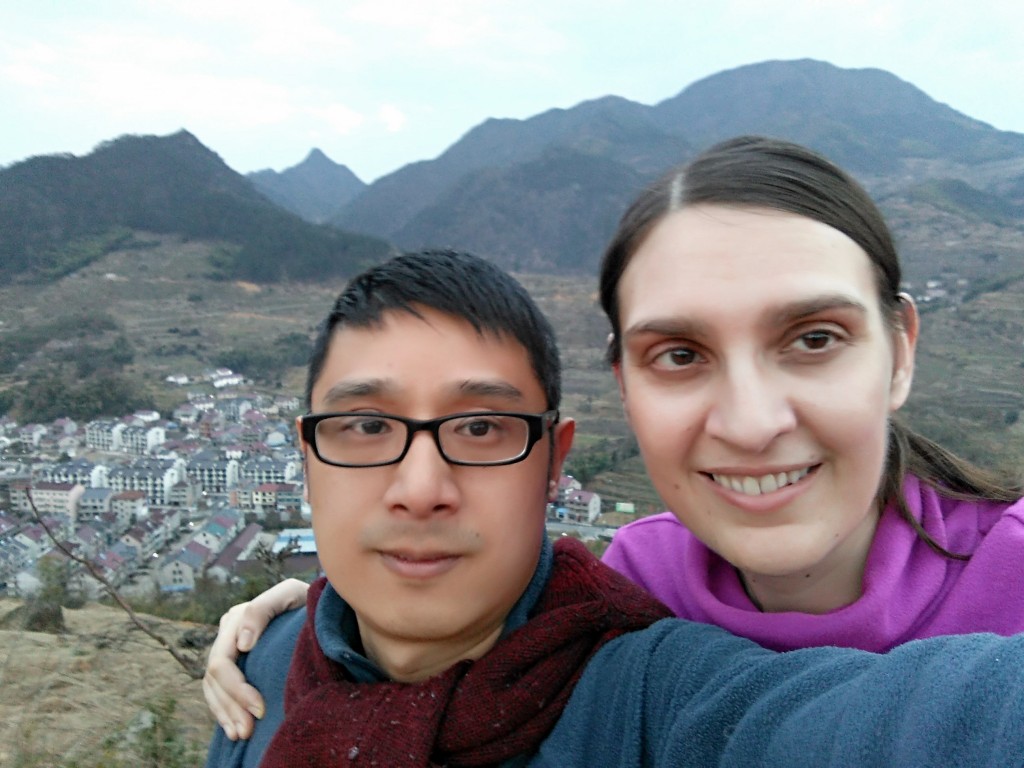
While I’m still on break this week, I thought I’d share some recent photos from the gorgeous “golden” spring blooming all around us here in the Hangzhou countryside.

IMG_20160315_150541 I call it “golden” because of the golden yellow rapeseed flowers that dominate the fields at this time of year. There’s nothing quite like standing among these fields of gold in the sunshine…

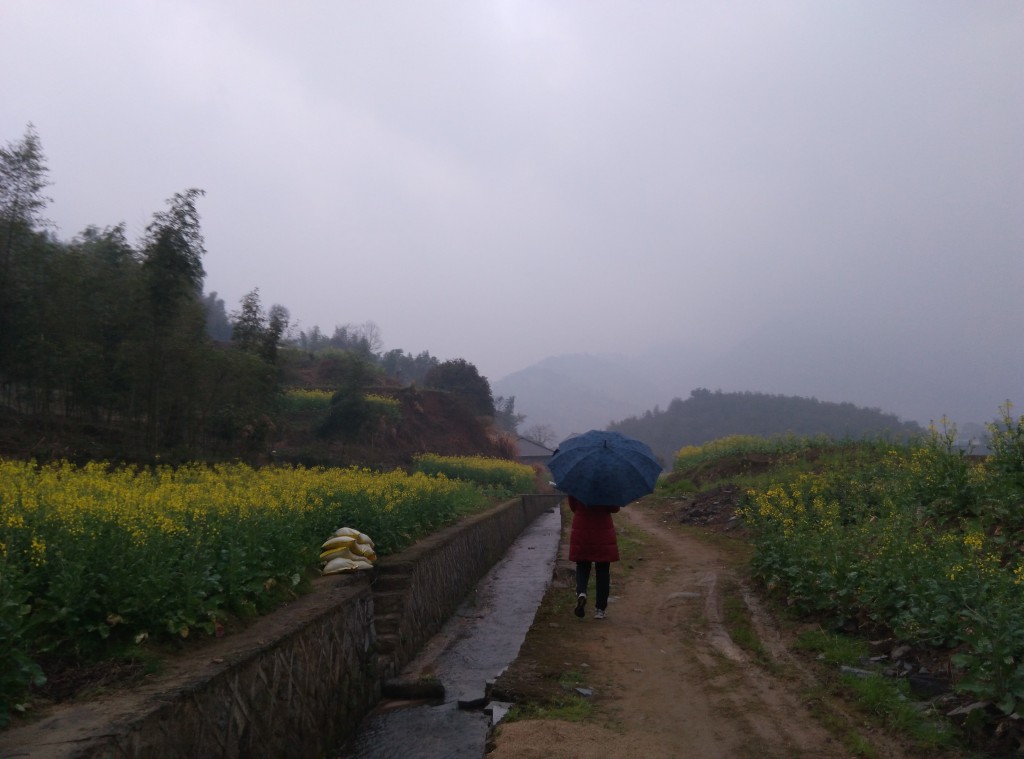
IMG_20160313_173636Or even the rain.

IMG_20160315_172534

Even when it’s overcast, the fields shine with the golden radiance of these flowers.

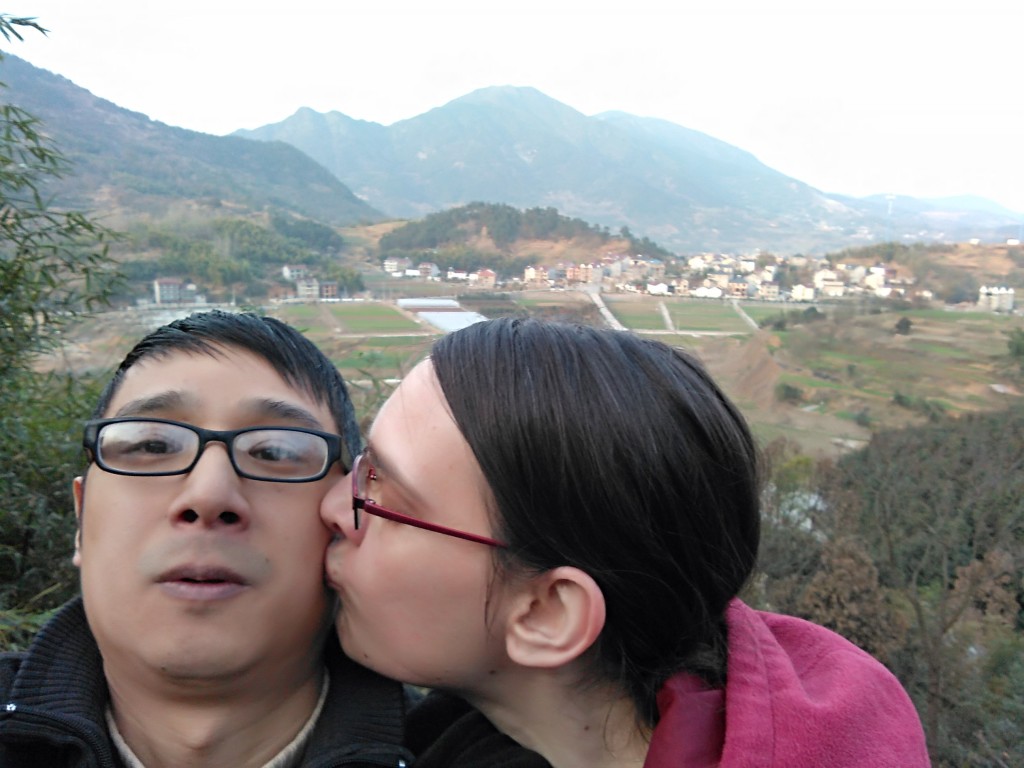
IMG_20160228_172219It’s even better when you can enjoy them with your best friend (and husband). Thanks John. 🙂

See you all next week!


From the Archives: Asian Men & Bags, Forgetting Cultural Differences (and More)

I have just finished up an incredibly exhausting week — the kind where it seems as if you’ve packed a year’s worth of events into seven small days — and can really use a break.

I’m taking the week off from blogging to recharge myself. And while I’m away, I’ll be sharing some of my favorite posts from the archives.

What’s the big deal about Asian men and bags? Some men in Asia carry their girlfriends’/wives’ bags for them or carry so-called “manbags” of their own. And there’s nothing wrong with that.

“Is he your foreign exchange student?” When you’re a white woman who looks older than her Asian husband. A cashier in America once mistook my Chinese husband for a foreign exchange student I was hosting — suggesting I looked too old to be his wife.

How could I forget about the cultural differences in my intercultural marriage? An interviewer asked, “Tell me about some cultural differences between you and your Chinese husband.” Why couldn’t I think of a single decent example?

Have fun reading! I’ll see you next week!

IMG_20160227_165522

How I Built a Good Relationship with My Chinese Mother-in-Law (Pub’d on LindaGoesEast.com)

IMG_2151Linda Goes East just published a guest post from me, and it’s titled “How I Built a Good Relationship with My Chinese Mother-in-Law“. Here’s an excerpt from the post:

If you’ve read my blog over the years, you know I love to gush about my mother-in-law here in China. I’ve written about everything from how she made a ring for me, simply because I complimented hers, to learning her special recipe for tangyuan. It’s easy to think we were always this close.

But you’d be wrong.

See, it wasn’t always a given that my mother-in-law and I would have a good relationship. In fact, from the beginning I wasn’t even sure the family would even accept me.

Months before I first visited John’s family home, he did the “big reveal” to his parents – that he was dating a foreigner!That led to an infamous quote from John’s father – that while it was OK for John to be friends with a foreign girl, he should not date foreign girls.

Uh-oh.

Head on over to Linda Goes East to read the full post. And if you love it, share it!

Student Seeks Intercultural Couples Using Mandarin & English for Research

Susanna Wickes & Mr. Wang
Susanna Wickes and her husband, Mr. Wang

Are you part of an intercultural couple using Mandarin and English for communication? Susanna Wickes, a master’s student at Trinity College Dublin, the University of Dublin (and the blogger behind the Inner Mongolian), wants you to participate in a simple online survey (takes 5 minutes or less to complete!) available in English and Chinese.

Here’s the story behind the project, straight from Susanna:

The idea basically came from my own relationship with my husband, and my interest in the strange, mixed-up language that we’ve made up over time as we’ve got to know each other and learned each other’s languages.

The project involves exploring in detail the ways that couples like us talk to each other in everyday life. The languages (English and Mandarin Chinese) and the intercultural dynamic are something all the couples have in common, but because each couple will have their own unique situation – where they live, their proficiency level in each other’s language, the length of their relationship, and so on – they will also have developed their own personal style of communication. And it’s this that I’m hoping to capture in the diaries and conversations that my participants create and send to me.

Being in a relationship with someone from a very different culture often means that both partners take on a new identity. Not just the identity of “wife” or “husband” but also aspects of the other person’s life and culture become your own. One of the main aims of my project is to look at how language use reflects the sense of “shared identity” that intercultural couples experience when they create a life together.

The surveys (in English and Chinese) are really simple to fill out. If you have five minutes and meet the requirements, Susanna would be enormously grateful for your help!

And if you’d like to be a more active participant in Susanna’s project — such as keeping a diary — you can leave her your contact information at the end of the survey to let her know.

Thanks!

5 Unhappy Things I’ve Struggled with as an Expat Married to a Foreigner

The Wall Street Journal Expat Blog just published an article titled Strategies for Coping as an Unhappy Expat. While I loved the suggestions provided by the author, the thing that struck me most about it was the focus. The idea of the unhappy expat.

Unhappy moments are not the sexy sort of thing we’d like to plaster all over our blogs and social media accounts.

Even I’m guilty of it. I’d rather you see these beautiful pics of Chinese New Year with my Chinese family than talk about how exhausting and frustrating the holiday was. I don’t want you to know about all of the hours I had spent crying in my bed, consumed with sadness.

It’s even harder when you’re married to someone from another country and living there. As I once wrote in this article for Matador:

Before I met Jun, I imagined international love to be as sexy as a James Bond movie, where lovers went from Monte Carlo to the Casbah as easily as ordering a martini. But then I went to China, and I was shaken and stirred by the reality there…

I think we’re all a little shaken a stirred – and not always in a positive way – when we chose to make another country home, with a spouse from that country. There are inevitable sacrifices and challenges that people don’t always talk about, but probably should. It would be a great leap forward to helping us all overcome the shame of feeling sad when we’re supposed to have these “fabulously sexy” expat lives.

Here are 5 unhappy things I’ve struggled with as a longtime expat in China married to a foreigner:

IMG_0045 (1)#1: Missing friends and family from your home country

I chose to live in China, half a world away from my friends and family back home. But, goodness, not a day goes by when I don’t think about them – and wish I could see them again.

Right now, for personal reasons, it’s just not feasible for me to return to the US. In fact, I haven’t returned ever since I moved here to China at the end of 2013, making it more than two years since I’ve been away.

This is probably a huge surprise to a lot of people, who might think expats always make those trips home at least once a year. But it’s not uncommon among the yangxifu (foreign wives of Chinese men) that I know. There’s one woman who actually lived six years straight in China before hopping on a plane to return to her home country. (Her reason was having kids in China – it was just too difficult for her to make the trip.)

12222324205_7aaa3fc67b_z#2: Feeling isolated

I live in Hangzhou, China. While it’s not a Beijing or Shanghai, it’s definitely right up there with the major cities in China. But there’s one thing Hangzhou doesn’t have – a vibrant, more permanent expat community.

The majority of expats in the city are pretty transient – overwhelmingly students at the universities – and don’t stick around too long. The rest of the working expats are scattered all over town. I almost never run into folks in the city, and there aren’t tons of venues to meet up with them either.

Add to that the fact that I also divide my time between the city and the countryside, and you’ve got a recipe ripe for isolation.

I have friends in China on my WeChat account, and we do chats every now and then. But honestly, just straight online chatting doesn’t really do it for me. Video chats are much better, though slow Internet can make it difficult too.

I’m learning the importance of reaching out to people when I’m struggling. Even then, I know that isolation will sometimes be a part of my life and I need to learn to find good coping strategies for it.

IMG_1838#3: Feeling misunderstood by your foreign family

I recently wrote, “It’s hard not to care about the happiness of my mother-in-law when, frankly, she spends so much of her time caring about ours.” and it’s a testament to how much I love her and the family I have here in China.

But the thing is, no matter how much I love them, there are things about my life that they don’t always understand. Especially things that have happened to me and my husband in America or places far removed from their rural Hangzhou life.

I can handle being misunderstood in small doses. But let me tell you, during Chinese New Year this month I was getting pummeled with it almost every single day from family members. And even though I know that words can’t really hurt you, I couldn’t help but feel down from it all.

Sometimes the best antidote to this is my husband, who tells me that I’m not alone in feeling like I do. With his experience living abroad and traveling, his family doesn’t always understand him or his decisions either. He’s a reminder that it’s OK.

IMG_2514.JPG – 版本 2#4: Visa woes

When you’re living in another country – and married to a foreigner – visas can become central to your existence. And in the worst case scenarios (a la the 2011 movie Like Crazy) visas can even get in the way of your relationship. I wrote about my own brushes with visa woes back in 2011 for Matador:

To me, Jun was the guy who first kissed me to the tune of cicadas, next to Hangzhou’s West Lake. The man who loved to pick me up from the metro station late at night, and ferry me home on the back of his bicycle. But to the visa officer at the US Consulate in Shanghai, Jun was just another immigration risk from China with no apartment or car, let alone a wife or children. “You’re too young,” the officer declared in Mandarin, stamping a denial in permanent red ink into the passport….

I shouldn’t have pushed Jun to apply for that US tourist visa — except I longed for him to meet my parents. I had met his months before, but he’d only known mine through the occasional long-distance phone call. But instead of getting the third degree from my dad, Jun had to get it first from a US visa officer, a guy who wasn’t kidding about “no.”

But it can go both ways. In online chat groups with foreigners, I often hear about the seemingly interminable troubles that they’re facing with applying work visas. Things like having to make the expensive journey back to their home country just to submit an application, figuring out how to get an acceptable criminal background check completed, and more. Sigh.

IMG_20160213_170645#5: When people laugh at your foreign accent

The Chinese are known for their excitement whenever Westerners say even a simple “Ni Hao” or “Xie Xie” – but that doesn’t mean it’s impossible for people here to laugh at your accent.

It has actually happened to me, particularly when I’m around kids (and often in a classroom setting). When I speak my accented Chinese to them, they think it’s funny and then don’t respect me so much. Or make jokes about me behind my back.

Granted, it’s nothing compared to what Chinese might experience in America. Many Americans are such racists sticklers that they consider certain accents – including Asian accents – as proof that you can’t speak proper English. (Or worse, that you should “go back home”….)

But the experiences I’ve had here have made me even more sympathetic to foreigners in America. And they’ve given me a taste of the unhappy experiences you can have when you don’t speak exactly like a native.

—–

Don’t get me wrong – I’m happy most of the time. I love my husband, I love China, and couldn’t imagine living anywhere else in the world. But sometimes, it’s good to share the flip side of it all. For all the ups we experience as expats, there will also be plenty of downs as well.

So next time you’re feeling a little unhappy in your supposedly “amazing” expat life, just remember one very important thing – you’re not alone.

What do you think? What unhappy experiences have you had as an expat and/or as someone married to a foreigner?

“We’re Not Fighting, We’re Just Talking!” My Struggle with Cultural Differences in How People Talk in China

IMG_2173
My husband (far left) with family members.

The other night, I could hear those amplified voices through the paper-thin walls in my in-laws home. One of those voices sounded a lot like my husband’s; the other surely was his father.

And inside, I shuddered. What were they arguing about? Was something wrong between them?

As the minutes turned into an entire hour, my worries only grew. Because of course, only something really bad could take that long to hash out. The thought of my husband getting into a deep argument with his father made me feel nauseous. I wanted crawl under my covers and pretend this wasn’t happening, except nothing could seem to quiet the unsettling noise from next door.

So imagine my surprise when my husband strolls in the door with a satisfied smile and not a trace of tension in his face. How could this be?

“Sweetie, were you arguing next door?” I mentally braced myself for confirmation of my worst suspicions.

“Oh no, I was just talking about finding our ancestors’ graves with my dad.” He was so nonchalant about it all. As if it was normal to discuss this topic in loud, booming voices.

I breathed out a huge sigh of relief. “Thank god, I was so worried! I could hear you through the walls — I thought you were fighting. And you were gone so long…”

“Don’t worry,” he said to me, his overreacting wife. (I swear that “Don’t worry” is probably one of the top ten common phrases John has to say to me in our relationship, because I’m always misinterpreting things for the worst.)

But it’s really easy to make mistakes like this when it comes to conversations between my husband and his family and friends in the countryside. That’s because when people talk to each other, even in friendly and congenial ways, it can sometimes sound like an argument to my American ears.

Growing up in the Cleveland, Ohio region, I learned pretty quickly that raising your voice was a sign of anger or disrespect. The times in my life when I heard yelling or loud voices in the house, it invariably meant an argument was in progress. Speaking loudly was just not a good thing.

But here in my husband’s rural Hangzhou village, people speak loudly all the time about normal, friendly things. I’ve watched my aunts and uncles stroll in with their booming voices, discussing how the weather was that day or what their ducks did in the yard. I’ve heard neighbors, in the most shrill voices I’ve ever heard, say nice things about my family’s home. I’ve observed family members discuss things they care deeply about – like finding an ancestor’s grave – with their vocal volume turned up.

You should see my mother-in-law when she answers the landline at the family home. She invariably speaks to the caller in a tone that you would probably classify as a “yell”, yet what she’s saying is totally friendly and normal. Have you eaten yet? Come over to visit us.

The funny thing is, I know all of this and yet I forget time and time again. It’s as if any loud voice has been permanently branded in my mind as angry and threatening. The fact that I don’t always understand everything that’s said here – as most people use the local dialect to communicate – only compounds the issue.

Will I ever get used to this? Maybe someday, years from now, after I’ve spend decades living in China. In the meantime, I’ll have to get used to being wrong about this, a lot.

Sometimes, it’s really good to be wrong about something. 😉

IMG_20160212_174500

Photo Essay: I Survived! Making it Through Chinese New Year 2016 with the Family

Every year, I swear this Chinese New Year is not going to kick my butt. And somehow, every year, I’m totally wrong on this.

Yes, Chinese New Year 2016 — welcoming the year of the monkey — has been an exhausting parade of lunches, dinners, toasts, and meetings.

By the last day I had rings under my eyes (the “panda” look that my husband kids me about) and a desperation about me that said, “Please, Chinese New Year, let me have a little peace and quiet.”

And so it came. Finally! I survived!

While I’m recovering from all the hustle and bustle of the holidays, I thought I’d share some of the pics from Chinese New Year 2016.

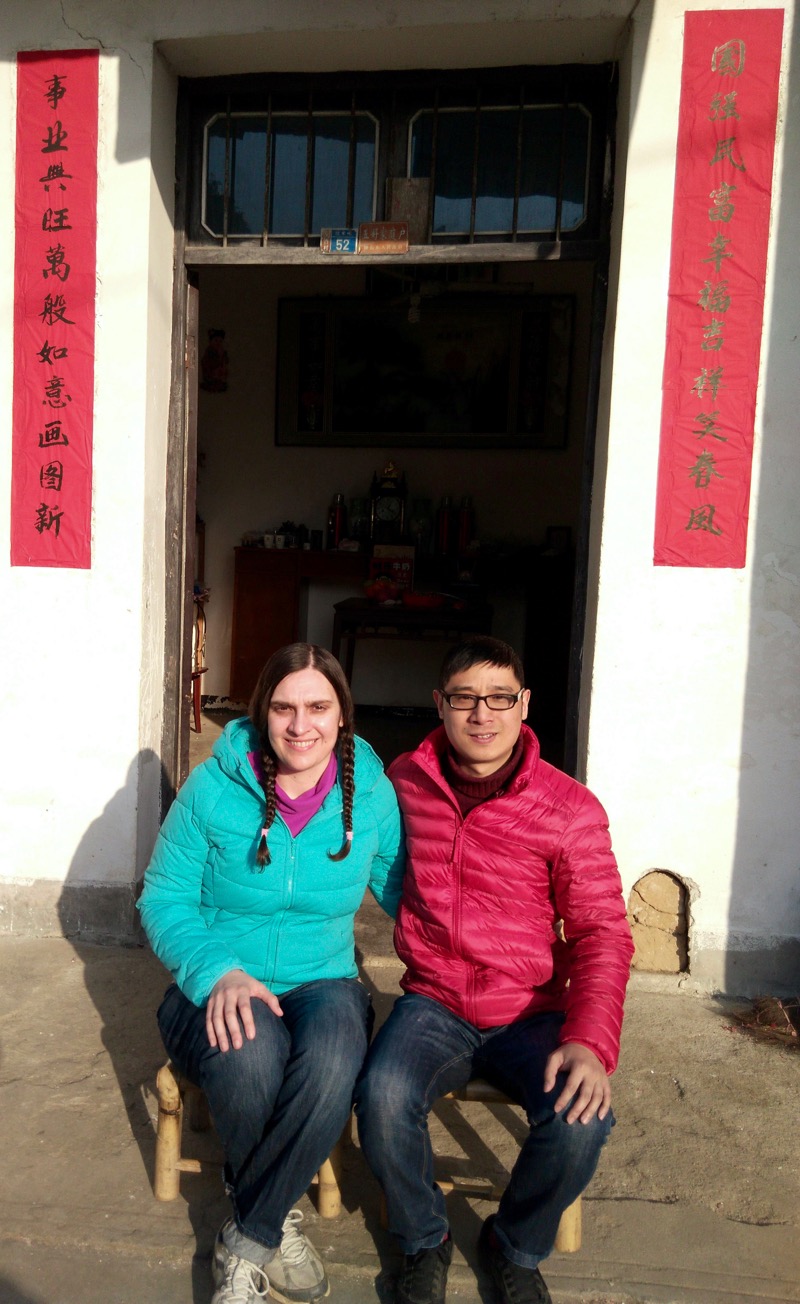
IMG_20160208_160634_BURST3New year, new picture of John and me in front of the family house. We may be smiling, but we’re beat. With all the fireworks set off all night, I got maybe four or five hours of decent sleep.

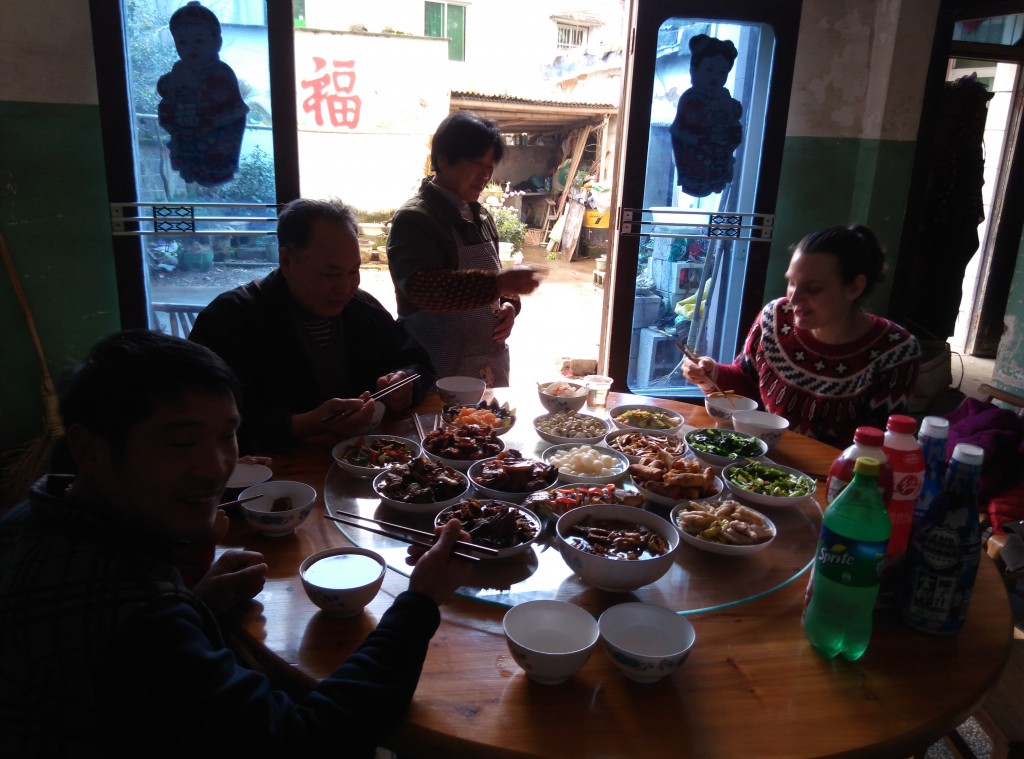
IMG_20160208_164147This is our first dinner of the new year at an uncle’s house. There’s lots of toasting, and lots of fantastic food. My husband’s aunt is an extraordinary cook and she happened to dish up a serving of Chinese-style kimchi more delicious than anything I’ve ever had (Must corner her and get the recipe!)
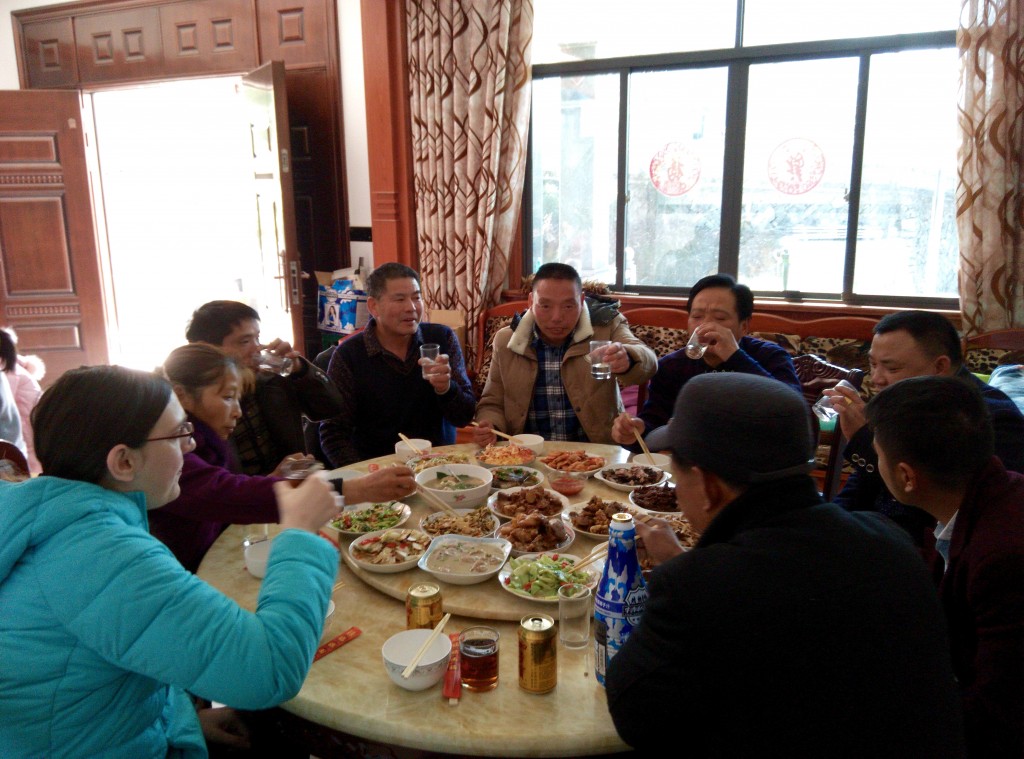
IMG_20160210_112440_BURST1Yeah, I know, eating again. Seriously, that’s the heart of this holiday. Lots and lots of lunches and dinners. As always, we ate…
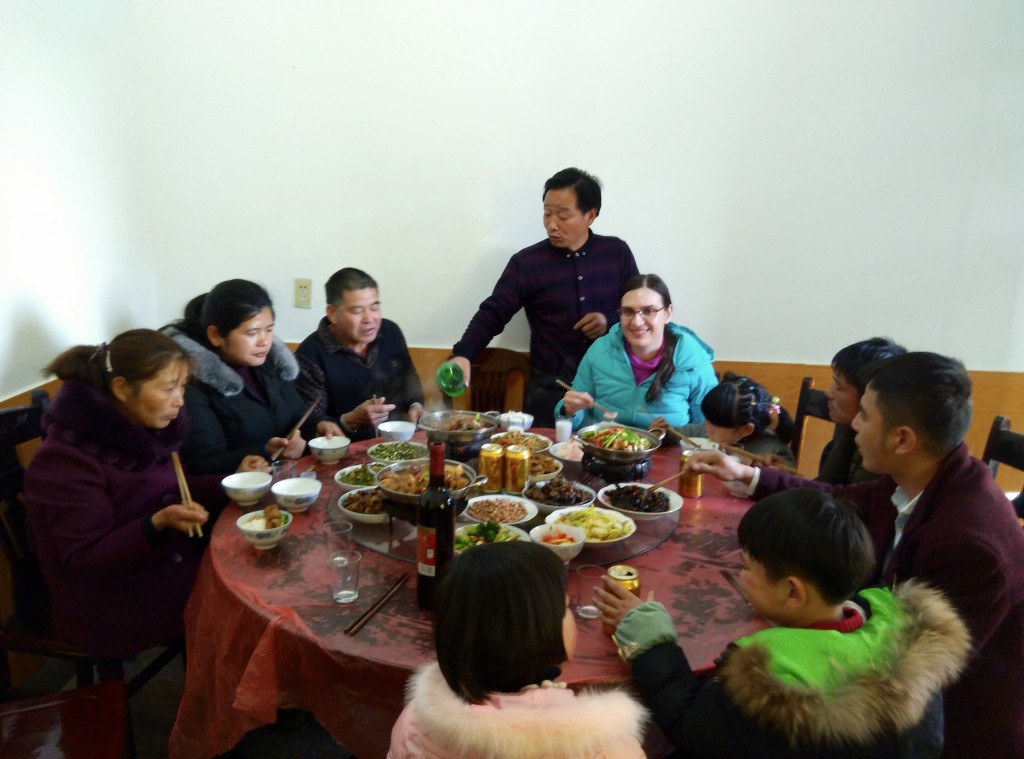
IMG_20160210_165223…and ate…

IMG_20160213_113430…and ate!

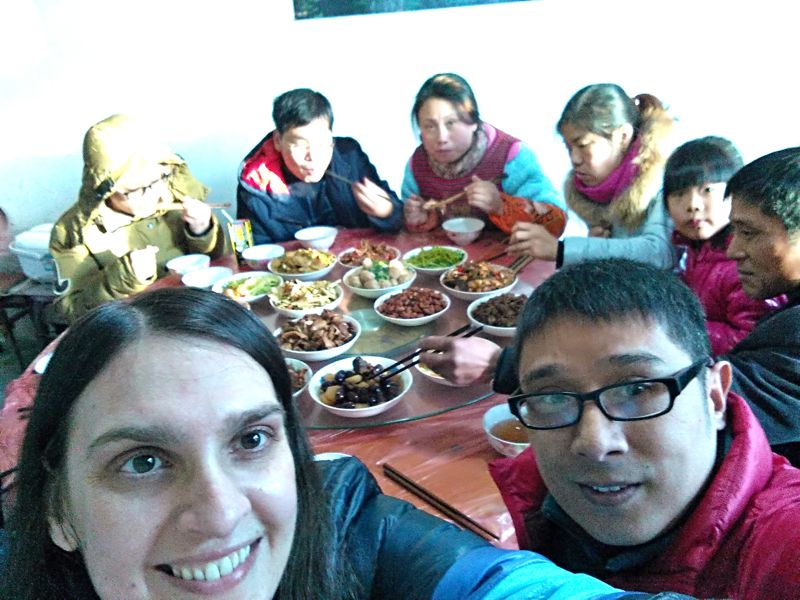
IMG_20160213_112247Even when you’re not having lunch or dinner, people usually offer you lots of food to snack on. Notice the trays of assorted nuts, fruit and candies arranged on the tables before us.

IMG_20160213_142542Here I am at an aunt and uncle’s home, attempting (unsuccessfully) to snack on raw sugar cane. Sweet, but a little too pulpy for my taste. This was day 6. Do you see the fatigue on my face yet?

IMG_20160213_170645This is John and me at the end of the holiday. I’m looking haggard (see the “panda” eyes?) — and longing for a little peace. Fortunately, when we returned from this walk, the village was quiet. Finally, I could rest.

Wishing everyone a wonderful year of the monkey (with hopefully more sleep than I got during the first days of the new year)! 😉

Photo Essay: 2016 Chinese New Year’s Eve at the Family Home

We’re busy celebrating Chinese New Year, the biggest holiday of the year here in China, at John’s family home in rural Hangzhou. I thought I’d share a few photos from Chinese New Year’s Eve.

IMG_20160207_134148

It was a lovely day to celebrate Chinese New Year’s Eve, with some of the most gorgeous blue skies of the winter.

IMG_20160207_151917

My brother-in-law took his daughter to pay her respects to the spirits in an old camphor tree beside the river, as he does every year on this day.

IMG_20160207_163726

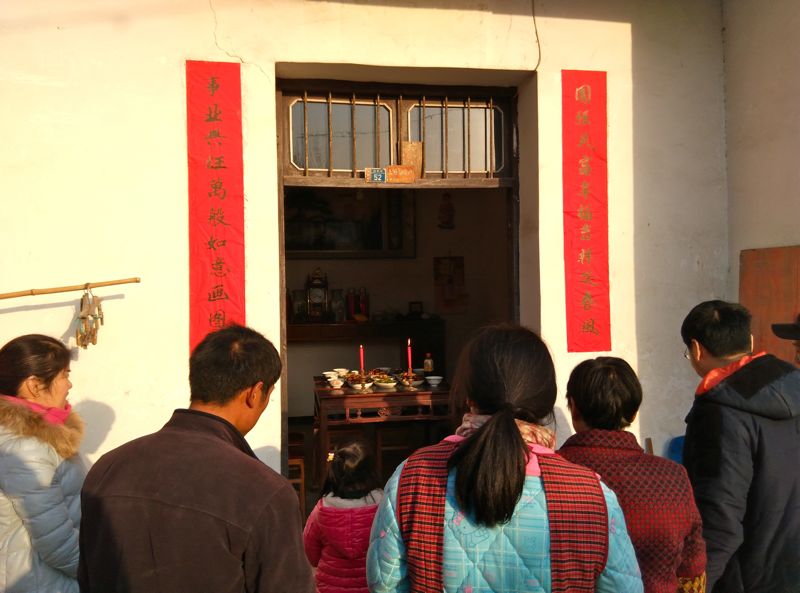
On Chinese New Year’s Eve, ancestors come first. Here we pay our respects to the ancestors at their table, filled with dishes fresh from my mother-in-law’s kitchen.

IMG_20160207_165200

Let’s eat! It’s the most wonderful dinner of all the year, the table loaded with delicious dishes made by my amazing mother-in-law. (I consider her kitchen one of my favorite “restaurants” in China… 😉 )

IMG_20160207_173212

As usual, John is one of the last to leave the table — he loves to eat, and takes his time. Here he’s enjoying some free-range chicken raised by my mother-in-law (his favorite dish of the evening).

Wishing you all a very auspicious and prosperous year of the monkey! Happy Chinese New Year!

Featured on the Global Times: Expats Adapt to and Put Their Own Spin on Chinese New Year Purchasing

Expats adapt to and put their own spin on Chinese New Year purchasing_Global TimesThe Global Times just published an article titled Expats Adapt to and Put Their Own Spin on Chinese New Year Purchasing featuring quotes from me about my own purchases for the holiday! Here’s an excerpt:

For Jocelyn Eikenburg, a 38-year-old American who has been in China for seven and a half years, shopping for Chinese New Year is a very important annual celebration, just like Christmas.

“It’s interesting because, in some ways, the shopping culture reminds me of preparing for the Christmas season back in the US. Like Christmas, we spend a lot of time shopping for gifts  to family and friends,” said Eikenburg, who now resides in Hangzhou, Zhejiang Province with her Chinese husband.

She bought all kinds of presents for her family and friends and tries to stick to the colors of the festival, even when buying foreign goods. This year, she bought a large crate of imported Spanish red wine to give as a gift. The wine bottles have a festive red label embossed with gold grape vines, and her husband’s family love drinking red wine during the holidays, so it’s a perfect gift for Chinese New Year, Eikenburg said.

Chinese traditional food and snacks are also vital to the new year tradition. Every year, Eikenburg and her husband will help the family prepare what they call miguo in the local dialect, a type of savory turnover made with rice dough and filled with vegetables.

Everyone, from her husband’s grandmother to her five-year-old niece, sits around the table rolling out the dough, filling the turnovers, and sealing them.

“It’s one of my favorite family moments from Chinese New Year, just being together with everyone to make this traditional snack,” said Eikenburg.

You can read the full article here, which includes more quotes from me. And if you love it, share it!