Why my Chinese family wants the foreign daughter-in-law around home + village photos!

I'm the good foreign daughter-in-law...because I stay around home.
I’m the good foreign daughter-in-law…because I stay around home.

Whenever my husband calls me his nèirén (内人), we both erupt in laughter — and for a good reason. Nèirén, a traditional Chinese term for “wife”, also literally means “inside person” — a perfect catchphrase for my current situation. After all, I spent my days either inside our home or inside our village, almost never venturing into the nearby town or beyond.

I have to confess, it’s a little strange to admit that my life remains pretty much confined to this rural mountainous village in Zhejiang Province and, specifically, to the family home.

You might wonder, why don’t you and the husband travel? You could go to Shanghai or some other nearby city? You could visit friends in China or see the country? Well, we have our reasons for sticking around here instead — reasons I’m unable to share here on the blog.

Still, here’s the really odd part for me — I no longer even run errands, things I used to do many years before when John and I lived in Shanghai. Back then, I used to go shopping on the weekends, mail things at the post office, and more. But here? Nothing.

In a sense, that reflects the fact that I’m living under one roof with my husband, his parents and other family members. My father-in-law handles pretty much all of the shopping for our home and does all of the post office runs — so if anyone needs something, we just let him know and he takes care of it.

But what if I wanted to go shopping in town on my own? Maybe I’m curious about what that local Falian Supermarket actually has on the shelves? Every time I’ve suggested anything like this to the family, I’m always met with a resounding “no”! Usually they say, with a grimace on their faces, “Don’t go, it’s too much trouble!”

Yet it’s more than just a matter of trouble, as my husband has told me. “It’s about safety,” he once said to me while we were walking through the mountains. “It’s better if people in town don’t see you.”

How could my simple stroll into town create a safety problem?

According to my husband, it works like this. If I head into town for shopping or other errands, invariably I’ll turn a lot of heads. People will stare, giggle, and talk about me — and if I’m unlucky, the wrong kind of person might notice me. You know, a thief.

Among this beautiful mountain village hides the ugly specter of theft. Every year, someone in the village is robbed, especially just before Chinese New Year, and past victims include my husband’s uncle and aunt who live just next door to us. My mother-in-law cited all kinds of shocking tales — of people who were at home while the robberies happened, of thieves who pried open the bars on windows to enter, of homeowners fast asleep as the criminals tip-toed into their rooms and bedrooms to steal valuables. As crazy as the stories sound, I believe them. Every evening I tune into the local Zhejiang news, reporting the latest batch of outrageous robberies in the province — and every small tragedy reminds me that the whole family must be careful, especially me.

The problem is, most Chinese think foreigners are wealthy, making my home an especially tempting one for any would-be burglar. Since it’s such a small town, it wouldn’t take long for anyone to ask around about where I live. In China, people love to talk — particularly when you have a yangxifu (foreign wife of a Chinese man) in town, the only one around for miles.

And if people came to rob my suite, they’d probably rob from the rest of the family too I would feel horribly guilty if my selfish desires to explore the town — a town that, when it comes right down to it, doesn’t have anything really special to offer — ended up harming the entire family.

Hence, being an “inside person” has become my life.

Sometimes I’ve wondered, how long can we keep this up before the wrong person discovers where I live? Well, as my husband and family sees it, the problem people would be in town, not in this village. Here in the village, only locals — folks who grew up in this area their entire lives — reside (it’s still against the law to buy or sell property in the countryside). But in the town a 15 minute walk away from us, you’ll find restaurants, rooms for rent, and all the other signs that outsiders (Chinese from other areas) and migrants pass through. Most Chinese believe that outsiders tend to commit crimes — and even though it’s a stereotype, it sort of makes sense. Everyone in China returns to their hometown for Chinese New Year, so why would you spoil it (or worse, increase your chances of being caught) by, say, robbing your neighbor there?

Still, please don’t feel sorry for me. I may be a good daughter-in-law who sticks to home and the village…but what a heck of a playground it is!


Yes, now that I think about it….I could get used to this whole “inside person” life here in China. 😉

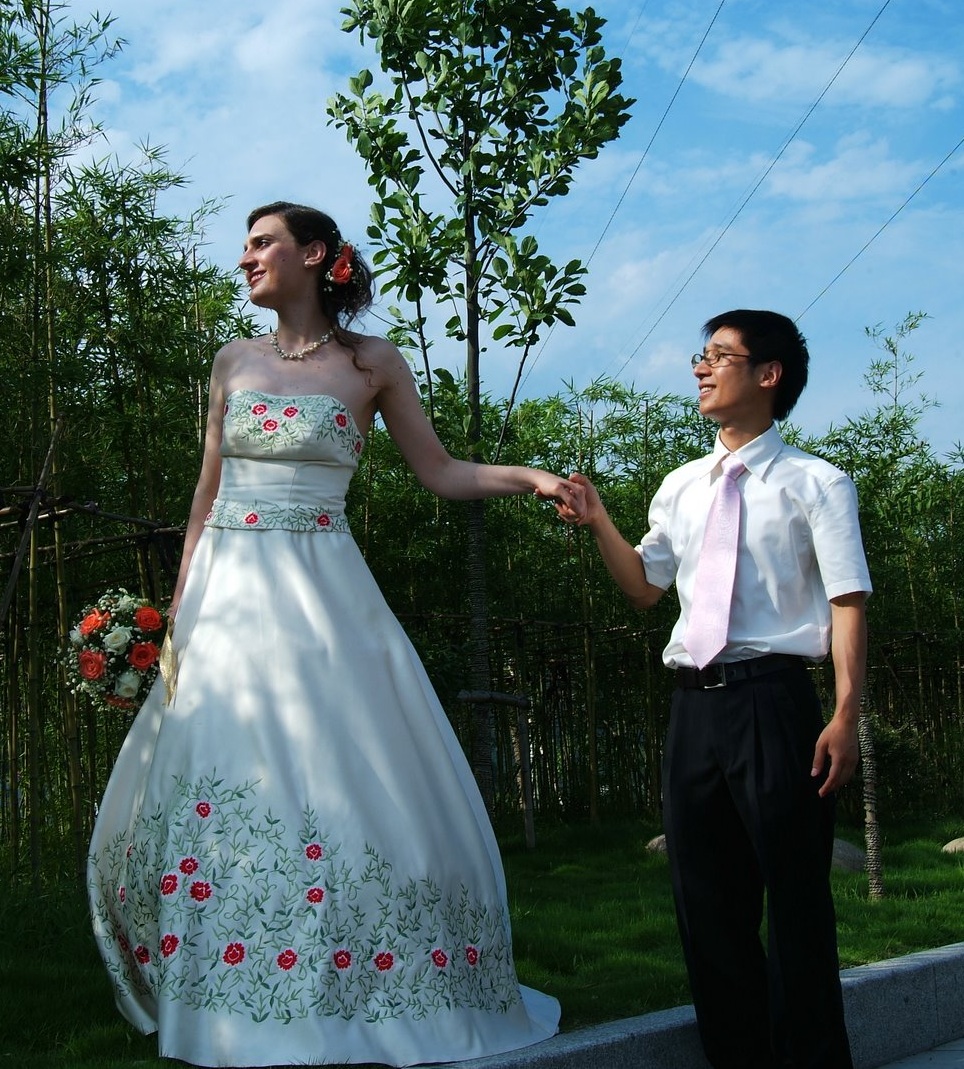
Introducing Posts in Chinese! 隆重推出中文版!

Reading Chinese charactersI’m thrilled to unveil the latest development for this site — translating selected posts into Chinese.

Last year, Fu Yuan, an incredibly dedicated fan of Speaking of China who hails from lovely Shandong Province, offered his help in translating my content. We’ve just launched 关于少见的洋妞中男配, the Chinese version of my most popular post, On the Rarity of Foreign Women and Chinese Boyfriends/Chinese Husbands. Expect to see more translations in 2014.

I’ll be adding Fu Yuan’s photo and brief introduction to my About page in the near future. Fu Yuan, words cannot express my gratitude for your assistance and extraordinary dedication to this website.

Readers — if there’s a post you’d love to see translated into Chinese, please let us know!

关于少见的洋妞中男配

As a foreign woman with a Chinese husband, I couldn't help but wonder why we're so rare

作者:Jocelyn Eikenburg  译者:远

(翻译自《On the Rarity of Foreign Women and Chinese Boyfriends/Chinese Husbands》)

在中国,尤其在农村,我总是有很高的回头率——这不仅仅因为我是一个洋妞,更因为我总是和俺那中国老公手挽着手。

事实上,相较于外国男人配中国女人,外国女人配中国男友或丈夫的确要少见许多。

在任何一个中国大城市的主要旅游购物点,你总可以碰到这种外国男人—中国女人,而非外国女人与中国男人的搭配。这一点可以很容易地通过“烛爱”网判断,该网站致力于帮助美国公民将他们的中国爱人带回美国。“烛爱”就像是一波汹涌的陷入东方恋的美国男人潮,裹挟着零星几对浮在水面的美国妻子和中国丈夫。

讲述洋妞与中国男友或中国丈夫的的书几乎没有。眼下我能想到的只有蕾切尔·德沃斯金(Rachel DeWoskin)的《洋妞在北京》与《跟我说》、尼克·莫尼斯(Nicole Mones)的《迷失中国》以及赛珍珠的《东风:西风》。

几年前,当我的丈夫参加上海新东方的GRE辅导班时,他们的老师曾警告所有男生:“如果你们这些小子打算留学,就要做好四年单身的准备。” 言外之意,和老外谈恋爱,门儿都没有——但是倘若爱神降临,就是惊喜。

当你找了中国男友或中国丈夫,有时你会感觉自己仿佛属于一个孤独俱乐部,而我并不是唯一的会员。我的来自德国的铁杆笔友就是这样在网络上发现我的,当时她找了一位中国男友并且迫切地想找人倾诉衷肠。

于是我开始纳闷——外国女孩和中国小伙拍拖的咋就这么少呢?

毫无疑问,部分原因根植于西方世界常见的偏见。

根据谢里丹·普拉索(Sheridan Prasso)的著作《The Asian Mystique: Dragon Ladies, Geisha Girls, & Our Fantasies of the Exotic Orient 》,基本上亚裔男人在美国主流媒体中一直以失败者的形象出现。

如果说好莱坞和电视上还有些许对亚裔女人令人仰慕的描绘,对于亚裔男人则吝啬许多了。他们绝少被刻画成拥有阳刚之气的男子汉。除了极少数例外,荧幕上的亚裔男性大多是鬼鬼祟祟而又没安好心的小个子——要么是缺少骨气的窝囊废,要么就是会些花拳绣腿却最终被白人打的屁滚尿流的小丑。缺少男子气,这些亚裔男性几乎永远得不到女人。

文章《性与亚洲男人》也印证了许多普拉索的观察,包括那种冷淡的武士:

即使在今天,亚裔美国男人仍然抱怨像周润发,成龙这样的动作英雄还是少有女人缘。正如本文作者,加州大学洛杉矶分校(UCLA)梁(Leong)教授所写的那样:“亚裔小伙子能拳脚功夫却不能得到一个吻。”

这种讨论在博客上就变得有些更加针对个人了,就像帖子《我们这群苦逼的亚裔男》或《亚裔男人真逊》。

即使这样,事情总有另一面。

我曾经被中国男人拒绝过,因为他们感觉作为传统的中国男性,实在无法想象娶一个洋妞。潜台词却通常是洋妞乃红颜祸水——生活随意的狐狸精或其他什么东西——或无法接受中国人的生活方式。一般来讲,分手的压力来自父辈。毕竟,在中国婚姻是整个家族的事情。

我之前的中国男友曾决绝地告诉我,他的父母是断无可能接受我的。起初我毫不怀疑他对我的爱——然而我感觉当他家里知道我们的恋爱关系后,就已经三令五申他和我这个洋妞之间绝无可能。甚至我丈夫也曾被公婆警告,洋妞可以做朋友,但绝不能做女朋友。幸运的是他们一见到我就改变了主意!

不过,还是有一些中国男性以及他们的家庭乐见外国妞成为家庭一员的。但是,麻烦又来了。杭州的闺蜜小陆(音)有一次告诉我,一些中国小伙子总是难以克服心中的自卑感——我这么一个来自世界超级大国美国的妹子总是会或多或少地吓到他们。按小陆的话说,这些小伙子无论如何也不会相信我这么一个姑娘会成为他们的另一半。

更有其他难言之隐。

09年夏天,载我去首都机场的司机承认他大学时有过一个俄罗斯女友。但是他说他从没能满足过那个妹子(嗯,那方面),然后,就没有然后了。这段刻骨铭心的经历让他从此对外国妹子敬而远之。

除此之外,我怀疑有些外国女人出于经济原因而不会考虑中国伴侣。如果不是大老板,高管,或炙手可热的人才,一般中国男人是很难挣到大钱的。而且如果他们要去女方国家生活,会有更多的障碍让他们难以养家糊口,比如语言不通,文化差异和异国固有的偏见。

尽管有这样那样的不顺、成见和其他阻碍,还是有洋妹子和中国小伙子走到了一起。我是其中之一,而且越来越多的外国女性正加入这一行列,比如博主the Local DialectThe Downtown DinerWo Ai Ni等等. 这种跨国恋甚至有时会悄悄地出现在新闻上。

眼下,生命中有了丈夫,我已感觉很幸福。这并不因为他是中国人或我们的婚姻有多么与众不同,而是因为,我爱他。

To learn dialect or not? When your Chinese family doesn’t speak Mandarin Chinese

IMG_2038
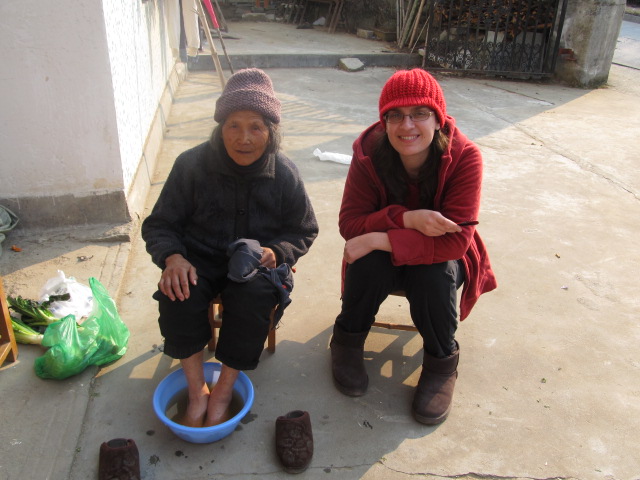
My Chinese Grandma is a lovely woman…who doesn’t speak Mandarin Chinese at all.

“Learn some Mandarin Chinese” is a suggestion I offer any foreigner dating someone Chinese, especially if they want to make a great first impression with the family. Even just knowing a handful of phrases makes a difference.

But what happens if you’re like me, someone now fluent in Mandarin Chinese after years of study…with a Chinese family whose local dialect is a completely different language.

My husband John hails from Western Zhejiang Province and his local language is one of China’s Wu Dialects (a family of languages that includes the dialects of Shanghai, Suzhou, Hangzhou, Ningbo and Wenzhou). There are literally thousands of dialects within this family. Even here in the Hangzhou region, which includes the county where my husband was born and raised, his local dialect differs from the county seat’s local dialect which also differs from the Hangzhou dialect. When John and I visited a friend in Yiwu, a city in Central Zhejiang Province, the local dialect there was completely different as well — and tough for both of us to understand. Still, nothing can beat Wenzhou dialect, considered one of China’s most difficult local languages to comprehend (supposedly, it was used for communications in China during World War II to ensure no enemies — especially Japan — could intercept wartime messages).

How is John’s local language different from Mandarin Chinese? Here are few examples:

Grandmother
– Mandarin Chinese: Waipo
– John’s local dialect: Abu

Child
– Mandarin Chinese: xiao haizi
– John’s local dialect: xia ninguo

Play/have a good time
– Mandarin Chinese: wan
– John’s local dialect: xi

Shoe
– Mandarin Chinese: xie
– John’s local dialect: a

Oneself
– Mandarin Chinese: ziji
– John’s local dialect: xiguo

Hour
– Mandarin Chinese: xiaoshi
– John’s local dialect: zhongtou

You get the idea…it’s an entirely different language!

But unlike Cantonese or Shanghainese, which are local languages in some of China’s biggest business/financial centers (Guangzhou, Hong Kong, Shanghai), my husband’s local dialect is only spoken in John’s hometown, a mountainous rural backwater. You won’t see foreign language students flocking to study John’s dialect, nor will doing so boost my resume.

So why bother learning at all?

That was my initial feeling when I first spent time at my husband’s home in the village. I had invested so much of my language study on Mandarin Chinese…and besides, we never stayed at his hometown for more than a few days or a week, providing me few opportunities to learn or practice.

But over the years, I started to find myself hitting a wall — and that wall was named Grandma (Waipo to you Mandarin speakers, Abu out here). See, Grandma doesn’t speak a word of Mandarin Chinese. And to make matters worse, she was born in the Wenzhou area…so her local dialect is clouded with a Wenzhou accent, making it even more of a challenge to understand her. During the summer of 2011, when John left me here at the family home, I passed many uncomfortable moments at Grandma’s house, trying to decipher what she was trying to say — missing out on opportunities to get to know her as person.

That’s the thing: this is the language of people I care about.

Yet it’s more than that, as this author reminded me in an article praising the importance of local dialects in China:

I don’t know where the tipping point was when dialects turned from a communication obstacle to a cherished heritage for Chinese culture. But when I stumbled upon children in my hometown talking to each other in Mandarin while playing on the street, it dawned on me that the days for most dialects are doomed. They would disappear within one generation or two. Possibly within my lifetime, most dialects would go down the road of calligraphy, or worse the abacus, where they would be under academic scrutiny and government protection, but out of the daily use of the common folk.

By learning John’s local dialect, even if it isn’t obviously “useful” or “practical”, I could actually help preserve part of China’s cultural heritage.

Of course, that’s if I ever actually master the language. For now, it’s just a phrase here, a phrase there, and a smattering of words.

But you should have seen the way John’s Grandma beamed at me when I opened her door and finally called her “Abu!” It warmed my soul to know that we were finally communicating for the first time in years. And though I have a long way to go (John still does most of the talking with her) I know in my heart I made the right decision to learn.

Have you ever considered learning an uncommon Chinese dialect? Why or why not?

Update: scratched out the entries under “Hour” above, thanks to the commenters who noted that Mandarin Chinese speakers may use both. Good catch!

My husband’s excuse not to drink? “I have a foreign wife!”

While the other men in the background imbibe way too much alcohol, my husband is off the hook -- because of me.
While the other men in the background have to drink up their baijiu, my husband (front and left) is off the hook — because of me.

During Chinese New Year, the alcohol flows as freely as the conversation — and sometimes a little too much so. On the second day of the new year, a lunch packed with mostly male relatives and well-lubricated with baijiu — the vodka-like hard liquor of choice — actually landed two of the men in the hospital for alcohol poisoning.

It works like this. The elder male relatives at the table insist their younger male relatives drink in a gesture of respect. Of course, nobody in Chinese history ever said filial piety involved imbibing the alcohol for your elders — but such reasoning is pointless at the table, where peer pressure and the expectation that “real men” can handle their alcohol rules.

Yet my husband John survived the entire holiday without a single drunken incident and ultimately only enjoying a few sips of red wine by choice. And when I asked him why, he cited me, his foreign wife, as the reason.

“I have a yangxifu,” he said. “You’re a good excuse not to drink.” In other words, because I’m a foreigner here, John’s relatives assume he needs to care for me more than if I was just Chinese (despite my fluent Chinese and years of living in this country). So if he was stupid drunk, he couldn’t fulfill his so-called “responsibility” to me.

We both laughed at this comical idea — that my being John’s wife actually shielded him from the pressure to drink in China.

Still, given John’s low alcohol tolerance, drinking among relatives will always be a dangerous pursuit. So as bizarre as it is, if my presence might save him from a drunken stupor — or worse, a trip to the hospital — I’ll take it. 😉

Photo Essay: The First Days of Chinese New Year with the Family

So long snake and hello horse! We’ve all been busy welcoming the new year these past few days. Much like the firecrackers and fireworks that boom across the village in the evenings, the holiday has been both exciting and overwhelming.

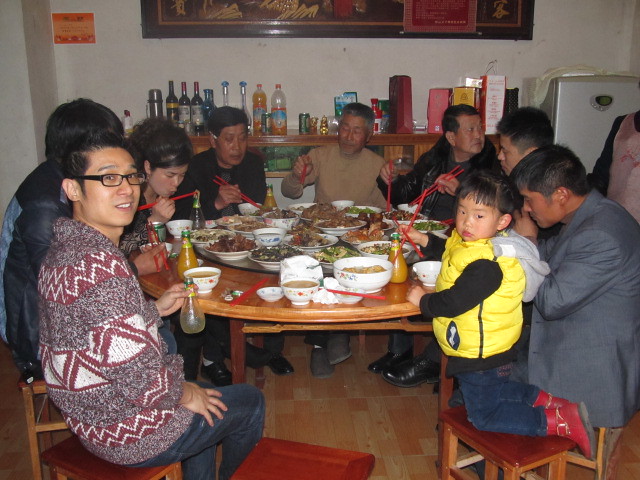
I’ve already attended four huge dinners with family, where the dining tables often become a cacophony of laughing and shouting (often because of those drinking games involving baijiu). I’ve learned to steel myself for the inevitable topic of children — which used to be a question (“When will you have kids?”) and has now become a command (“This year, you must have a kid!”). And strangest of all, I actually witnessed a grown man slumped unconscious in a bamboo chair before our doorway because he drank too much baijiu (sorry guys, no photo of that!).

Still, amidst all of the drama of these past days, I can’t help but feel incredibly loved and appreciated by our family here. Just this evening, the mother of one of John’s cousins stroked my arm lovingly, saying how much she liked us and how she hoped we would return for another dinner soon.

While I relax and recover during those few and precious quiet moments in the day, I’m offering you a peek into the start of our year of the horse through photographs. Again, wishing you a successful horse year! 马到成功!

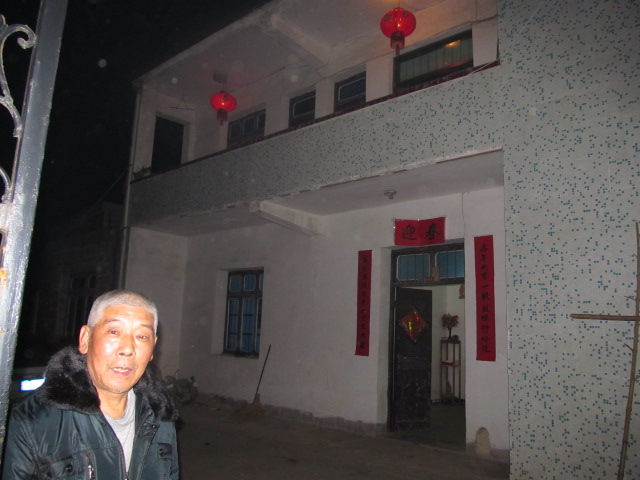
My father-in-law opens the gates to the family home just before midnight when the new year comes.
The family sets off firecrackers and fireworks just outside the gate to welcome the new year.
According to the tradition, we always start the new year off with new clothes! Here, John and I have laid out our never-before-worn outfits for the first day of the year.
IMG_2145
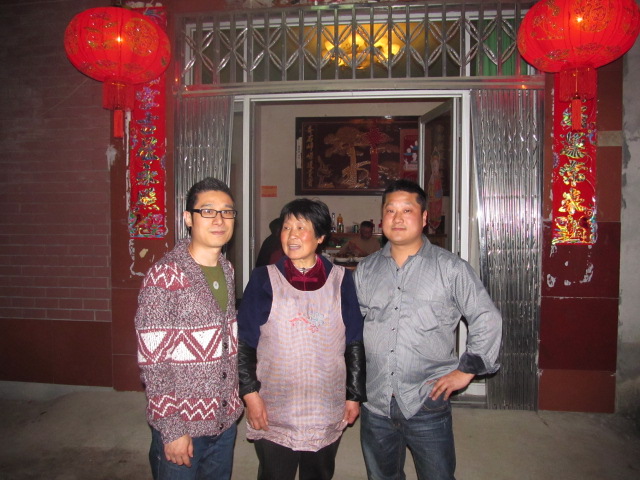
John and I show off our new outfits for the new year outside the front door of the family home.
During Chinese New Year, you can always be sure to have lots of visitors at your home! Some of our first visitors in the new year include a cousin and grandparents.
The number one activity during Chinese New Year? Eating! These past few days have felt like a dining marathon with one huge meal after another. We ate… (lunch at the grandparents’ home prepared by John’s oldest brother — it’s tradition for the men to do the cooking on the first day of the new year).
…and ate… (dinner at little uncle’s home just next door)
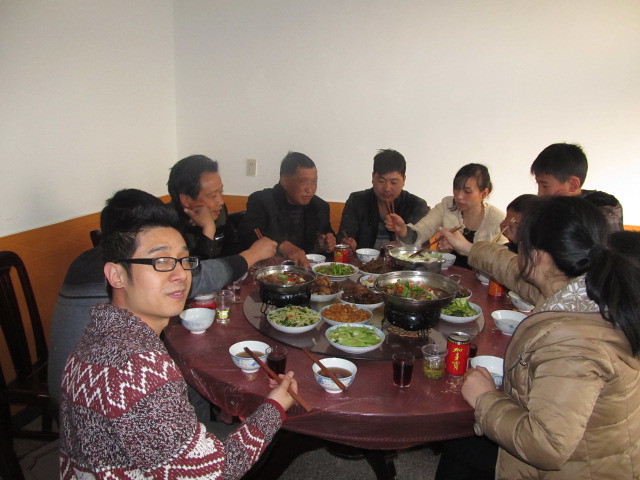
…and ate…(a huge and raucous lunch at our home which led to at least two people becoming so drunk they had to go to the hospital)
…and ate! (dinner at an aunt’s home)
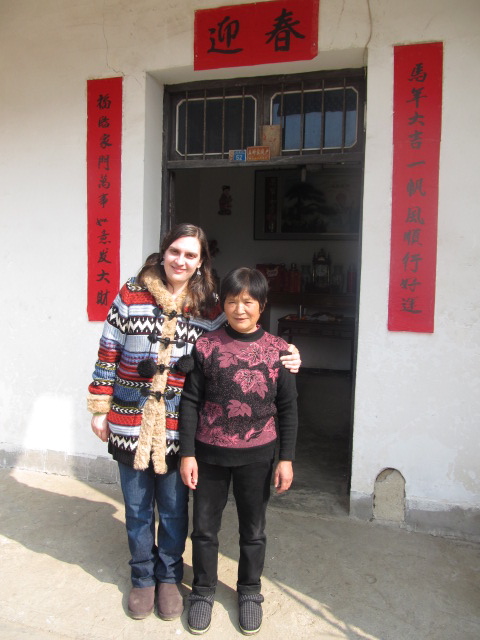
But most of all, we felt so loved and appreciated! Here, John poses with an aunt and cousin — this was the aunt who couldn’t stop doting on both of us. It’s so nice to be back home.

On Invitations and the Dinner We Never Expected

IMG_1979“Time for dinner! Go to big uncle’s home!”

When my mother-in-law shouted the news up the stairwell a few weeks ago, I was dumbfounded. It was 4:30pm and we never ate dinner until at least 5:30pm. But more importantly, nobody told John and me we were having dinner out this evening. And we weren’t the only ones surprised, as we learned when we met my mother-in-law downstairs.

“They’ve already made dinner,” she said. She was wearing her favorite blue-and-yellow felt apron, evidence that she had probably been working on dinner for us when someone from big uncle’s home came over with the news. “It’s bad not to go. Just go over there and eat a little.”

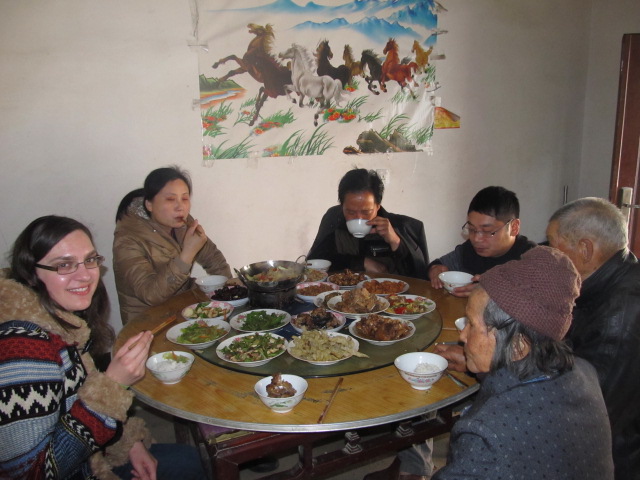
A little, however, was not what big uncle had in mind — as John and I discovered when we walked into the dining room. Eight people were already huddled around a dining room table filled with more than 10 different dishes, a delicious assortment of stir-fried meats and vegetables that would have rivaled some of the most lavish banquets I’ve ever attended in China.

I couldn’t help thinking how my family back in the US would never pull off such a huge spread at the last minute. People would need days if not weeks of notice, and even then some people might not be available. Yet here, it just happened one afternoon, all because big uncle wanted to share his generosity with us.

Even though I still equate the word “invitation” with advance notification, I’m also learning to understand that invitations don’t always work like that — especially out here in my husband’s village. Sometimes it’s not an easy thing to accept when, like me, you’re so used to setting your own schedule and being told well in advance of upcoming dinners, meetings or other events. But there’s also beauty in living spontaneously, in not always having every moment and every second planned out…especially when, like big uncle’s dinner, it turns out to be a tasty surprise.

Why “white loser laowai & Chinese women” is a thorny topic

2198623502_801e329120
(photo by Daniel R. Blume via Flickr.com)

Yesterday, I received an e-mail from a friend who urged me to read an essay by Virginia Proud of Tales of Expatria. She dubbed the essay “controversial” but then again, as she put it “blogs thrive on controversy” and encouraged me to introduce the topic. Well, she said the magic word — “controversy” — so of course, I immediately clicked on the link and dove into the first paragraph.

But when I finished the essay, a feeling of dread settled over me…which had nothing to do with Virginia’s essay per se.

First off, let me say that I thoroughly enjoyed the essay. The writing was exceptional — humorous, thoughtful and self-reflective — and you could clearly tell that Virginia has, as you might say, “been around the global block” in her own experiences as an expat.

No, my dread stemmed from the subject itself, which I’ll let Virginia describe for you:

If you spend enough time in Expatria you’ll meet this chap, we affectionately call him the LBH. The Loser Back Home. Best described as someone you wouldn’t normally touch with a barge pole, but transplanted to foreign soil, is suddenly hot property, especially with attractive, young local women….

The LBH has always been with us and probably always will be. I remember my first LBH encounters as a teenager, when my family lived in Hong Kong. I couldn’t understand these corpulent old buggers with their gorgeous Chinese wives, until my mother pointed out their diamonds. It was the glory days of British rule and massive salaries and no one cared if the men were boring, ugly, stupid, or even mean. But then again, money and power has always been enough to make men wildly attractive, even back home….

Yes, the LBH — or, as people call him here in China, the Loser Laowai. Or for the purposes of this blog, the white Loser Laowai who only dates local Chinese women.

To me, this topic feels like the “skeleton in the closet” in the realm of cross-cultural and interracial dating in China — a topic so icky I’ve wanted to stay far, far away from it. And in the few times I’ve gathered the gumption to attempt a blog post on it in the past, invariably I abandoned my drafts and turned my attention to other topics.

Yet Virginia was able to produce a splendid essay that, to an extent, dealt with this topic, and I can’t help but wonder if it’s a matter of perspective. After all, Virginia, who is originally from Australia, currently calls Budapest, Hungary home and referred to this LBH in a more universal sense. She doesn’t have to address the proverbial “panda in the room” that immediately comes to mind once you move the topic to China — yellow fever. And for the purposes of this blog post, I’m referring to those white Laowai men who prefer Asians and potentially have highly racialized notions about Asian women.

See what I mean? Loaded stuff.

In my opinion the majority of white men with Chinese women do NOT fall into this “Loser Laowai” category. But still, we all know there are white loser laowai out there hooking up with Chinese women. And like the yellow fever phenomenon, their existence does have ramifications for couples of white men and Chinese women around the world. As Christine Tan of Shanghai Shiok wrote:

The problem, to me, is that shallow, superficial relationships between white men and Asian women vastly outnumber the same sort of suspicious pairings between Asian men and white women. And sadly, these types of WM/AF pairings are the most visible ones, because they often create spectacles of themselves….They are the Douchebags, the Jerks, and the Ambitious who think dating a white man or Asian woman betters them, financially or socially….those are the types of WM/AF pairings we remember, because they were too in-your-face to forget.

Which unfortunately could lead to the wrong assumptions when you see a white man and an Chinese woman walking down the street. Again, as Christine wrote:

I know that the white male/Asian female pairing has numerous negative associations attached to it. Words that immediately come to mind: Opportunistic. Gold-digger. Fetish. Sexualization. White-worship. Money. Exploitation. Lust. Pinkerton Syndrome. ‘Sarong Party Girl’ behavior was something I was warned against growing up.

I think a lot about why those associations exist. There are poorer women in China and the rest of Asia who view a foreign man as a meal ticket. There are Asian women who only date white men because most of the men they meet are white, and/or they find them more culturally/sexually appealing. There are white men who only date Asian women because of the society they live in — where the women are mostly Asian — or yes, they do find Asian women more culturally/sexually appealing. There are white men who come to Asia to hook up with local women in certain seedier places. There are local women who go to these places to hook up with the white men who come to Asia.

But then there are cases like mine — a mutual friend introduces a man and a woman and they get along, they like each other, they both like eating, and books, and the Barbie store. And oh, by the way, they happen to be white and Asian, respectively.

Enough said.

There’s another side to this topic of white Loser Laowai who only date Chinese women — when the men justify their dating choices by insulting the women back home, which Virginia alludes to in her essay. I’ve addressed this before and find it abhorrent that anyone would defend their relationship in such a hateful way. But it happens, most often in anonymous online forums. And because the expat gender balance is so skewed — far more expat men, who are overwhelming white, than women — well, let’s say if you’re a woman like me, you need a lot of courage to speak up about it in public.

Additionally, let’s not forget what Virginia mentioned near the end of the post: “And the fall out of all this, of course, lands on the head of the single expat women, who need to keep adjusting their ideas of ‘attractive’ as their dating pool starts to feel more like a puddle.” Or in other words, it’s the China Daily article published a few years back titled Foreign women label [China] a dating wasteland. This is also thorny territory…because then the question comes, why aren’t they interested in dating Chinese men? Some women have understandable reservations (for example, they’re not interested in marriage or getting too serious in a relationship) but others exclude locals for completely superficial reasons, often based on stereotypes.

Ugh.

In the end, I’ll never be able to write something like Virginia, not with all the baggage that accompanies this idea of white Laowai Losers with Chinese women. Still, I believe the subject deserves a conclusion. So, as someone who writes about relationships, perhaps it’s fitting that I sum this up with a phrase used on dating sites around the world: it’s complicated.

P.S.: For further reading on this “thorny topic”, I recommend They’re So Beautiful, the companion website to the compelling documentary Seeking Asian Female.

How rare are Chinese men/Western women? Enough to be “nonsense”

One villager in John's hometown in China couldn't believe we were married
One villager in John’s hometown in China couldn’t believe we were married

As the wife of a Chinese man, I’m used to attracting attention when I’m out and about in China. The stares, the questions about where I’m from, the way cars slow down to gawk at us — it’s all par for the course.

So during one of our evening walks in the village, I wasn’t surprised when an elderly woman walking in the opposite direction suddenly began asking my husband questions.

“Where are you from?” she inquired in the local dialect.

John mentioned the name of his village, nestled right in the heart of the valley.

“Where is she from?”

“America. She’s my wife.”

The woman grimaced at him in disbelief. “That’s nonsense!” Yes, she refused to believe that someone from John’s little mountain village could have possibly married a woman from America. And she walked away, not to be bamboozled by us.

When John translated the whole conversation for me (I’m still working on my local dialect) I nearly doubled over in laughter. “Are you kidding? She thought you were lying about me?”

Hiking the mountains in John’s hometown

It was the first time anyone in China doubted the authenticity of our relationship. But as strange as it sounded, I could understand why. In John’s hometown, it’s not uncommon to meet people who have spent their entire lives, knowing little else beyond these mountains thick with hardy bamboo and fragrant Chinese red pines, and the rice paddies and terraced gardens sculpted into the hillsides. Who could imagine that one of their hometown sons would meet and marry a foreigner, let alone spend years in her country? As rare as it is to find Chinese men and Western women together in China’s urban playgrounds, out here in the Zhejiang countryside such a coupling sounds impossible and even ridiculous.

The Chinese government advises foreigners to carry their passports with them at all times in China. I have to wonder, should I also carry around my Chinese marriage license so I’m prepared for the next time someone calls my marriage “nonsense”?

My Chinese Grandma, Frying Up Rice Noodles — And Lots of Love

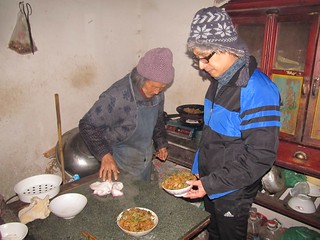
11776026213_2e785c1720_nThe other day, John’s grandma invited the two us over all of a sudden for dinner at her house. When I say “all of a sudden”, I mean that she interrupted us in the midst of preparing handmade dumplings and told John and me we were dining on fried rice noodles instead.

As much as I love fried rice noodles, her invitation arrived on an evening when I had been craving the very handmade dumplings we were preparing with John’s father. But what could we do? Here was grandma, who had been hospitalized for two months in fall of 2013, standing at the door and asking us to dine on the noodles she had already finished preparing. It was the kind of situation with “just go with it” written all over it. Besides, my mother-in-law said we only had to eat a little, just to be polite. So I hid my dumpling disappointment behind a smile, hooked my arm in grandma’s arm, and strolled out the door with John beside us.

Once at grandma’s home, she immediately plunked heaping bowls of rice noodles in front of us — each bowl easily three times larger than her own. When she said dinner, boy did she mean it.

“Aiya, too much!” John said in protest, which I repeated in turn. What happened to just eat a “little bit”, like my mother-in-law said?

“Not too much!” Grandma said in a gruff voice, followed by nagging us to “Eat, eat!” as if we had to finish our bowls of rice…or else.
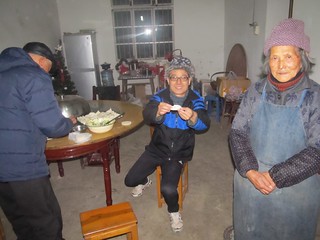
So we tucked into the rice noodles with our chopsticks and discovered that, if this was indeed a “responsibility”, it was the most delicious kind. I couldn’t help savoring the baby bok choy perfectly seasoned with garlic and dark aged soy sauce. It wasn’t too salty or overdone, and arguably it was the finest rice noodles she had ever fried up for us. So as I cleared the last of the noodles in my bowl, I couldn’t help but tell her, “So delicious!”

For grandma, that wasn’t praise but rather a cue to provide seconds. Before we could utter “bu yao!” grandma was on her feet, trying to shovel more rice noodles into our bowls. We each shielded the bowls with our hands, pleading to her not to add more. And when that failed, we simply rose from our stools and headed for the door itself.

Grandma chased after us with mandarin oranges, trying to press the fruits into our hands with far more strength than you might expect from a recently hospitalized woman over 80. But we pushed them back into her hands and then trotted outside, saying “Save them for next visit!”

Grandma, interrupting our “regularly scheduled” dumplings for a spot of fried rice noodles at her place.

“You know, she shouldn’t have made us those rice noodles,” I said to John on the way back home, shaking my head. “She’s still recovering from her heart condition.”

John shrugged and smiled. “That’s how she shows her love for us.” His words echoed what my mother-in-law would say after we returned home: “She shouldn’t do it, but she wants to do it because she likes you.” You could say the same about the black striped polyester pants I never asked her to buy for me (and which I could barely squeeze into) or the hulking bag of puffed rice sweets she delivered to us one afternoon.

Grandma has never hugged or kissed me, nor told me she loves me. But these days — and especially after this impromptu dinner — I’ve never felt closer to her.