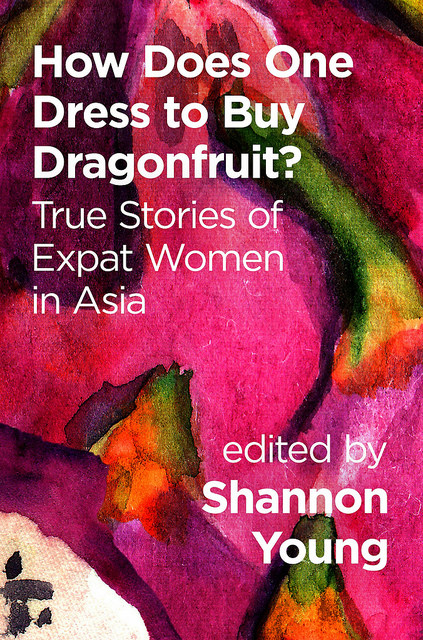
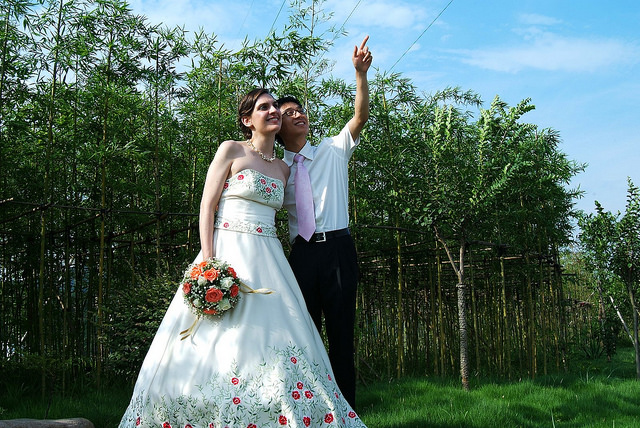
My personal essay is titled “Huangshan Honeymoon” and centers on a rather unusual kind of vacation for newlyweds in China — one where my husband’s father-in-law came along for the ride! Why did we bring his father on the trip? And, more importantly, how did this journey change my relationship with his father, a man who once counseled his son not to date foreign women? Find out when you read “Huangshan Honeymoon” in this forthcoming anthology.
Kaitlin Solimine, author of the forthcoming novel Empire of Glass and a contributor to Unsavory Elements (her essay, “Water for Li-Ming”, was one of the standouts in the collection)
Christine Tan, whose now-defunct blog Shanghai Shiok was one of my all-time favorite reads on cross-cultural relationships and interracial dating between Asians and non-Asians
Edna Zhou, who wrote for Shanghaiist and is best known for her blog Expat Edna, which chronicles her globe-trotting adventures
“How Does One Dress to Buy Dragonfruit is an eclectic, soulful collection of stories by badass women who have adventured far out of their comfort zones. Full of candid observations about travel, language, food, self and other, it’s a book for anyone who has ever felt peripheral, upside down, culturally shocked or inspired. In other words, a book for all of us.”
– Rachel DeWoskin, author of Foreign Babes in Beijing, Repeat After Me, Big Girl Small, and Blind.
“A unique and inspiring collection of voices that calls up all the wonder, fascination, challenges, disorientation, and delights faced by women expats throughout Asia. I was moved by the breadth of experiences included in this anthology at the same time that I fell in love with one thread running throughout: how the expatriate journey takes us away from ourselves and then ultimately delivers us back, richer, wiser, and even more aware of how our own identities fit within our wide, wide world.”
– Tracy Slater, author of The Good Shufu: A Wife in Search of a Life Between East and West.
There’s one topic in the foreign blogosphere in China and Asia that I just don’t understand. Why do people make such a big deal about Asian men carrying certain bags?
For those of you who missed the hoopla, the complaints fall into two different camps:
#1. Why do Asian men carry their girlfriends’ or wives’ purses? It makes them look effeminate, unmanly and/or “whipped”. #2. Why do Asian men carry “manbags” or “man-purses”? It makes them look effeminate, unmanly and/or “whipped”.
Note that while the two complaints are slightly different, the conclusion is essentially the same. In other words, if a guy does one or the other (or, god forbid, both!), he is forever exiled out of the kingdom of masculinity.
I’ve lived a total of almost six years in China and have seen my share of Chinese men carrying their girlfriends’ or wives’ purses — or sporting what some might label as a “manbag” of their own. But I’ve also experienced them on a personal level through my marriage to a Chinese man.
Whenever my husband and I go out shopping, he always offers to carry my shopping bags…and, at times, he might even hold my own bag or purse for me. I never thought of him as “less than a man” just because he did that. To me, it just seemed like gentlemanly behavior — like opening a door or pulling out your seat for you, a simple way to show he cares for you. And besides, whenever we shop, I’m the one who’s usually rifling through the clearance racks and dashing in and out of the fitting rooms more than him, and I’m the one with the list of stores to hit and things to buy. Honestly, it’s nice to have someone to take care of the bags so my hands are free to sift through the shelves and racks without worrying about forgetting or losing the bags. (I am, after all, incredibly absent minded!)
As for so-called “manbags”, my husband’s oldest brother just bought him a brown leather bag as a gift. It was square and had a sturdy shoulder strap. My husband ultimately wasn’t interested in it (he’s prefers backpacks or computer bags) but neither of us judged his brother for the gift.
What I’ve learned from my experiences is this — there is no such thing as a universal definition of what it means to be a man. Different countries and cultures have different ideas of what men should and should not do. So we shouldn’t automatically assume that our country’s definition of “how to be a man” applies everywhere around the world.
We shouldn’t assume that when an Asian man carries a woman’s bag or purse for her, or carries what some label as a “manbag”, he’s somehow not a man. Maybe it’s not something you or the men in your life would do, but that doesn’t mean it’s wrong. So why should anyone make a big deal about it?
Personally, I love the fact that, here in China, men can carry all kinds of bags without thinking, “Will this compromise my masculinity?” Sadly, that’s not true in the US, my home country. For all of the talk about freedom and being yourself in the US, our definition of masculinity is frighteningly restrictive.
Ultimately, the measure of a man is not in what bag he has under his arm or on his shoulder. It’s about who he is as a person. And you’ll never know that from a casual glance on the street.
For everyone who still insists that carrying a woman’s bag/bags for her or toting a so-called “manbag” undermines your manhood, let me ask you this. Who told you so? Where is it written that “Thou shalt not carry thy woman’s bag/bags or carry a so-called ‘manbag’”? And why is it okay for men to carry certain bags, like laptop bags or backpacks, but not others?
While a cold, misty rain hung over Hangzhou that February morning, in my mind there was nothing but sunshine. A feeling of happiness surrounded me as John and I left that building, a jubilant couple bounding down the street hand-in-hand.
“How could it have been so easy?” I wondered.
We recalled the smiles from the woman at the front desk, who helped us rearrange our materials. We remembered the uniformed officer who told my husband how to write up an invitation letter, word by word. And when we left, both of them offered us a warm farewell, with the officer even complimenting my husband on how outstanding he was.
To think that we had just left Hangzhou’s Public Security Bureau (PSB), and felt as if we were VIPs once John introduced me as his foreign wife needing to get a residency permit.
And what about those calls John made in advance to the PSB? The moment John mentioned he was inquiring about residency permits for his foreign wife, that person on the other line transformed instantaneously. They became a friendly and helpful voice on the phone, as if John had just dialed customer service.
All it took was one magic word: yangxifu.
In Chinese, yangxifu (洋媳妇) means foreign daughter-in-law. But people here — including my husband — commonly use the term to refer to any foreign woman (like me) married to a Chinese man. And sometimes it seems like the very mention of a yangxifu can light up some of the toughest people you’ll encounter in China. Meanwhile, my husband’s friends have called him a “legend” from the time he married me, and his cousin even wanted us to find him a yangxifu.
And if you turn to the Internet, there’s even more evidence of the popularity of yangxifu. For example, Baidu has two entire forums devoted to discussing yangxifu: Yangxifu Ba (洋媳妇吧), with over 5,000 followers and over 180,000 threads, and Waiguoxifu Ba (外国媳妇吧), with over 1,500 followers and over 40,000 threads. A Baidu forum devoted to yangnǚxu (洋女婿, foreign sons-in-law), however, has only 3 followers and 42 threads.
To many Chinese, having a foreign girlfriend or wife is the best bling money can’t buy. Like cruising in a BMW or popping open a bottle of Moet (part of the worship of all things foreign in China, chóngyángmèiwài or 崇洋媚外) , we suggest he’s truly “made it.”
With a foreign woman by his side, that Chinese man casts a powerful aura around the world in China. People crown him as lihai (厉害, awesome), gaping in awe at his good fortune — and his social status soars.
My husband also believes that China’s love of yangxifu has something to do with how his country views marriage. The traditional view is that when a woman marries, she leaves her family to join his for good. So from this perspective, while a yangnǚxu will theoretically take his Chinese wife away from China to his foreign family, a yangxifu marries into a family in China (and thus, it’s a “gain” for China). Yangxifu are also much less common than yangnǚxu (as I’ve written before and a reader recently confirmed during a trip to Hong Kong), making us more of a novelty in China.
But really, when I think about it, the real wonder of being a yangxifu is not in enjoying a little VIP treatment from the PSB or making my husband a “legend” among his friends. To think that I could travel thousands of miles to from the US to China — a country I barely knew most of my life — and find a wonderful husband here, living happily ever after in his rural village. Now that’s magical!
It’s one thing to see history on display behind a museum glass and another to experience it right beneath the soles of your hiking shoes.
My husband has always told me China is a magical place. And among the “magical” things about his native country is, naturally, its amazing 5,000 years of history. Over the years that I’ve been together with John — first as his girlfriend, then as his wife — I’ve heard him gush with pride about how China is one of the world’s oldest civilizations. And why wouldn’t he? If I came from a country with a continuous culture that stretched back thousands of years, I’d be proud of it too.
We’re both history and culture buffs, so naturally we’ve visited lots of museums on our travels across China, often in awe of the beauty and craftmanship of artifacts that are thousands of years old.
But I never believed we would ever find a piece of China’s history right in John’s humble little village in the countryside.
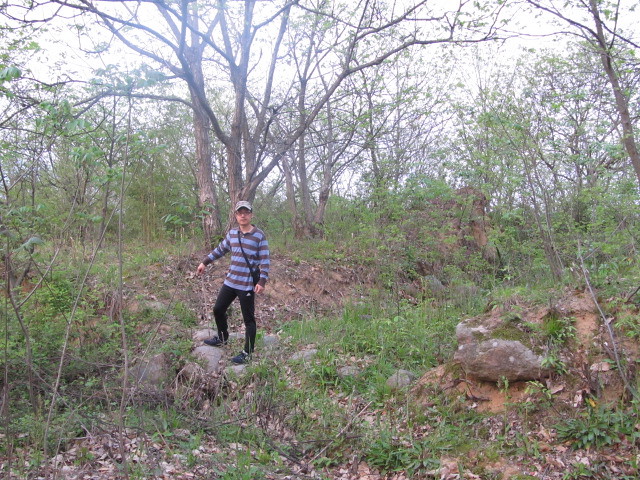
While exploring a ridge trail that cut across patches of bracken ferns, bamboo and satintail grasses on a hilltop, we suddenly came upon a clearing on the hilltop — and a historical marker carved into a slab of marble. That landmark designated the fertile ground beneath our feet the site of an ancient civilization that flourished 4,000 to 5,000 years ago.
That’s right. Four to five thousand years ago!
I couldn’t believe we found this on our hike! I surveyed the clearing around us, covered in mugwort, clover and other small weeds. Nothing about the geography could have told us we would stumble upon an ancient site on this ridgetop. And then I wondered, what was it like back then? How did these people live? Were any of the stones around the area evidence of their civilization as well?
Stones scattered around the site. Just coincidence or were they left behind by the ancient civilization?
But the other side of the marker provided no introduction or description for the culture, beyond that it was an ancient site dated to China’s Neolithic age.
I also wondered about what it meant for John and his past. Were these people among John’s ancestors? The idea thrilled me for a moment, even if we had no way to confirm it.
Later, when my husband looked up the site online, we learned that archaeologists had discovered a cache of broken pieces of ancient pottery at the site, including the legs of ding vessels, and suggested it was a part of Zhejiang’s Liangzhu culture.
When I saw an online photograph of the site’s scattered pottery fragments, each like a lost puzzle piece, I knew the find would only stand as footnote in China’s ancient history. Since the archaeologists already unearthed the major artifacts on the site, there wasn’t much to see there, apart from the landmark the government left behind. Meanwhile, friends and family in the village didn’t even know about it, and nothing about that hillside nor its trail even suggested that a fantastic find lay hidden beneath the trees and bushes.
Still, it felt magical all the same to know that a small part of China’s ancient history sat right in our backyard.
The hillside where we found the landmark. It looked so ordinary from afar!
Have you ever stumbled upon a historical or ancient site?
As a child growing up in Cleveland, Ohio, USA, wild edible plants — especially those we foraged for ourselves — were never on the menu. Sure, we picked blackberries on late summer hikes and a few times I tried harvesting Staghorn sumac berries to make my own tea. But otherwise, the food on our dinner table came straight out of a supermarket.
So it’s hard to believe that, these days, wild edible plants comprise at least half or more of the stir-fried dishes that leave my mother-in-law’s kitchen here in China. Even stranger to me, I’ve actually helped forage for some of these wild edible plants. To think that something I harvested actually became dinner!
Here are three amazing wild edible plants here in Zhejiang, China that have enchanted me and my Chinese family this Spring.
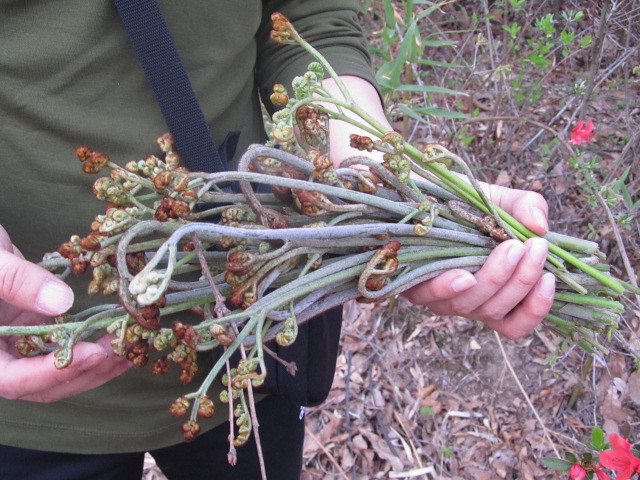
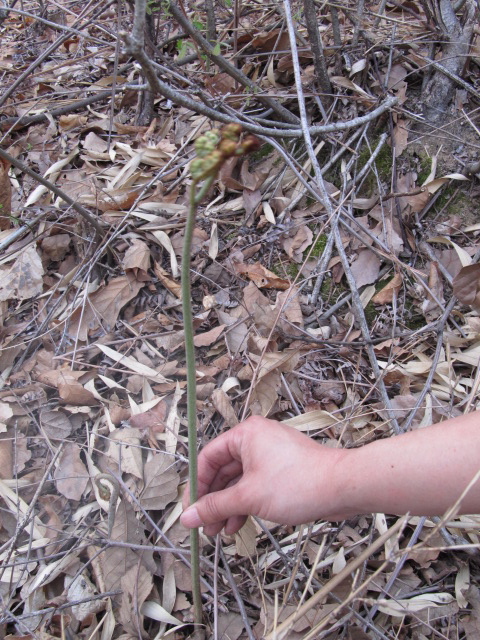
Fiddlehead ferns
These tender fronds have become a Spring favorite in farmers markets in the US (and among foragers who know and love them). But out here in rural Zhejiang, people have gathered fiddlehead ferns in the mountains for generations. The local variety is the bracken fern and the tender shoots spring up over the mountains in our village.
Some claim bracken fern is carcinogenic, though there’s really no absolute evidence proving that the consumption of bracken fern fiddleheads will definitely give you cancer. When I posed this “do bracken fern fiddleheads cause cancer?” question to my mother-in-law, she dismissed it as unscientific and ridiculous. “People here have been eating this for generations, even grandma, and they’re not getting cancer.” Well, even if you disagree, remember that some popular foods (red meat and hot dogs, anyone?) are considered carcinogenic. Personally, I think I’ll take the risk.
We only pick the most tender fiddleheads growing in the mountains, with the fronds still curled up. These days, it’s not uncommon for my husband and me to return from a hike through the hills with a huge handful of fresh fiddleheads. I never thought a simple hike could yield so many delicious things! 😉
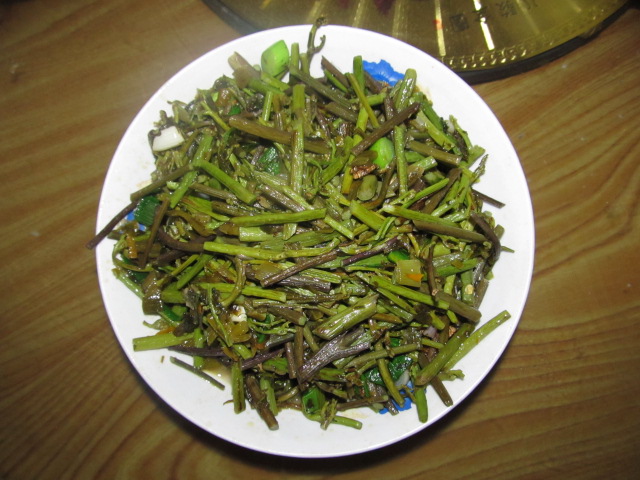
My mother-in-law washes them thoroughly in her kitchen and then blanches them. Some claim the process reduces the carcinogens in the fern, though my mother-in-law says this simply eliminates the unpleasant sour, “numbing” flavor of the fiddleheads. Finally, she chops them into matchstick-sized pieces and stir-fries them with fragrant garlic, ginger, pickled hot peppers, Shaoxing wine, and salt.
So tasty, you’ll forget all about the alleged cancer claims. Promise!
Spring bamboo shoots
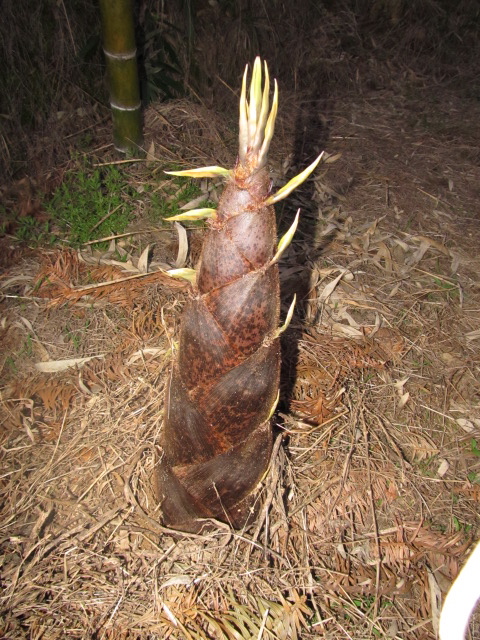
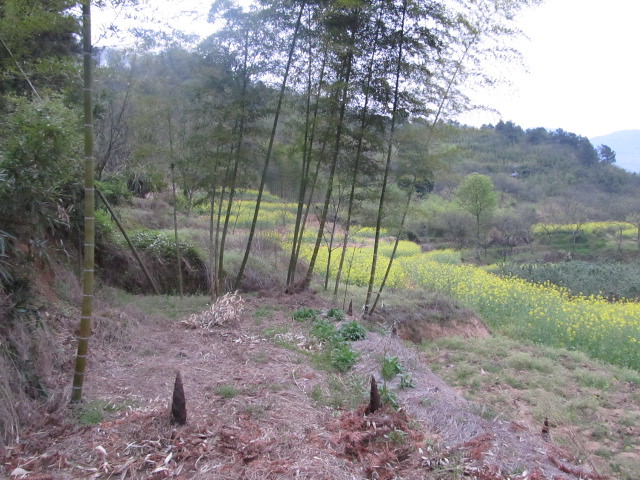
Spring maosun found in the wild
The Chinese saying “like spring bamboo shoots after rain” (yǔhòuchūnsǔn, 雨后春笋) refers to how quickly things can suddenly happen or come up. And trust me, after the rains in late February and March settled over our region of Zhejiang, before I knew it spring bamboo shoots were sprouting all over the hills.
Notice the bamboo shoots sprouting up from the ground?
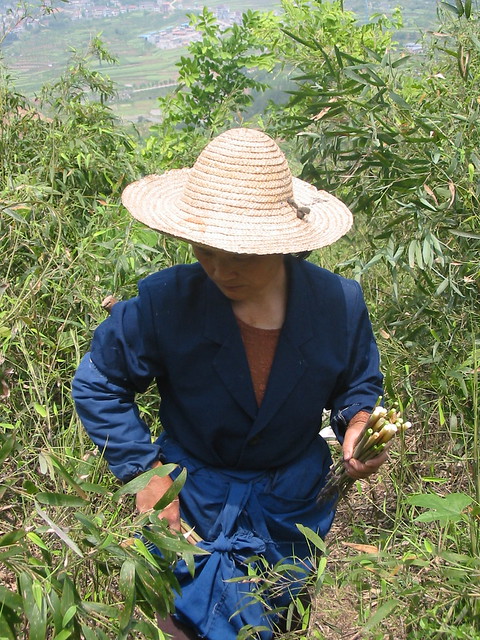
Right now, we’re seeing two varieties in the mountains. One is moso bamboo shoots or maosun (máosǔn, 毛笋); this is the largest variety of bamboo you usually see in the area. If you’ve ever watched any Chinese films that feature bamboo forests, chances are they’re moso bamboo. The other, well, I have no idea what it’s called in English — but it’s small and grows wild all across the mountains, so in the local language they call it “mountain bamboo shoots” or shansun (shānsǔn, 山笋). To harvest either variety, you simply dig up the shoots from the ground.
My mother-in-law, harvesting shansun from the mountains.
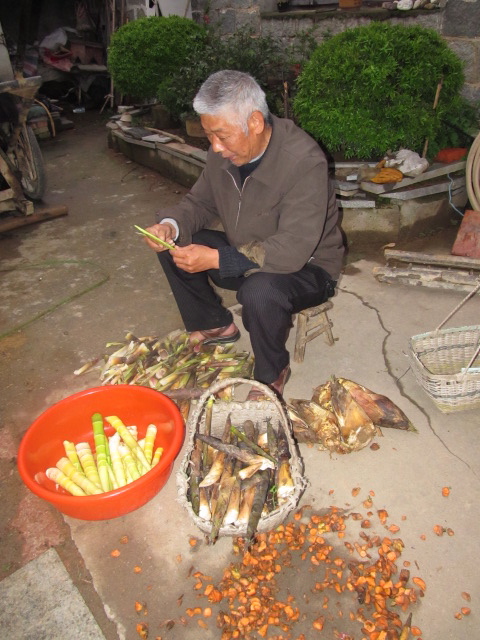
Whether maosun or shansun, you must first peel away the hard husk of the bamboo shoots to reveal the tender and edible portion.
Peeling the bamboo shoots to reveal the tender and edible part of the shoots.
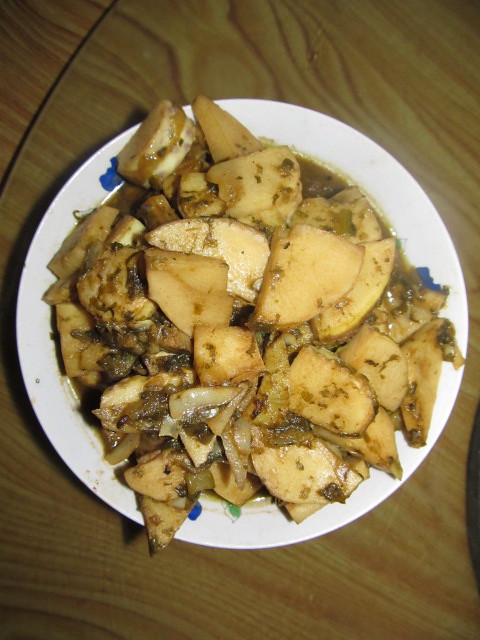
These days, when it comes to wild bamboo, we’ve mainly seen wild maosun at the table. My mother-in-law usually prepares it one of two ways. For the vegetarians in the family (i.e., me!), she stir-fries it with lots of rapeseed oil, ginger, sugar, Shaoxing wine, soy sauce, pickled greens, and salt to taste.
Maosun with pickled greens
For the carnivores, she stews the maosun along with fatty pork, ginger, sugar, Shaoxing wine and salt to taste.
Maosun with pork
If you’ve only known bamboo through the lackluster canned versions sold in the West, all you need is one taste some wild bamboo shoots and I promise, you’ll never buy another can again!
Mugwort (Qingmingcao)
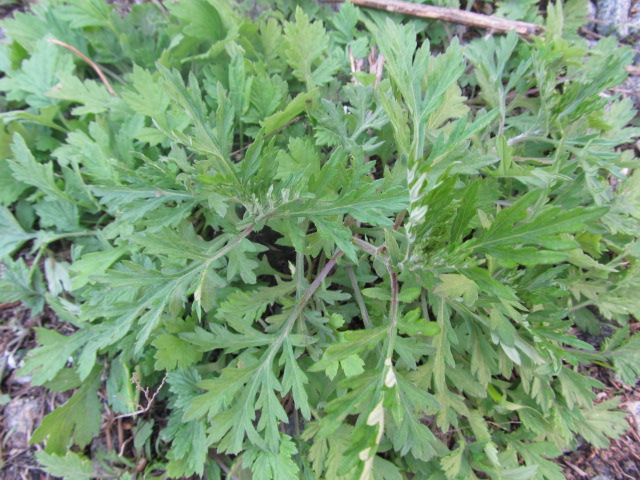
This past Saturday (April 5) we just celebrated Qingming Jie (qīngmíngjié, 清明节) or the Tomb-Sweeping Festival where people visit their ancestors graves and remember family and love ones who have passed away. And here in rural Zhejiang Province, there’s no wild plant more beloved during this holiday than the aromatic mugwort, also known as qingmingcao.
It’s hard to believe just how common this variety of mugwort is around here. In fact, it grows like a weed everywhere, even in the dusty pebble lanes that criss-cross the fields in the village. For nearly two weeks, I hiked these lanes, never realizing all that time that mugwort was right under my shoes!
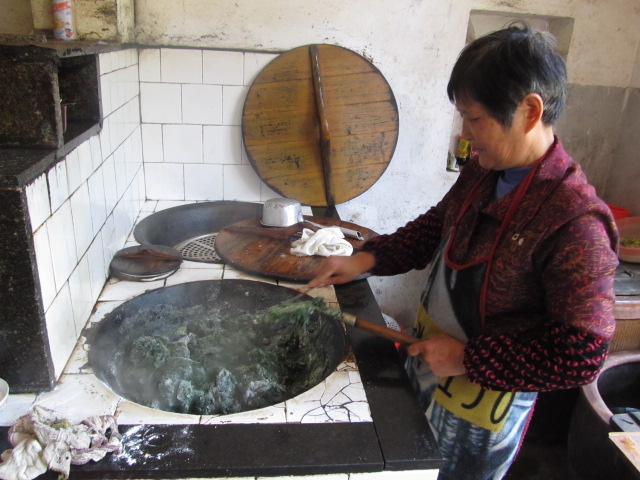
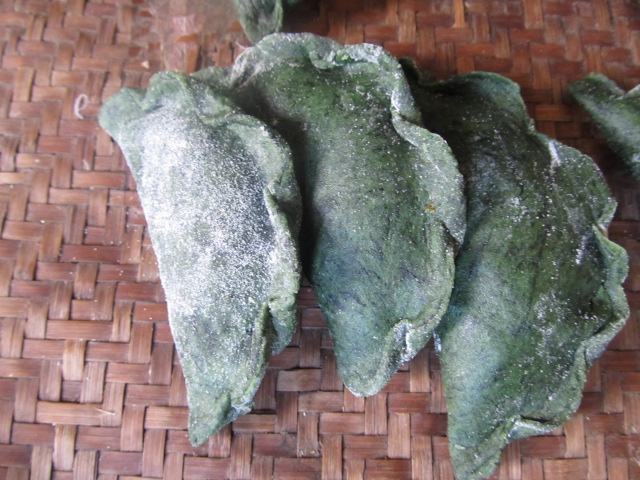
My mother-in-law gathers wild mugwort from the hills well in advance of the holiday, because this lowly little wild green undergoes an extraordinary transformation in the kitchen. After cleaning it, she blanches it and then crushes and grinds it into a paste, infusing the kitchen with an aroma reminiscent of lavender. The paste then goes into a warm wok along with glutinous rice flour, creating a dark green dough.
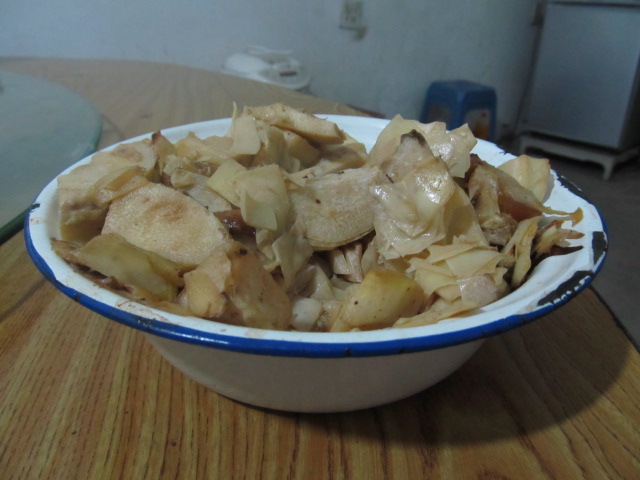
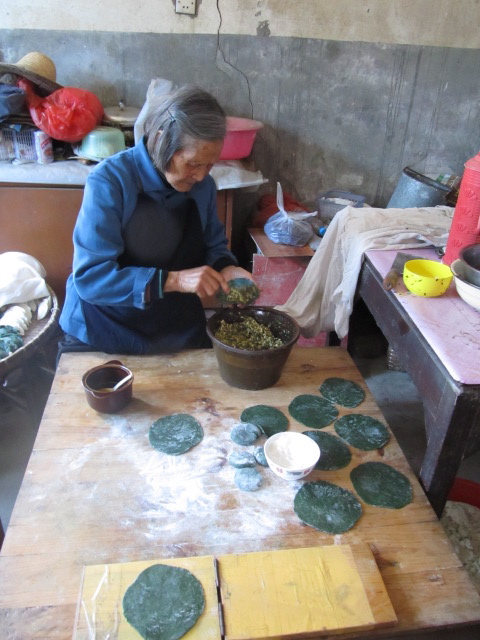
That dough then gets kneaded and partitioned into small rounds, which after being flattened, become the wrappers for qingming turnovers (stuffed with chopped up bamboo shoots, tofu, and salted greens).
Making the qingming turnovers (flattening the rounds, then filling them with vegetable filling).The finished qingming turnover up close.
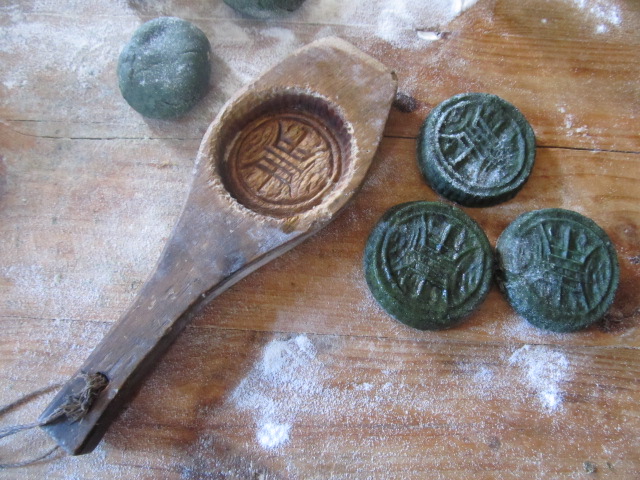
For a sweet version, my mother-in-law adds sugar to taste to the green dough and then shapes the rounds in a small mold made especially for Qingming Jie.
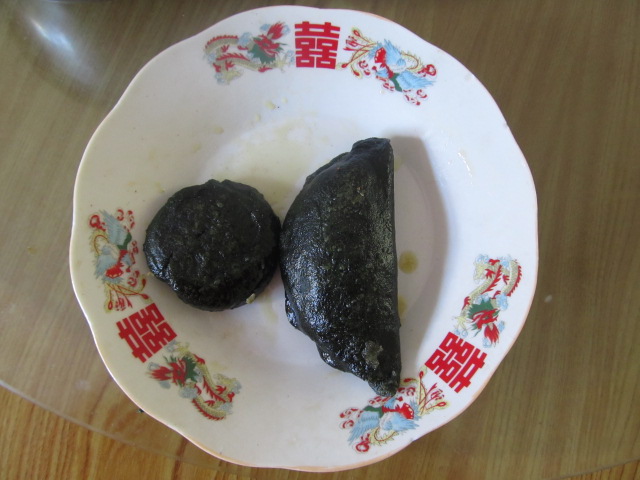
Finally, she steams the turnovers and sweet rounds in her wok until they’re cooked through and turn a deeper shade of green.
Here’s the final product (one turnover, one sweet round) — slightly fragrant, sticky, and oh-so scrumptious. Remembering your ancestors never tasted so good!
Have you ever foraged for wild edible plants? What are your Spring favorites?
My name is Jocelyn Eikenburg and I grew up in Cleveland, Ohio, USA. This summer, I’ll be celebrating 10 years of marriage with my husband John, who is a Chinese national.
Sure, we’ve weathered our share of misunderstandings over the years and had to learn to adapt to each other, both culturally and personally. But I still love him just as much as the day when I said “Wo yuanyi!” (I do) to him in the Shanghai Marriage Registry Office.
And over the years, I’ve discovered a lot to cherish about our relationship.
I’ve been busy behind the scenes this week, including getting interviewed by Chinese-Tools.com! In the interview, which just went up Wednesday evening, I discuss everything from dating advice to what brought me to China and what I’ve learned from blogging.
Intrigued? Here’s an excerpt from the interview, where I’m talking about intercultural relationships:
For example, growing up in the US, I was socialized in a home where my parents openly showed their affection for each other and us through hugging and kissing and saying things like “I love you.” My husband grew up in a home where public displays of affection just aren’t a part of life; nobody hugs or kisses each other, or even says “I love you!” It could be very easy for someone to make a conclusion about my husband like, “Oh, he’s not that romantic because he doesn’t like to kiss in public.” And that conclusion would be incredibly wrong! In fact, my husband is super-romantic, often in the most surprising ways.
I was born and raised in a very white and very average suburb of Cleveland, Ohio in the United States. Yet now, I live in the countryside of Zhejiang, China with my Chinese husband and his family, where bamboo and tea bushes grow wild in the mountains, the chickens are always free range, dog leashes are optional, and central heating doesn’t exist.
Nothing in my life before prepared me for this one — and to be sure, the first time I came here I never imagined I would ever feel comfortable in this home or area. But it’s amazing how you can adapt and learn in a new environment. Over time, I’ve found myself feeling extremely at home in this home and this village. And in the process, I’ve experienced and learned things that, when I think about the woman I once was back in the US, really surprise me at times.
1. When you live without central heating, there are ingenious ways to stay warm
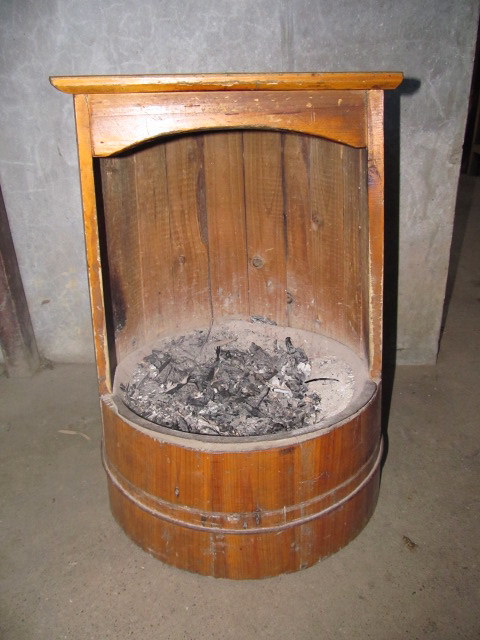
No heating in the dining room? No problem! Meet the huǒtǒng (火桶). You just add warm coals to the receptacle in the bottom, then sit and enjoy the warmth underneath while you eat. This is how I survived many a dinner in the wintertime (when I wasn’t bundled under the covers, with the electric blanket cranked up!).
One of the huotongs in our home is even a family heirloom, gifted to my in-laws more than 40 years ago for their wedding. And according to my mother-in-law, it still warms your behind just as well as it did the first time they used it.
2. There’s nothing like the “sunshine scent” of freshly sunned laundry
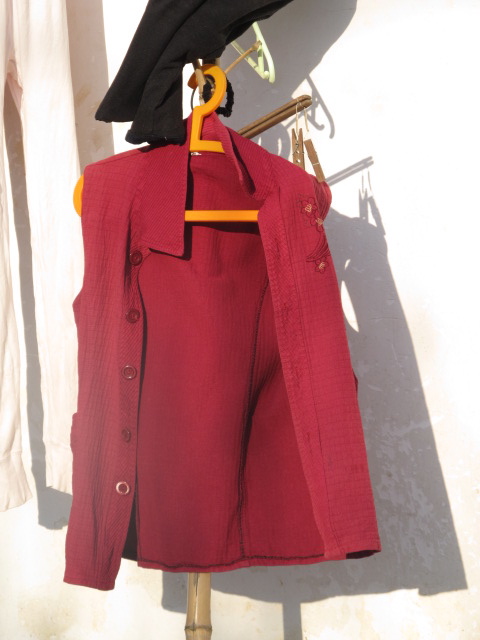
Growing up, my family and our neighbors never used laundry lines to dry clothing, robbing me of the chance to discover one of the great wonders of sunshine — that alluring “sunshine scent” after sunning clothes for an entire day. The sun-dried laundry smells especially fragrant where I live, thanks to the absence of smog and plenty of glorious blue sky afternoons with lots of fresh air.
If you’ve never experienced the “sunshine scent” from a sheet or towel or shirt left to sun for a golden afternoon, well, you’re missing out on one of life’s wonders.
3. Fire-powered woks truly rock
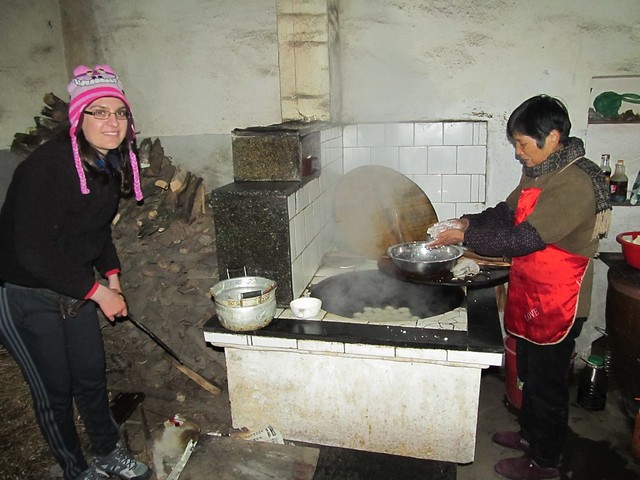
I’ll admit, the first time I peered into my mother-in-law’s kitchen and found a pile of wood stacked up behind her wok, a part of me felt like I was transported to another era. People still use wood to fire their woks?
But soon I discovered the wonders of a fire-powered wok — namely, that it makes some amazing dishes.
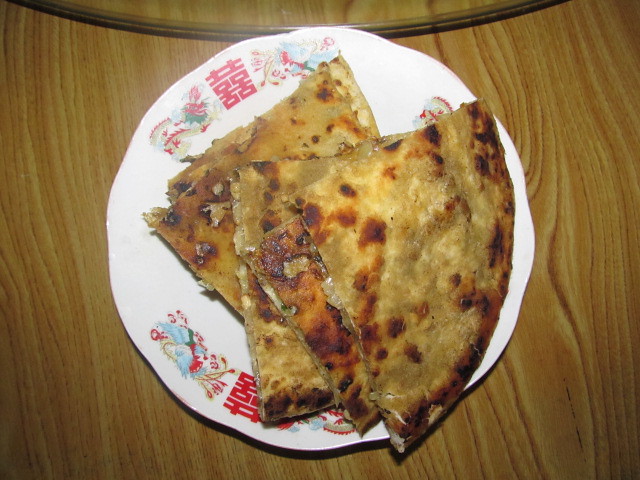
I still can’t get over the jianbing my mother-in-law once made. The flavor and even texture of it was so reminiscent of tandoori-style Indian flatbreads, and even more delicious with the vegetables tucked inside. You could never get the same satisfying taste making the flatbread in a wok heated by gas or even electricity.
My mother-in-law’s jianbing fresh from her fire-powered wok — so delicious!
Maybe it’s no wonder, then, that when I imagine my future dream home, I envision a fire-powered oven or wok somewhere in the kitchen!
4. How to clean up chicken droppings
My mother-in-law raises a flock of free-range chickens. So from time to time, they meander into the house to forage for scraps and leave behind a little something we’d rather not step on. Well, when I spotted one of these offending “presents” near the front door, I instinctively sought out the remedy my mother-in-law uses time and time again: ashes. Just cover the droppings with ashes, wait a few minutes, then you can easily sweep them up (and out the door) with a broom.
I still can’t believe “cleaning up chicken droppings” is now part of my house-cleaning repertoire.
5. Even the scariest unleashed dogs can fear sticks and clubs
I never thought that “speak softly and carry a stick” could also help protect you from dogs.
Where we live, dogs are the countryside version of home alarm systems — everyone has one. But leashes are optional. So when my husband and I take our hikes through the mountains in the village, well, you can imagine how I’ve felt when we suddenly hear a threatening bark or growl — and have no idea if “Cujo” is even tied up.
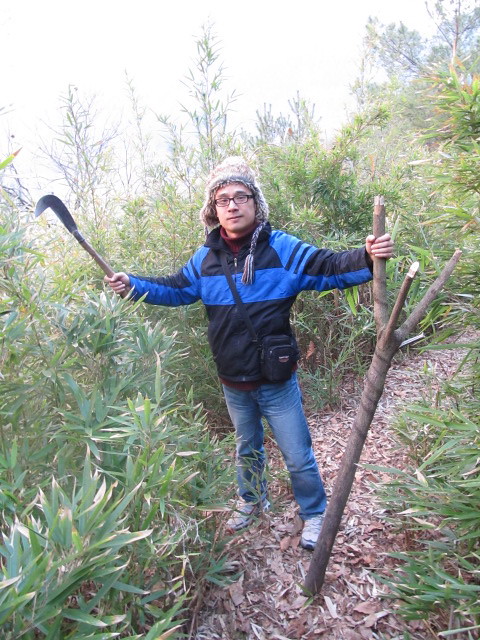
The first time this happened, my husband just grabbed a stick beside the trail and waved the stick above his head so the dog could see it. Instantly, the dog backed off from us…and I could breathe again. 😉
I don’t know exactly why this works, but it does. Along with water and a sturdy pair of shoes, “walking stick” has now become one of my must-haves for hiking out here!
6. Hot water from the tap is a precious thing
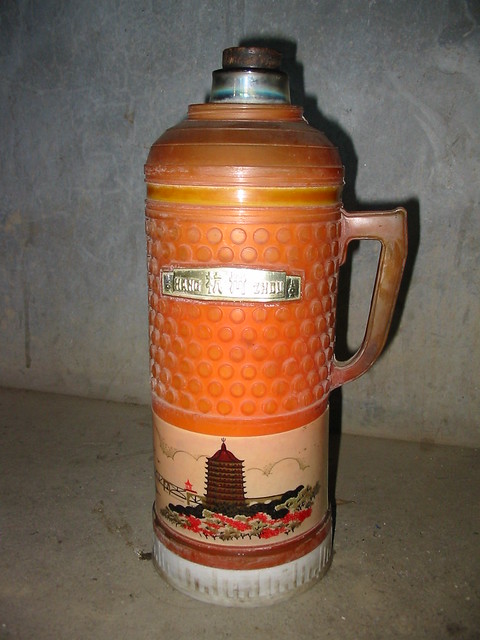
When there’s no hot water from the tap, we turn to boiled water, which we usually store in a thermos like this.
Our house has a solar-powered water heater. But when there’s no sunshine, there’s also no hot water from the tap.
Still, who says we have to go without? We can always have hot water…provided we boil it and store it up in thermoses, ready to mix with cold or lukewarm water for washing up or a bath. Some evenings, I spent an as much as an hour preparing all of that hot water to bathe.
The experience of preparing my own hot water makes me appreciate the precious hot water from the tap so much more.
7. Irrigation ditches make really awesome hiking trails
I’ll be honest, it’s hard to hike the mountains out here in the countryside, where there’s no such thing as “trail maintenance”. Sometimes we’ll be on a perfect trail tracing a mountain ridge…only to find that the deeper we walk into the woods, the more it descends into a thorny mess of bushes and vines that will slash your clothes and even your tender hands. Don’t even ask me about that time we climbed to the top of that mountain, only to take a different trail down…that landed us in the most odious field of thorns I’ve ever encountered.
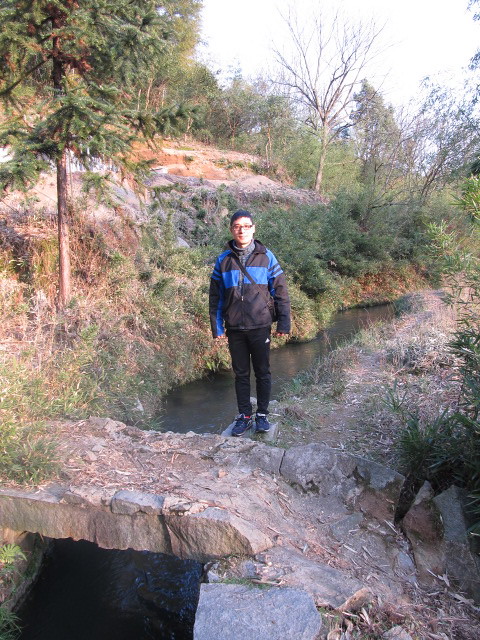
So I’ve come to love the irrigation ditches out here that are built into the hillsides. The stone walls reinforcing these ditches repel those noisome thorny bushes and vines. But even better, the wall itself becomes a perfect trail, naturally “maintained” and kept open by the heavy foot traffic beside the ditches (essential for watering the terraced fields in the village).
My most favorite trail in the area includes an extra-long irrigation ditch that passes some of the most beautiful scenery in the area — from a natural river that cuts through a wooded hillside to the brilliant green terraced fields in the villages.
8. You can make a home in some of the most unlikely places
If you had told me years before I would be happily residing in the countryside — in the same home as my in-laws — I might have called you crazy or even laughed at the thought. Yet here I am, living under the same roof as my in-laws…and actually having a pretty good time of it.
Life hasn’t always turned out as I expected it, including the circumstances that have necessitated my current residence. But I feel so incredibly loved and cared for here.
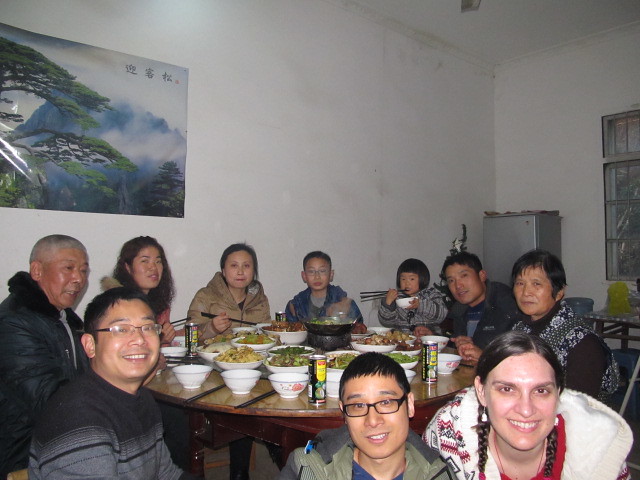
Every meal with the family feels like a small holiday feast, beguiling us with the wonderful aroma of eight or nine different home-cooked dishes on the table — and always with an ample selection of my vegan favorites, from spicy pickled daikon radish to the local smoked tofu stir-fried with peppers or celery. My mother-in-law refuses to let me even lift a finger to do my own laundry, preferring instead to wash it herself by hand and then hang it to dry on the clotheslines that criss-cross the front yard. My father-in-law will slip John an overly generous sum of RMB he withdrew from the bank, refusing to let us return a single note. Our relatives in the village insist on inviting the two of us over to their homes only a short walk away for dinners as lavish as a wedding banquet, telling us to eat, eat, eat. And John and I sleep snugly in our very own private suite in the home, outfitted with every possible comfort we could need — from our soft, warm bed to the TV and Internet — and a view of bamboo fronds and orange trees just outside the window.
Most importantly, I’ve learned that it’s always home to me as long as I have my loving husband, space to read and write, and time for hiking or walks. It’s that simple.
Have you ever lived in a place you never expected to live? Did you learn some surprising things from your experience?
Yuan Fu is the official English-to-Chinese translator for Speaking of China. A native of Ji’nan, China who studied abroad at Cardiff University, he has always loved languages — and this lifelong passion ultimately moved him to offer his talents to this site. When he’s not racking his brains translating posts, Yuan serves as an audit trainee for an accounting firm in Ji’nan. Someday, he hopes to work for a non-profit organization, have a workshop for creating translations and handcrafted military/building models, and also marry the Western woman of his dreams (ladies, he’s single!).
For any comments or suggestions regarding translations, you’re welcome to contact Yuan at speakingofchina(at)hotmail(dot)com.
Thanks so much to Yuan for being a part of this site! And by all means, please feel free to contact him — he’d love to hear from you.
This website uses cookies to improve your experience. We'll assume you're ok with this, but you can opt-out if you wish.AcceptRejectRead More
Privacy & Cookies Policy
Privacy Overview
This website uses cookies to improve your experience while you navigate through the website. Out of these cookies, the cookies that are categorized as necessary are stored on your browser as they are essential for the working of basic functionalities of the website. We also use third-party cookies that help us analyze and understand how you use this website. These cookies will be stored in your browser only with your consent. You also have the option to opt-out of these cookies. But opting out of some of these cookies may have an effect on your browsing experience.
Necessary cookies are absolutely essential for the website to function properly. This category only includes cookies that ensures basic functionalities and security features of the website. These cookies do not store any personal information.
Any cookies that may not be particularly necessary for the website to function and is used specifically to collect user personal data via analytics, ads, other embedded contents are termed as non-necessary cookies. It is mandatory to procure user consent prior to running these cookies on your website.