
My “hard-to-buy-for” Chinese father-in-law

(photo by Geoffrey Gilmour-Taylor via Flickr.com)

That hard-to-buy-for person? To my parents, that could have been John’s father — given the conversation we had yesterday about what to give him for the holidays.

“Wouldn’t he like, say, one of those pocket knives?” my dad asked. “Or a letter opener? Or even a tool kit?”

But John shook his head “no” at every suggestion, leaving my dad surprised and even laughing. After all, we essentially vetoed what he considered the top three must-have gifts for the average American guy his age.

While John’s dad was only a few years younger than my dad, he was a world away when it came to interests and needs. Unlike my dad, John’s dad wasn’t one of these handyman types who liked tinkering around the house, and would never have imagined that anyone needed a special tool to do something as simple as opening a letter. He cultivates bonsai in the garden, dabbles in painting and calligraphy, pens his own articles and self-published books, and reads the newspaper from front to back everyday. And while I’m sure some American men out there must share his passions, I’ve yet to meet him.

It’s no wonder, then, that cross-cultural gift-giving challenges so many of us — enough to keep a steady stream of “what should I buy him/her in China” e-mails flowing into my inbox.

In the end, my parents settled on an engraved pen — sure to please a certain “cultured” retiree in Zhejiang with a penchant for writing.

P.S.: Have a hard-to-buy-for person in China on your list? Check out my gift guides.

“Won’t you miss the holidays when you’re in China?”

(photo by christina rutz via Flickr.com)

“Won’t you miss the holidays when you’re in China?”

I couldn’t fault American friends for asking. It’s not just that John and I are moving back to China permanently. We’re also leaving the US on Thanksgiving Day, which means we’ll miss that holiday as well as Christmas, the king of them all.

It’s true. Perhaps years from now, I’ll wax nostalgic for those Thanksgiving dinners that filled the house with the smell of sage and pumpkin spice, or how I used to trim the tree together with my family, or eating figs and chocolate truffles on Christmas morning. And I’ll miss my family in the US once I’m far away.

Yet ever since I’ve married John, my idea of the holidays has changed forever. It’s not just about my American holidays — it’s also about his Chinese holidays too, which I’ve come to miss since we’ve stayed in the US. At the same time, even my American holidays feel different with him in my life, where five-spice turkey and Chinese dumplings complete my Thanksgiving dinner. The holidays just aren’t the holidays anymore without him and the unique, cross-cultural world we’ve created together.

If anything, I’m not worried about what I’m missing because I married John and am moving my life to China — because I know I’ve gained so much more.

From the Archives: Why Would You Want To Go To China?

A stack of moving boxes
(photo by Chris Schauflinger)

It’s 31 more days until we board a flight back to China — and that means moving to-dos are starting to take over my schedule. Which is why I’m taking a break this Monday from posting and running a few posts from the archives (related, of course, to the idea of moving or moving to China). I’ll be back this Friday with some fresh content!

Why Would You Want To Go To China? When someone asked me why I wanted to go back to China, I couldn’t help wondering if it was curiosity, or something else.

On Moving: My “Too Much Stuff” And My Husband’s Little Blue Duffel Bag. One tiny blue duffel bag. That’s all my Chinese husband brought over to my apartment in Hangzhou years ago when he first moved in with me.

Ask the Yangxifu: Love and Location Dilemma With a Chinese Man. A European science graduate student loves a Chinese man, but doesn’t love the thought of sacrificing her career to live with him in China. Can they overcome location to be together?

Featured on BBC News: “Mixed marriages in China a labour of love”

Mixed marriages in China a labour of loveBBC News just featured me and my husband in an article titled “Mixed marriages in China a labour of love.” And even though I’ve already seen the article, I still can’t believe it. Wow!

If you haven’t read it yet, here’s a snippet of the full article:

“From the first time I started to love a Chinese man, hiding became part of my life,” says American Jocelyn Eikenburg.

She had moved to Shanghai in 2003 to be with her now-husband Jun Yu.

“In the past, students had been expelled for dating or marrying foreigners. We didn’t know what would happen if the university administration found out, so we told no-one he was living off-campus with me,” she says.

A foreign woman with a Chinese man is a rare pairing.

Within her small expat community the social isolation was almost immediate. She felt alienated by her girlfriends, who would openly express their distaste for Chinese men.

“I felt alone in being married to a Chinese man and I wanted to find other people to connect with,” says Ms Eikenburg about her decision in 2009 to share her experiences on her blog, Speaking of China.

My thanks to BBC Journalist Zoe Murphy for contacting me for an interview. You can visit the BBC News website to read the full article in its entirety. And as always, if you love it, share it!

And stay tuned — Zoe Murphy also interviewed Jo of Life Behind the Wall, so expect to see Jo on the BBC website as well.

P.S.: Note that the article originally misspelled my last name (which I’ve corrected in the quote above and have requested that the BBC correct). So in case you’re doing a double take when you’re reading it, no, it’s still Eikenburg.

On moving in with my Chinese in-laws

“My parents miss us,” said John, who beamed like a Mid-Autumn moon. “They want us to be back at home. They like it better when it’s renao,” or lively.
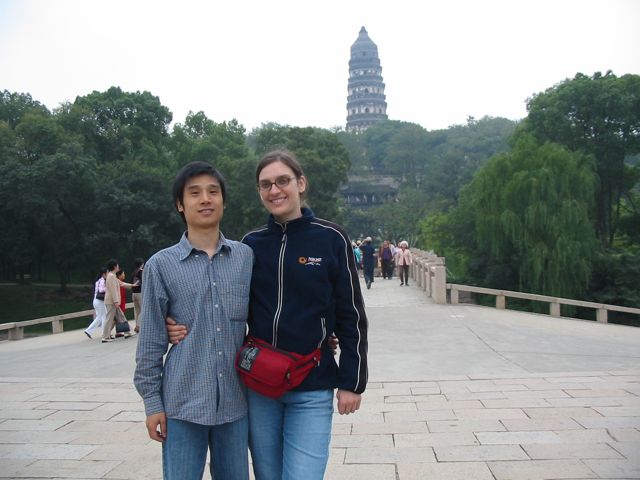
While working on to-dos for our trip back to China, my thoughts turned to living in the family home once again. And just like that, John reminded me of the warm welcome we’ll enjoy when we move back into the same two-story building his parents call home.

I felt that same welcome from John’s parents during the summer of 2009. On the phone, my father-in-law spoke of home renovations they planned to complete before our arrival. “Why are they wasting their money on that?” I once asked John. Turns out, the renovations were a whole new addition to the family home — including a two-bedroom and bathroom suite that my father-in-law would later dub our xinfang, that new home every newly married couple should have. “This is your home,” my father-in-law said to me once, after I claimed John and I didn’t have a home of our own.

In the US, this reads more like a fairytale — or even a myth. While your parents might kick in some cash for your wedding, they’re sure not likely to leave a “vacancy” sign on for you and your spouse to move in and call it home. And as for the married child, well, moving back home with your spouse is an utter embarrassment — or even life failure.

But John’s parents wanted us living with them so much they made room for us — literally.

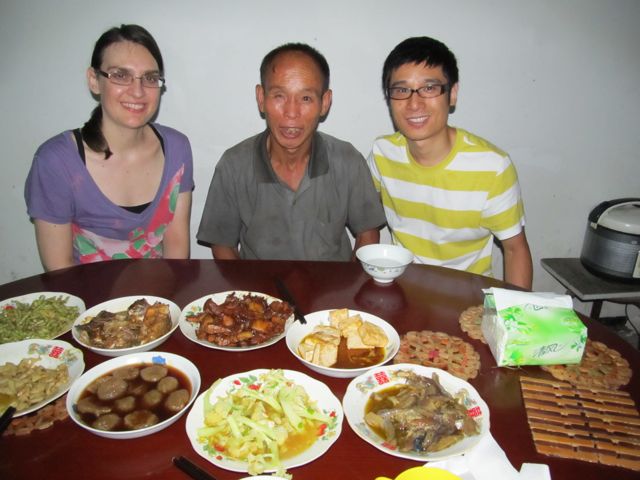
And, strange as it may seem, I want nothing more than to live with them too. I love the way his father gets excited about the flowers in the garden and Chinese poetry and writing about the history of his ancient village. I love how his mother keeps me stuffed with the most sumptuous home-cooked vegetarian dishes, and won’t let me do my laundry, and teaches me how to cook with her fire-powered wok.

Maybe most Americans can’t understand why I’m excited about moving in with my in-laws. And that’s okay. The more time I’ve spent with John, the more I’ve realized that not everything about the white US culture I grew up in makes sense either. Sometimes, it’s not about what makes sense to the world or to others, but what makes sense to you.

All I can say is, I’m already missing my mother-in-law and father-in-law and can’t wait to be home with them.

Starstruck over the US — just as I once was in China

Just before John and I went to the US together, I too was once starstruck with the idea of living here.

“Everything is so great here in the US!” said this young woman from Jiangsu. She gushed like a girl talking about her first crush, right down to the blush on her cheeks and the glimmer in her eyes. And in a way, maybe it was a crush to her — a “business-trip-to-the-US” crush.

We met her while waiting for a changing room to open up at an Adidas outlet. Even though the conditions in the store seemed like hell — only three changing rooms and endless customers streaming in through the doors — the conditions outside bordered on heavenly. An azure sky, sunshine, the trees dressed in their finest autumn scarlet and gold and orange, and throngs of happy shoppers. In the beauty of that day, I even began to forget the sadness of the past 24 hours.

But when I heard her praise the US, a part of me shuddered. After all of the hardship that John and I experienced in this country, I just could never endorse the idea that everything was just fabulous here. And given the recent government shutdown — which has locked up the local national park where I once found solace and comfort in daily hikes — I wasn’t alone in my feelings.

Yet, before I brought John to the US, wasn’t I — in a sense — as starstruck as this young Chinese woman? Once upon a time, I spun my own personal fairytale version of a happily ever after with John in the US. The fact that John was once denied a tourist visa to come over to the US only strengthened my conviction that, somehow, if I could just bring him over here, everything would be better. But things unravelled as the years in this country passed and the disappointments piled up — until I had not a single thread of that fairytale left.

What I had left was a lot of guilt. I remembered how John’s father told me, “When you’re far away from us in the US, you’ll have to take care of him.” Even though it was completely and utterly irrational, I felt responsible for every terrible thing that happened to John.

Sometimes life lets you down. But it doesn’t mean that I’m down or John is down. And it also doesn’t mean that I have to bring someone else down because of it.

So when she gushed about the US, I just smiled and nodded. “I’m glad you’re having a good time.”

Who knows if she’ll feel the same way days or even years later? And who knows if I’ll feel the same? But I do know this — her happiness somehow touched me, and reminded me that perhaps my happiness will eventually come in time.

We’re Going Home — To China

IMG_0462I’m going home later this year — to China.

Sometimes, when I come across a memento of my pre-China life, I can’t believe that now I think of a foreign country as home. I imagine that girl, the one who longed to break free of the suburbs, who dreamed of the world beyond the Cleveland, Ohio area she’d always known. Who’d have thought those dreams would take me across the Pacific, to a whole different country?

I even think back to my first steps in China, imagining the whole experience would turn into nothing more than some “gap year” between my graduation and eventual career back in the US. It’s funny how a small decision like teaching English in China can change your life forever. Soon, one year turned into several years, where I found my calling as a writer and eventually met my husband John, a native of the Hangzhou region.

But while John and I moved together to the US, our attention — and plans for the future — shifted back towards the Pacific shores. Maybe that seems counterintuitive — honestly, even I wondered that sometimes. After all, most of the other yangxifu I know who met their husbands in China invariably packed up their lives, left China and never returned. But after a while we couldn’t imagine living forever in the US; it never felt like home and never fully ignited our dreams and our potential.

Of course, there’s another factor in China’s favor — that we actually have our own home there, awaiting our return. John’s parents added a new suite to their family house just for John and me. They called it our “xinfang” or new home in Chinese. There, the delicious aroma of my mother-in-law’s stir-fried specialties — from smoked tofu with spicy peppers to fresh bamboo with soy sauce — fills the entire household, and delights us at every meal. There, my father-in-law spins stories of life in his ancient village and shares his latest artwork and calligraphy with me. There, my niece bounces through the household with the exuberance of a toddler while my sister-in-law just grins. There, the relatives come over almost every day to visit, or invite us over for dinner, or share some of the freshest fruit in season with us.

When I think of this home in China, anticipating our arrival, I am filled with enormous gratitude. Maybe it’s not a coincidence, then, that our departure date just happens to be November 28 — Thanksgiving Day in the US.

From the Archives: On Stares, “Why Not Married?” & More

(photo by Chew – Lin YIP via Flickr.com)

None of us are immune to those tough questions or moments. During a week where I’ve had a face some challenges of my own — and need a break — I’m running several entries from the archives that speak to this theme. I’ll be back this Monday with some fresh content!

Ask the Yangxifu: Staring in China at Couples of Chinese Men-Western Women. A Chinese man loves the Western woman he just started dating, but not the stares and attention from his fellow Chinese when they’re in public.

Ask the Yangxifu: Dealing With “How Come You Aren’t Married Yet?” A guy asks for advice on how to manage that toughest of questions from his Chinese relatives.

On Bainian — Chinese New Year’s Calls — And Those Annoying Questions From Relatives. For some young Chinese, the very possibility of seeing family means the potential for annoying personal questions — ones they’d sometimes rather not answer.

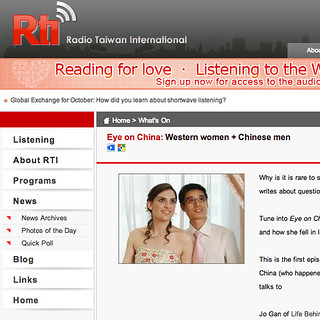
Radio Taiwan Int’l Interview – Eye on China: Western women + Chinese men

Radio Taiwan International - Eye on China: Western women + Chinese menRadio Taiwan International just interviewed me last Wednesday for their “Eye on China” series, looking at Western women and Chinese men through my blog and experiences. Here’s the introduction to the interview:

Why is it is rare to see western women with Chinese men? Jocelyn Eikenburg writes about questions like these in her award-winning blog Speaking of China.

Tune into Eye on China as Natalie Tso talks to Jocelyn about her popular blog and how she fell in love with her Mainland Chinese husband John.

You can listen to the full interview here.

Natalie is also interviewing Jo Gan of the fabulous Life Behind the Wall about her experiences as a Black woman in China (with a Chinese husband) and also Michelle Guo, a Chinese American who blogs in part about life with her Mainland Chinese husband. Stay tuned for those interviews coming up this week and next week!

But in the meantime, check out my interview — and if you love it, share it!


Infidelity in China? Doesn’t matter to my marriage

(photo by hjrosasq via Flickr.com)

Not long ago, I received an e-mail from a reader with a Chinese partner inquiring about infidelity in China. While I cannot reveal the actual e-mail since I promised confidentiality, from reading between the lines I could sense this reader seemed worried about the potential for the partner to engage in extramarital affairs in China. Isn’t it funny that a stranger would ask me to shed light on this for reassurance about their relationship?

That e-mail echoed the concerns of a white woman I knew. She had a Chinese husband and considered moving back to China with him, where he hoped to realize his dreams of entrepreneurship. But in the end, she couldn’t do it. Among the reasons why, she fretted over some hypothetical “private secretary” who would surely steal her husband away from her.

As my husband and I plan to return to China, I’m far more worried about how to ship our things over or make that connection in New York’s JFK airport than I am about phantom mistresses and potential affairs. So what if China has “private secretaries” and KTV “hostesses” and entire communities of ernai? China sure didn’t invent the concept of cheating on spouses, as people do it all around the world (including in my home country, the US). More importantly, I know my husband and I know the strength of our marriage. Anyone who believes that a move to China will lead John astray knows nothing about him or us.

I’m not sure what the future holds. But I am sure about the love and trust I hold in my heart for my husband — and that’s enough for me to believe that our future will be a blissful one, together.

Have you ever heard people discuss China’s infidelity — and worry about their relationship or marriage? What do you think?