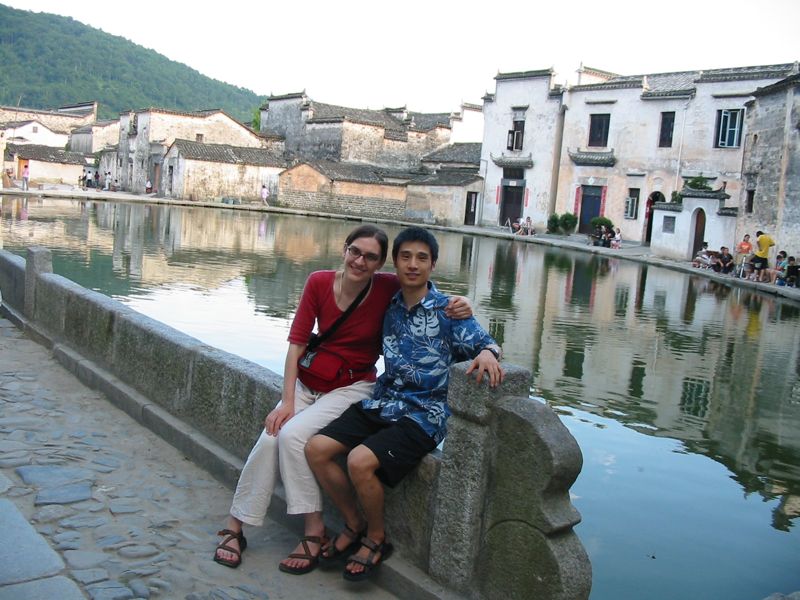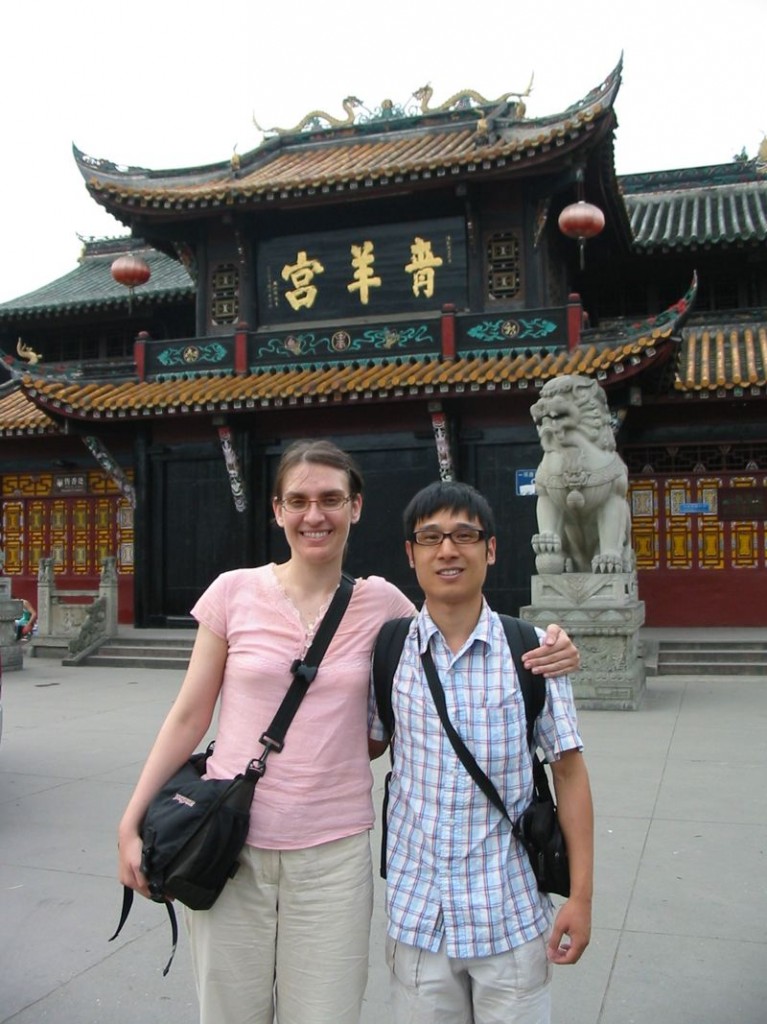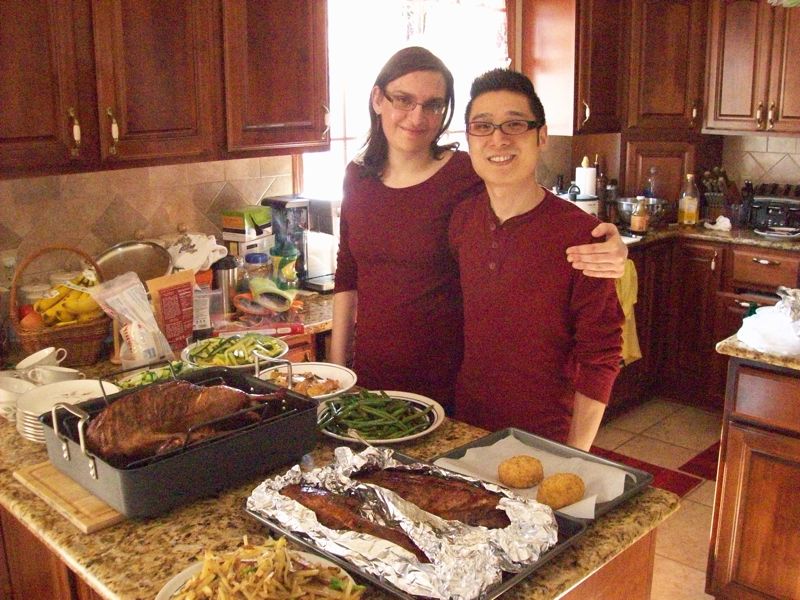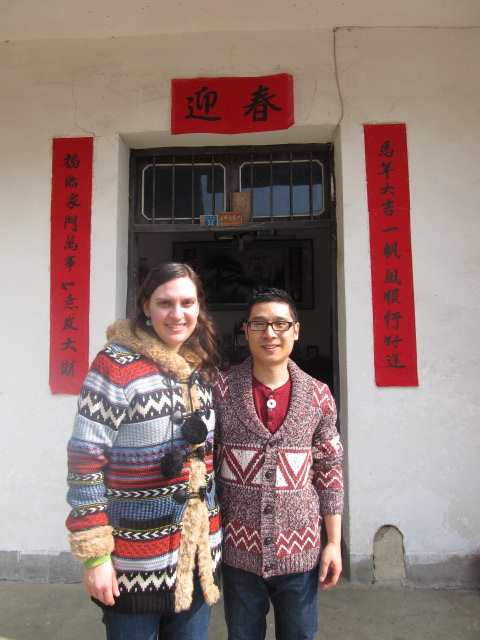
Double Happiness: How An American Woman Fell In Love With Xi’an (And One Special Guy)

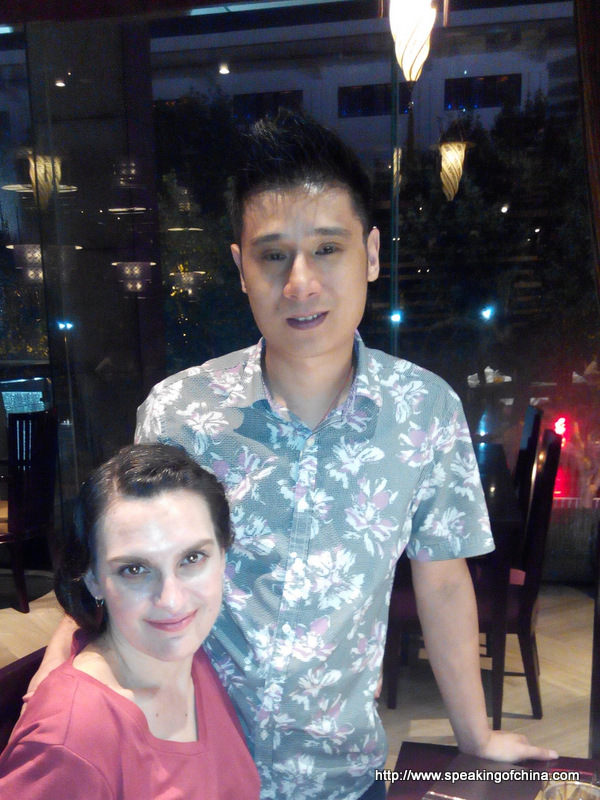
Marissa and ZJ
Marissa and ZJ

“I’d never dated or been attracted to Chinese men before,” writes Marissa Kluger — not until she met ZJ in Xi’an, a city that stole her heart away.

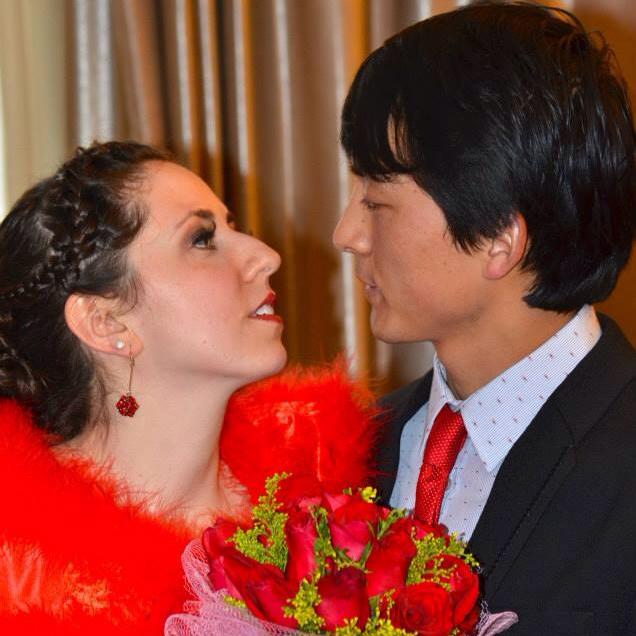
Marissa’s blog Xiananigans has been a pleasure to follow over the years (right down to her “explosive” Chinese wedding, where she dons the most gorgeous red wedding gown I’ve ever seen). Here’s the story behind it all, from how she discovered Xi’an and ZJ to how they eventually moved it to her hometown in New Jersey.

Have an “explosive” story you’d like to share with us? To learn more about getting your stuff published on Speaking of China, check out the submit a post page for details.

—–

My first trip to China, in 2007, happened to be a three week intensive course abroad, a general education requirement instituted by Goucher College, my alma mater. Xi’an ended up being one of our destinations. Besides inspecting the soldiers at the Terracotta Warriors, bicycling around the Xi’an City Wall, and navigating the alleys of the Muslim Quarter, we met with an alumnus teaching at Xi’an International Studies University.

The city of Xi’an compelled me to return four years later to teach at Xi’an International Studies University. I’m a fairly indecisive person but I had made up my mind after listening to the alumnus’ anecdotes about his job, travels, and experiences. Meeting his students further cemented my longing to come back; they were inquisitive, interested in cultural exchange, American politics and exposing me to as much Chinese culture as several hours would allow.

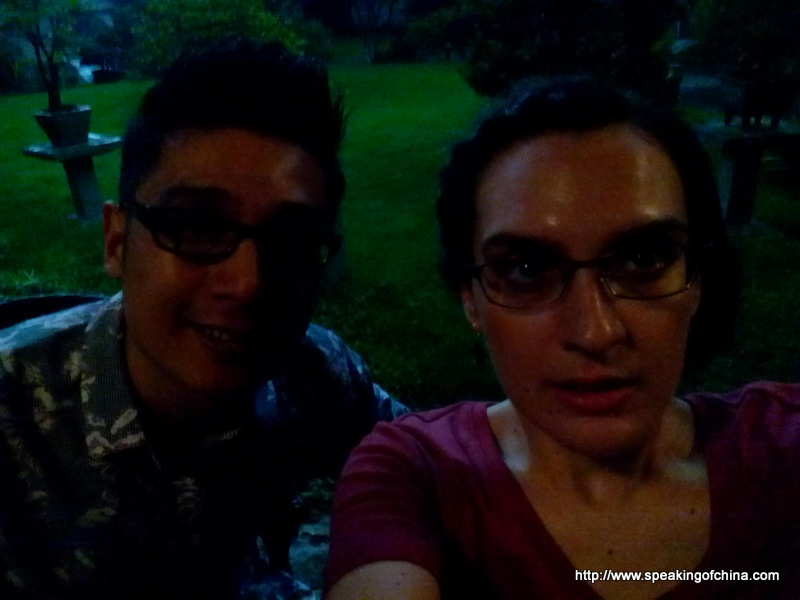
Snapped at Delhi Darbar, our local Indian haunt, Summer 2013

Although I knew they would show us around their dorms, the campus, and give us small gifts, I was overwhelmed by their warmth, affection, and extroverted personalities. In many ways, they toppled every notion, or better yet, stereotype I read about Chinese students. We met students from universities in other cities during our travels, but XISU students left the deepest indent.

I also saw it as a one-year opportunity to do something outside-of-the-box before starting a career, although at that time I had little idea about what I’d be doing; I hadn’t even declared a major, still opting for that looming “Undecided” title. My parents thought I’d give up on the idea as I still had three years of schooling. They were supportive of the decision, also seeing it as a good opportunity, hoping I’d pick up the language and gain other valuable experiences that could propel whatever career path I chose forward.

In 2009-10, my final year at Goucher, I applied for a position at the university. Three months went by without a word, so I began applying for jobs in my chosen field in the Greater New York City area. A ray of sunshine appeared just a week before commencement…I had received an email from the university offering me a teaching position for the next academic year! When my college girlfriends offered their congratulatory sentiments, they also foreshadowed that 缘分, or fate would lead me to at least date, perhaps even settle down in China. I dismissed this as I didn’t really put much stock in fate.

Bicycling to the 798-like art district in Xi’an, Summer 2013

I arrived in Xi’an in late August 2010, and luckily I had the first month of September free, as I had been assigned freshman. Freshman have mandatory military training, and four years ago, this lasted an entire month. I took this chance to meet up with a very good friend of my former private drum instructor and his Chinese wife. Lu Min Lu, I called her Daphney, helped me settle in and introduced me to the nightlife Xi’an offered. She took me to Park Qin, a bar frequented by Xi’an expats. ZJ worked at Park Qin.

The first time ZJ and I met, I insisted on getting his phone number on behalf of a British girl. I initially cut in for several reasons: I was looking for Chinese acquaintances who might become friends, most of my college friends were guys, he was easy to talk to and charming. I, of course, did all of this not knowing anything about Chinese dating culture, or that ZJ considered himself “traditional.”

After getting his phone number and exchanging texts, we agreed to meet up on his next day off. Shortly after that first meeting, I went back to Park Qin and spent hours talking to ZJ about movies, music, college, culture and more. We had a lot in common, he spoke directly, didn’t seem shy or introverted, much like the students I met in 2007, but I didn’t see this going in a romantic direction. The American girlfriends I emailed back home were elated: “I told you.”

ZJ and I in Xi’an, Chinese New Year 2013

It was about a month later that ZJ and I began dating. In the early stages of our relationship, we looked more like friends. We weren’t affectionate in public and our relationship remained a secret. In February 2011, I met ZJ’s parents during our Chinese New Year visit to his hometown. He prepared me very well for that first visit, explaining that to his parents, bringing a girl home, let alone a foreign one, meant to them we were serious.

I met his best friend from high school as well as extended family from both his mother’s and father’s side; I felt more comfortable than I initially thought in an environment so different from Xi’an and New Jersey. ZJ cared, translated and interpreted for me; his way to show affection manifested itself unlike any previous relationships. I liked the nuances, subtlety of it all, and more importantly, started to fall for him, and so upon returning to Xi’an, ZJ moved in with me.

After moving in together, we spent Western Valentine’s Day on the City Wall, visited the Shaanxi Botancial Gardensattended a professional soccer game at the sports stadium, and he attended Thanksgiving dinner I hosted with a friend. I went back to the US for the summer in 2011. Although we lived together, I worked during the day while ZJ slept after bartending into the wee hours of the morning. After 2012’s Chinese New Year, he decided to take a sabbatical from work.

We visited Baoji after the Chinese New Year to meet 大哥, ZJ’s eldest brother. The spring months of 2012, free from working in the evenings, we visited another campus infamous for their cherry blossomsday-tripped to Hanzhong with friendsspent July in Xi’an and backpacked through Thailand and Laos that summer. This trip tested our relationship, and looking back, foreshadowed some of the difficulties we now face.

The flowers ZJ procured by riding on a motorbike taxi in the pouring rain, at our engagement on June 8, 2013

When the holiday season approached, ZJ fostered my homesickness by taking me out for Peking duck on Christmas, a tradition commonly observed by Jewish-Americans. I went home for three weeks in January 2013; I wished he could have traveled with me, to meet my family and friends. I missed him when I went home for two months in 2011, staying in touch via Skype, however, those three weeks felt utterly painful. I enjoyed my time at home, but a sense of relief washed over me when I touched down in Xi’an a week or so before heading to his 老家 for Chinese New Year.

We had already started discussing getting engaged and this discussion was met with approval by 老爸, 老妈, 大哥和二哥. ZJ proposed to me on June 8, 2013. The timing of the ceremony, the set-up, and the ring were all a surprise to me. He told me we were celebrating his birthday; I saw this as slightly suspicious, but didn’t give it a second thought when he shot me down over WeChat when I asked if he planned to propose.

DSC_4002_Fotor_Collage
A collage put together by one of our foreign guests at the Chinese wedding ceremony, Feb. 5, 2014

We had a friend take engagement photos, stayed at the Sheraton North as a quasi-engagement honeymoon, biked to Xi’an’s new art district, and went to Beijing. We talked about when we would get married that summer: would we stay in China or move to the US?

We registered our marriage a year ago. In October, we took our wedding photos for the Chinese wedding ceremony. Because many of ZJ’s coworkers and friends wouldn’t be able to make the two and a half hour trip to his 老家, we hosted a wedding luncheon in Xi’an, receiving the customary red envelopes. A month or so after, we began researching the DCF process so that we could move to the US in the summer, setting the wedding for February 5.
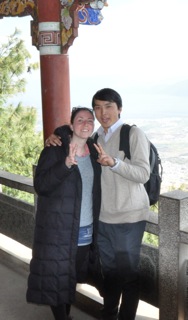
We made it up Cangshan, Dali Feb. 2014

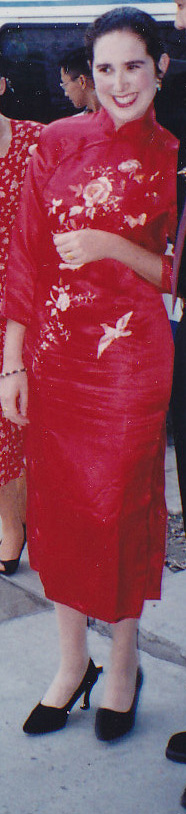
I wore an ankle-length red gown, one of three dresses purchased on Taobao for the ceremony held in the countryside. I opted for a red princess-poofy gown, complete with fur-like trim, flowers, taffeta-like mesh, all in red. I changed into a red lace qipao in order to toast the guests, wearing it with a qipao-style top as a jacket in hopes of keeping out the cold. I even wore all red undergarments. My youngest sister made the trip from the US, served as pseudo-maid of honor, taking on my hair and makeupWe also had a few foreign colleagues from the university attend. 爸爸和妈妈 Zhang, my brothers and sisters-in-law ensured the shindig, a once-in-a-lifetime affair, could be watched over and over again (there’s a video!). We had a honeymoon of sorts, to Lijiang and Dali, and I say of sorts, because my sister and friends of ours tagged along.

We had traveled to Guangzhou for the petition in January and a couple of months after all the wedding excitement died down, we traveled back again for the medical and interview portions. ZJ didn’t pass on the spot, as we had to send additional documents. A week or two later, we had ZJ’s passport with the appropriate visa in hand. I couldn’t believe how relatively quickly and pain-free the process had been! More foreshadowing…
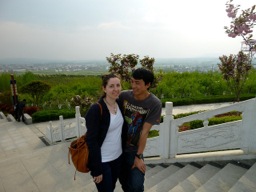
ZJ and I in Hanzhong, 2012

We’ve now been in the US for two and a half months. We live with my parents in the house I grew up in. I work part-time for Starbucks while I pursue other avenues. This is the first encounter ZJ’s had with my parents and friends, with the exception of my youngest sister, who also lives at home. He just received his social security number last week. When we went to the department of motor vehicles earlier in the week, they weren’t able to verify his status, meaning we have to wait before he can obtain his driver’s license. In other words, the ease we experienced during the DCF process meant more obstacles after landing stateside.

It’s not all bad news, though. I never imagined I’d be a 26 year-old “we”, returning from four years in Xi’an, and struggling to figure out what comes next. I would never take it back, or trade it in for an “easier life.” Much like the processes we’ve gone through in the last year: getting our red books, preparing for our Chinese ceremony, navigating the DCF process, prepared us for the ups and downs of a new life. I underestimated the adjustment moving to the US would be, but my husband never did.
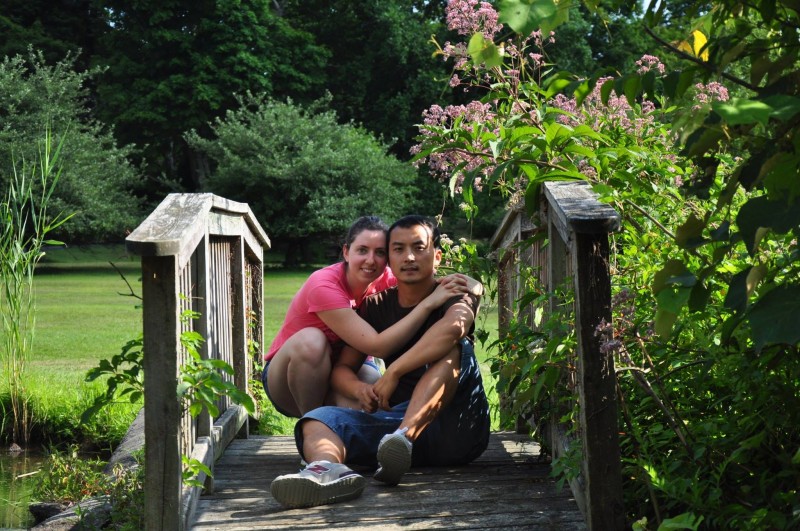
10506957_709406521895_2768534532961771026_o
Ringwood State Park in New Jersey, July 2014

This is why I love him. When I’m losing it, he remains calm, rational, and thoughtful. When I’m overly emotional, which is pretty much all of the time, he’s calculated and prepared to counteract my moodiness by jokes, sarcasm, or a story. He knows exactly when I need solitude, a hug or a kiss, encourages me to not only pursue my dreams, but to do so independently.

His sense of humor is infectious, and he’s grown into a more talkative, outwardly affectionate individual. He supports me in all my endeavors. Our marriage and relationship may not be conventional in the eyes of some, and we may be opposites, but I always foresaw, if I did marry, ending up with my “other half.” You see, I didn’t think I would marry, especially in my mid-20s, not because I don’t believe in the institution of marriage, but after a failed serious relationship in college, preferred to bask in dating solitude.

DSC_0024It’s laughable that there are Western women in China who write off Chinese men. I’d never dated or been attracted to Chinese men before, but I’m very attracted to my husband: appearance, intelligence, and personality-wise. If I had written them off, the handsome, caring man sitting to my right reading the local paper wouldn’t be in my life.

Marissa Kluger married her Chinese husband ZJ a year ago. They live in New Jersey. She reminisces about Xi’an and muses about life in the US at Xiananigans.

—–

Speaking of China is always on the lookout for outstanding guest posts and love stories! If you have something you’d like us to feature, visit the submit a post page for details — and then submit yours today.

Guest Post: The “Dark Side” to Moving Across the World for Love

I’m excited to run this guest post from Grace Mineta of the fantastic blog Texan in Tokyo (if you haven’t discovered her insightful and entertaining blog yet, you’re missing out). Grace just successfully funded a kickstarter project for her book “My Japanese Husband Thinks I’m Crazy: The Comic Book” in only three days!

Today she reflects on something that many of us know all too well, but are often afraid to write about (myself included) — the dark side of moving across the world for someone you love. 

Have something to say (and share) on Speaking of China, just like Grace? Check out my submit a post page for details on how to get your guest post published here.

—–

Interracial relationships are complicated. So are intercultural relationships. I don’t think I fully understood the complexity until I entered my own – and it’s a bit difficult trying to explain to other American friends with absolutely no knowledge of Asian culture why no, we can’t just “put my husband’s parents in an old-folks home once they lose mobility.”

Or when my husband has to try to explain to his coworkers that “no, my wife probably will not quit her job when she gets pregnant. She loves working. I might transition to part-time work and be a stay-at-home dad instead.”

Grace and Ryosuke Mineta

You see, as wonderful, exciting, and educational an intercultural relationship is, there is also a deep, dark side to moving across the world, for the sake of love. It can be isolating. You have to compromise about subjects you didn’t even think were ‘on the table,’ so to speak. You will both make mistakes.

After reading Susan’s recent memoir “The Good Chinese Wife,” I decided I wanted to write a guest post for Speaking of China about the dark side to moving across the world for love.

And, of course, if you’re really interested in daily life in Japan as a foreigner, you should check out my book “My Japanese Husband Thinks I’m Crazy: The Comic Book.”

It is an autobiographical memoir about my life as a white, Texan freelancer married to a Japanese businessman, living in Tokyo. It covers intercultural and interracial relationships, in a funny, light-hearted way.

Texan in Tokyo comics

Enough of the good, let’s talk about bad.

Here are the top 6 elements that make up the “dark side” of moving across the world for love:

1. You can become almost pathetically dependent on your spouse

My husband and I have lived in both Japan and Texas, with a vast majority of our time spent in Tokyo. We spent two months in America together before the wedding, and another month and a half in Texas after the wedding.

We had a wonderful time, but we also had some problems. Ryosuke couldn’t drive a car in America. He was completely dependent on me and, on days when I had a freelance project due, he was left walking my sister’s dog, Bo, around the neighborhood for hours, since he had nowhere else to go.

Thankfully, in Tokyo I can get anywhere by train/bus. However, there are times, like when I’m trying to open a bank account, file a health insurance form, or figure out some obscure Japanese law when I am completely dependent on my husband.

I’m lucky that I have my own job and can speak Japanese pretty fluently… but even so, I still get frustrated.

2. Visas, bureaucracy, and a lot of red tape

I went to the immigration office seven times to get a visa. Seven times. My visa was rejected for all sorts of stupid and illogical reasons (Not enough time left on my tourist visa, one form was improperly dated, the visa I was applying for didn’t exist, “waiting to apply for a spouse visa” was not a valid reason to extend my current tourist visa… the list goes on).

One incredibly unhelpful lady at the Tachikawa immigration office told me “Go back to America, wait a couple of months, and apply for a visa there.” When I told her I couldn’t afford to just ‘go back to America,’ she suggested I go to Korea instead (since it’s “cheaper”) and then called up the next person in line.

Now I have a valid, working visa in Japan.

However, I know other women who are not able to work on their spousal visas in their husband’s countries… and it’s hard.

3. Finding a good career “in your field” is incredibly difficult

I love writing, but I never wanted to be a writer. I wanted to work for local government. Or at an NGO.

Unfortunately, it is incredibly difficult to find a job in my field in Japan. I either don’t have enough experience, can’t make the proper time commitment, can’t speak Japanese well enough, or can’t afford to commit to 40 hours of work (unpaid, no stipend for food/travel) for at least 16 months at my dream NGO.

Hence the reason I am a freelance writer, blogger, and English teacher.

I don’t love the work, but it pays the bills and gives me something to do. In my spare time, I get to blog, draw comics, and volunteer at a local orphanage.

I can’t count the number of women I know who moved abroad with their husband, expecting to find a career in their field in a couple of months… only to wind up frustrated, disappointed, and underemployed.

4. Insecurity is normal

On one of our larger fights a couple months ago, I asked my husband why he didn’t just marry a nice Japanese girl. “She would be able to talk to your family without any problems,” I told him, “and she would be better at housework (or, like, actually agree to do housework. I’ve met so many Japanese girls who love cleaning. I hate it. Ugh.)”

“I don’t want to marry a ‘Japanese girl!'” he shouted back. “Or an ‘American girl!’ I just want to be married to you!”

A lot of our friends are Japanese. When we have house parties or go on double dates, I often find myself toning out what the other people are saying. Speaking in Japanese all day makes my head hurt… and I start to feel out of depth.

Texan in Tokyo comic about the telephone

When nearly all of our friend’s wives quit their jobs after marriage, clean the house every day, wake up early in the morning to cook their husband breakfast, do laundry every day, and always keep the house presentable, clean, and well-stocked with food, it’s hard not to get insecure.

I still stand by everything I wrote in my last guest post on Speaking of China, “7 of the Best Things about Being Married to a Non-Native English Speaker.”

And thankfully, my husband doesn’t expect me to be a “Good Japanese Wife.” If he did… well, I would probably go crazy. And we would yell at each other more.

5. You might have to re-evaluate your priorities and compromise on some tough issues

This one is pretty self-explanatory.

Just remember that arguments are an essential part of any healthy relationship and they provide a great way to broaden your horizons and re-evaluate your priorities.

6. You will be isolated

When we first moved back to Tokyo, we spent the first couple months living with his parents in Ibaraki, an incredibly rural prefecture next to Tokyo.

In the first couple months I had no job (I was still battling the immigration office), no English speaking friends, and no connection to the ‘outside world.’

I fell into a deep, dark depression that lasted for several months. I cried a lot. I started losing weight (not in the good way). I watched my friends from college go off and get amazing jobs… and just felt worse about myself.

Then we moved out. We saved enough to get out own place, in central Tokyo. I got a visa and picked up a couple part-time jobs. I made a bunch of new friends.

Texan in Tokyo comic about the beach

I still had cultural problems from time-to-time, but instead of being a sad reminder of how “foreign” I was, they started being kind of funny.

I wrote a comic book, “My Japanese Husband Thinks I’m Crazy,” that ended up being wildly successful.

I have a ‘sort of’ career now.

Of course, I still feel isolated from time-to-time. But I’m learning how to deal with it. 

Grace Mineta

Author Bio:

Grace Buchele Mineta is a native Texan, founder of the blog “Texan in Tokyo,” and author of the autobiographical comic book, “My Japanese Husband Thinks I’m Crazy.” She lives in Tokyo with her husband, Ryosuke, where she blogs and draws comics about their daily life.

My Japanese Husband Thinks I’m Crazy: The Comic Book” is the autobiographical misadventures of a native Texan freelancer and her Japanese “salaryman” husband – in comic book form. From earthquakes and crowded trains, to hilarious cultural faux pas, this comic explores the joys of living and working abroad, intercultural marriages, and trying to make a decent pot roast on Thanksgiving.

—–

Speaking of China is always on the lookout for outstanding guest posts and love stories! If you have something you’d like us to feature, visit the submit a post page for details — and then submit yours today.
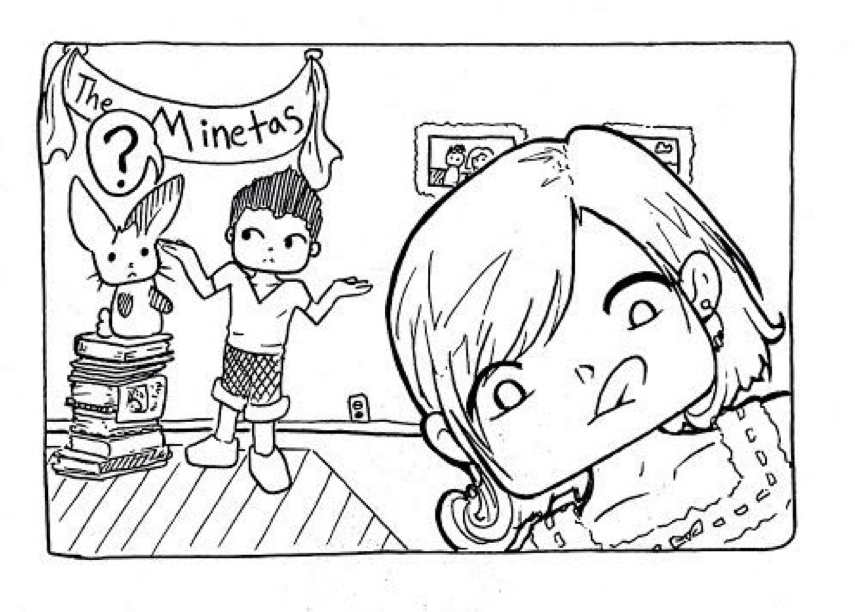
How to have an incredibly imperfect 10th wedding anniversary in Hangzhou (just like us)

IMG_20140726_205043

When you’re getting ready to remember 10 years together with the person you love most in the world, you want it all to be as perfect as that diamond wedding ring. After all, isn’t 10 years of marriage called the “diamond anniversary”?

But the reality doesn’t always sparkle like that most coveted of all jewels, just as John and I discovered this past Saturday when we set out to celebrate our 10th anniversary together. Here’s how our day ended up losing some of its luster:

1. Celebrate it right smack in the middle of the hottest days of summer.

Notice the sweat gleaming on my face and neck? Welcome to Hangzhou in the summer!

Our marriage anniversary is July 26, only three days after July 23 (also known as by the Chinese as dàshǔ or 大署, the “Greater Heat”). At this time of the year, the entire city feels like one huge sultry public sauna that you can never leave (unless you duck into an air-conditioned store or home).

As soon as John and I left our apartment, the heat and humidity enveloped us like a huge wet rag — and it wasn’t long before my brand-new fuchsia T-shirt was dotted with beads of sweat. Not an auspicious start to our celebration!

2. Arrive at the West Lake just as a huge thunderstorm descends upon the city.

Taking shelter from the storm

After indulging in a little pampering at a local hair salon (a up-do) and a makeup shop (where a pro did my makeup for the day) John whisked me off to the most romantic locale in all of Hangzhou: the West Lake. Our goal? To visit the very bench on Su Causeway where we had our first kiss on July 26 in 2002.

But not long after we reached the scenic shores of the lake, fringed with the rich green patches of lotus plants studded with pale pink flowers, an ominous gray cloud darkened the sky. Thunder soon rumbled right in, followed lightning and a monumental downpour. When I say “monumental downpour”, I mean 90 mm worth of rain (that’s a little over 3.5 inches) in one hour!

We sought shelter just in time in a public teahouse beside the lake, and were trapped there for almost an hour, witnessing nature’s own version of fireworks boom across the lake (I screamed when the lightning hit a nearby tree) as the landscape around us became soaked in rain.

Then, because we needed to hustle to make our 6pm dinner reservation at a hotel, we splashed our way down Beishan Road through the runoff water that burst up from the drains beside the road and cascaded over the sidewalk right into the West Lake. It reminded me of all those times when I was a kid and insisted on going creek-walking — except you don’t usually go creek-walking with your hair and makeup done, all dolled up in your new shirt and long black skirt.

Even worse — the rain revealed leaks in my own umbrella, scattering droplets of rain all over me (including more than a few that conspired to ruin my nice up-do and makeup…thank goodness they didn’t!).

You might wonder, “Why didn’t they just flag down a taxi or take the bus?” Well, as anyone who has ever lived in Hangzhou knows, it’s almost impossible to flag down a taxi on rainy days. Plus, the traffic on Beishan Road was locked in gridlock and plodded along so slow we actually walked faster than the buses themselves!

3. Due to a downpour of seemingly Biblical proportions, walk into the five-star hotel where you’re going to have dinner with at least half of your outfit completely soaked

I know I'm smiling here, but believe me, most of my skirt and all of my shoes are soaking wet!
I know I’m smiling here, but believe me, most of my skirt and all of my shoes are soaking wet!

There’s nothing that says class quite like strolling into the glittering lobby of a five-star hotel looking as if you crawled out of one of the drainage pipes beside the West Lake. The Assistant Manager on duty — a willowy blonde dressed in a perfectly-pressed suit jacket and pencil skirt — stared at us as we hurried across the lobby and up the stairs, and I couldn’t tell whether it was because we were that rare AMWF couple in China or because our shoes left little puddles behind us wherever we walked.

4. Due to same downpour, spend over an hour awaiting the rest of your friends to arrive.

IMG_20140726_194849-001

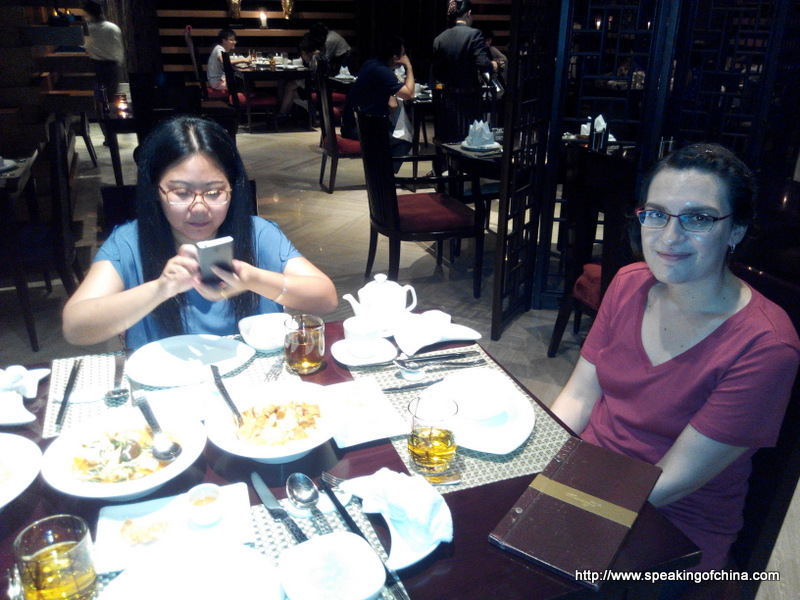
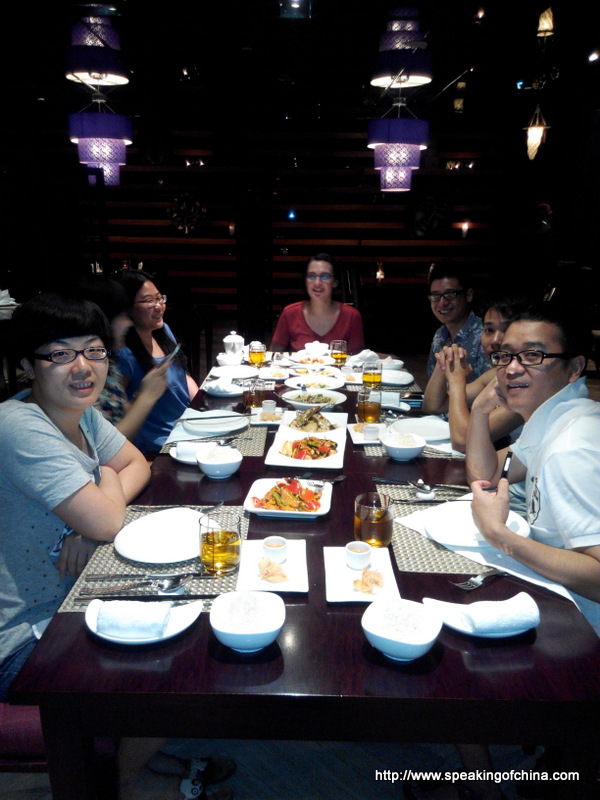
Four of our guests — more than half of our table — took over an hour to make it to the hotel because the downpour brought Hangzhou’s traffic to a screeching halt. This photo (with me putting on a smile while my friend Caroline plays with her mobile phone) pretty much sums up how we spent that hour at a very empty table for seven.

5. Realize it’s the most imperfect anniversary celebration you’ve ever had — and enjoy yourselves regardless.

IMG_20140726_195028

Between the sweltering heat and all of the mayhem caused by a sudden downpour, we had one tumultuous afternoon. No carefree strolling beside the lake, no stolen kisses at our old bench on Su Causeway, no confident entrance into the hotel. Our shoes were still totally wet and squishy. The rain even drenched a classic photo of us that John carried in his wallet.

But we had five of our friends with us, as we dined on some of the most sumptuous Thai dishes I’ve ever sampled in my life in one of the most glamorous restaurants in town. Maybe we didn’t get the perfect day we hoped for — but as I helped myself to another creamy mouthful of green curry vegetables and admired the mahogany-toned wooden accents in the space, I couldn’t help but think that, for the moment, it was just perfect enough.

(P.S.: For those of you curious as to where we had our anniversary dinner, it was at the lovely  Sawasdee Thai Restaurant in Hangzhou — one of my favorite dining spots in the city.)

Have you ever experienced a less-than-perfect celebration?

Photo Essay: Celebrating 10 years of marriage to my husband!

Ten years ago on July 26, my husband and I stood before a government representative in Shanghai, promising to spend the rest of our lives together. It’s hard to believe that 10 years have passed since that moment, yet I love John just as much as the first time I stood before him and said, “Wo yuanyi!” (“I do” in Chinese — and yes, like most of us in China, I did it more than once for reasons explained in this post).

To commemorate those 10 incredible years I’ve enjoyed with the love of my life, a guy who still makes me swoon after all this time together, I’m sharing one of our marriage registration photos from 2004 plus 10 photos of us together (one from each year of our marriage)!

2004

IMG_0012

This photo was taken just moments after we took our vows in a civil ceremony in Shanghai and signed our official little red marriage books. Can’t you just see that newly-registered glow in our faces? (Or maybe it’s the red we both wore that day!) 😉

2005

IMG_2109

As part of our Huangshan Honeymoon in 2005 (which I wrote about in an essay for the new anthology How Does One Dress to Buy Dragonfruit) we visited a couple of traditional Huizhou-style villages in the foothills of Huangshan. Here we pose before a reflecting pool in Hongcun.

2006

IMG_2698

We visited friends in Chicago in February 2006 and ended up strolling beside Lake Michigan, despite the freezing winter temperatures. Who needs to worry about cold weather when you have the love of your life beside you to keep you warm? 😉

2007

Jocelyn and Jun in the park near Fenshui River.

The summer of 2007, we returned to John’s hometown to make our marriage official (in the eyes of his family and friends) with a big Chinese wedding ceremony.

2008

IMG_4773

Late in the summer of 2008, John and I took off for one last camping trip deep in the Rocky Mountains. What views!

2009

IMG_6056

When John and I went to China for the summer of 2009, we indulged in a month-long trip across the country to take in all of the sights we never visited years before — from Xi’an and Chengdu to Changsha and Kaifeng.

2010

IMG_5743-1

John and I welcomed the year of the tiger in 2010 as the emcees of a Chinese New Year celebration. What a night!

2011

IMG_0537

Here we are in 2011 celebrating John’s birthday over Thai curries. John never used to think much of his birthday until I came along — but if the smile on his face is any measure, he loves the change!

2012

IMG_1272

To commemorate our wedding anniversary in 2012, we enjoyed a relaxing evening of classical music performed by the Cleveland Orchestra. But before heading out, we posed before the flower garden to remember the evening.

2013

102_2242

For Chinese New Year in 2013, John and I whipped up a traditional Chinese feast for the family — from roast goose and ribs to ginger-garlic green beans and stir-fried matchstick potatoes. We’re smiling, but there’s exhaustion behind those eyes because we spent the entire morning in the kitchen! Still, it was worth the effort.

2014

IMG_2145

There’s nothing like finally spending Chinese New Year at the family home in China for the first time in years. In 2014, John and I reunited with his family and the country we love.

Here’s to hoping for 10 more incredible years with my incredible man. Thanks for everything, John.

FREE in Beijing! “Leftover Monologues” about love/sex/marriage in China on stage (includes an AMWF story)!

14689681892_390936a981_bAre you in Beijing? Or will you be there on July 26? Would you love to hear a performance of fabulous monologues about love, sex, marriage and relationships in China? One that includes an AMWF love story?

Then you don’t want to miss the “Leftover Monologues”! Here’s the scoop:

Join us for an evening of sparkling entertainment that unites a dozen brazen Chinese (and foreign) in rousing adaptation of the “Vagina Monologues;” a play which provides stirring new insight into the complexities of love, sex, marriage and relationships in China.

We’ll regale you with tales of lost innocence and sexual discovery, embarrassing blind dates orchestrated by bumptious matchmaking mothers, and electrifying, but ill-fated love stories. Candidly, viscerally, and ardently, our performers will convey their battles with duty and desire, passion and practicality, and of course, give you an earful of the triumphs, travails and tribulations of being/fearing/or totally loving – being a leftover.

When? Saturday, July 26th, 7:30PM.

Where? Meridian Space

English address: Building 8, C&C Park, 77 Meishuguan Hou Jie, Dongcheng

Chinese address: 美术馆后街77号77文创园8号楼

Seating is limited to 80 people. Admission is free, but please RSVP to [email protected] so as to ensure a spot!

中国首次大型剩女主题话剧演出“剩下的独白”诚挚地邀请您的光临!

你是否也为爱情痛苦着,你是否也想把和别人讨论你心中那个隐蔽的“性”,你是否也曾被家里人安排的尴尬的相亲折磨着,你是否也在爱情的理想和现实中苦苦挣扎。这些事情吞噬着我们,影响着我们,但从未有人大胆的说出来!

今晚我们召集了一批热血沸腾的中国人和外国人,他们将通过类似“阴道独白“的表现方式讲诉关于中国复杂的爱情, 性,婚姻,和恋爱之间的关系。所有的独白都是发生在那些话剧主人公身上的,或发生在他们身边的那些令人激动人心的鲜活案例。

今晚加入我们,带你走进这些寻常人眼里的爱恨情愁,和我们一起感受这些仍然炙热的青春。

时间:2014年7月26号下午7:30

地点: 时差空间

地址:北京市朝阳区美术馆后街77号77文创园8号楼

现场座位可以容纳80人,免费入场但是需要提前预约

[email protected]

This production is brought to you by the good folks behind Chaoji Shengnü (aka 超级剩女 or “Super Leftover Woman”). If you’ve never heard of Chaoji Shengnü, then you’ve been missing one of the coolest and most ingenious online comics ever penned about love, dating and marriage in China!

Double Happiness: Xi’an native introduces Kiwi fiancee to his hometown

Jo and Kane in Xi'an.
Jo and Kane in Xi’an.

A few weeks ago, Kane Gu graciously regaled us with the story of how one “foreign student-turned-party boy” found the love of his life in New Zealand. It’s a beautiful love story and worth a read.

But what happens when Kane finally introduces his fiancee to China and his hometown of Xi’an for the first time? A fiancee that has never stepped foot in the Middle Kingdom and doesn’t speak of word of Chinese? It’s one big cross-cultural adventure that the two of them will never forget. 

If you want to be like Kane and have your words published on Speaking of China, check out my submit a post page for details.

—–

In August 2012, almost 2 years after Jo and I first met, we became engaged to be married on a cool Autumn night by the beach at Maraetai. There, Jo whispered in my ear, “I will.” We both knew we were in for an adventure of a lifetime together.

My adventure first began when I crossed the Pacific and found Jo. Then one day, we decided to trace my steps back to visit my hometown of Xi’an, China. This is my place of origin, the land that nourished me as a child, the great Northwest and the Loess Plateau dotted with cave dwellings, the voice of Qin and of a people born tough but pure of heart.

Southern comfort, Northern discomfort

We arrived in late August, expecting the weather to cool down as Autumn approached. I had been away from home so long that I had forgotten just how vicious the sun was during the Xi’an summers. While I was born and bred in Xi’an, I had suggested that we should bring warm clothing, only to be assaulted by scorching temperatures above 38C upon our arrival. There we were, each carrying a thick coat as we stepped off the plane while quickly realising how big of a mistake we had made. Needless to say, suddenly I felt even more foreign than the white guy we saw at the airport dressed in a t-shirt and shorts.

Since we arrived at lunchtime, my parents decided we should grab a quick bite to eat before we get to their apartment. My heart yearned for some roujiamo and cold noodles — typical Xi’an street food — from a typical Xi’an roadside restaurant. As we walked in, I was reunited with all the familiar and delicious aromas of pickled garlic, slow cooked pork for the roujiamos, vinegar and chilli oil. With the noisy atmosphere and the scattered tables full of people, all these memories suddenly came pouring out and I felt home again.

I couldn’t say the same for Jo, however. She was the only white person in the entire restaurant. The moment she walked into the room, all the chattering and clinking of utensils ceased abruptly with her presence as 50 heads turned her way — some amused, some bewildered, and some just amazed. As we searched around and found a table to sit down, everyone gradually returned to their own business and the noise resumed. Our dishes arrived quickly to the table one by one and so did some curious gazes. Jo quietly said to me she felt uncomfortable with the amount of staring and attention she was receiving, which didn’t surprise me. Even I felt a little uneasy about it. But I had to reassure her that people are simply curious about why a foreigner would visit a humble local eatery, and what she was doing with a Chinese family. To many, an East-West relationship is still a novelty and when the man happens to be a local, he gets to become the “translator” and the “tour guide”, as I had been referred to on multiple occasions.

Lost in translation

Even with a translator on standby 24/7 (me), life still became difficult for my non-Mandarin-speaking fiancee.

A lack of English signage made outings impossible without me accompanying her. She had limited abilities to converse with anyone else but me and translations were not always easy with cultural and social contexts were thrown in. Once a minor mistake caused a major misunderstanding between Jo and my mother. Ever since Jo had some dental work done on her teeth, she was advised to avoid foods that are “hard to eat”. In English it would generally be intepreted as items that are hard or chewy, but in Chinese, if directly translated it becomes “nanchi”, which means “unpalatable”. This, unfortunately, was how I translated Jo’s English when she was discussing a particular dish with my mom — and you can imagine my mom wasn’t happy about her dish being regarded as “nan chi”. I finally explained to her that it was indeed an error on my behalf rather than because of her cooking.

Of course, while we were out exploring the countless heritage sites Xi’an and its surrounding areas had to offer, we were solicited by one hawker after another, attempting to offer us their goods and services at vastly inflated prices. A refusal from me in the local dialect however would normally suffice in stopping the harassment, even against the very persistent ones.

Jo in Xi'an.
Jo in Xi’an.

Shopping woes

While globalisation draw nations closer to each other than ever, you would think people around the world now would have more in common. But when it comes to fashion, this isn’t always the case.

What Jo, a young Kiwi woman, would consider as fashionable and attractive was almost never the same as her Chinese counterparts and vice versa. And on the rare occasions when she actually liked something, it was never in a size or style that would actually fit her. Jo had trouble shopping for almost everything in Xi’an. The biggest shoes we could find were always half a size too small. Not much luck with clothing either, as she is considered a big girl in China while her size is quite normal in New Zealand.

However, having a Chinese MIL shop with you could be a huge advantage. First, she knows where to go. Second, you end up saving hundreds as a result of her expertise in bargaining. And third, if she likes her daughter-in-law enough she might even offer to foot the bill as a gift. The drawbacks? Besides the aforementioned difference in taste, you will get taken to some very “Chinese” shopping complexes. Forget the modern, glitzy and smoke-free malls with all the creature comforts you can afford. Some hidden jewels and good bargains can be found in those sweaty, overcrowded, and sometimes gritty looking suburban shopping centers (if you knew how to find them in the first place).

For the love of food

To many expats out there, nothing reminds them more of home than the food they grew up on. It could be something simple like a burger or pizza, or in my case, cold noodles, roujiamo, and street snacks like barbecued lamb on skewers. Coming home brought me back to food paradise, but for Jo, it was a shock to the system, literally. All these new delicacies and spices just didn’t agree with her stomach.

When my mom suggested that we should go to Pizza Hut one day for lunch, I could almost hear the excitement in Jo’s voice as she said, “Please, that sounds great!” Just like back home? Perhaps it tasted even better than the Pizza Hut we remembered from back home, or perhaps I had cravings as well. So in the following days, we had sampled all the Western foods in the area — first KFC, followed by McDonald’s and Papa John’s pizza. It was like festival time for Jo and her poor shell-shocked Western stomach.

It all ended when Jo discovered Haidilao, that extremely popular hotpot chain across the country. Despite the unspeakable aftermath of each hotpot session, we kept coming back for more. Maybe Jo had found the perfect comfort food in China? It might not have reminded her of home, but it made her feel at home: a family sitting around a table, cooking and eating at the same time while laughing and chatting away. You’d never find this kind of family atmosphere in New Zealand!

Conclusion

That trip to China was a homecoming for me, and it was an eye-opening experience for Jo. She felt frightened at first, but then I witnessed her transformation as the days progressed. She established a mutual friendship with my parents as they readily accepted her into our family with open arms. She faithfully accompanied me halfway around the globe into a world of unknowns just to experience my homeland with me. What more could I ask for in a woman? My parents loved her as well. They already consider her a xifu or daughter-in-law despite the fact that we weren’t married yet.

Eventually, that inevitable day came when we had to say goodbye. As my parents watched us walk through the departure gate, that familiar feeling erupted in my chest again just as it did 10 years before when I left home for the first time. I tried to hold back my emotions and turned around to glance at Jo. But the moment I gazed upon her, she turned away. In the corner of her eye, I saw something flickering and eventually running down her cheek. Maybe I wasn’t the only one that had come home after all.

Kane Gu found his true love in Aotearoa, the land of the long white cloud.

—–

Speaking of China is always on the lookout for outstanding guest posts and love stories! If you have something you’d like us to feature, visit the submit a post page for details — and then submit yours today.

The “Good Chinese Wife” Interview with Susan Blumberg-Kason

(Note: I’m excited to be giving away one FREE copy of Good Chinese Wife! Want to enter the giveaway? Scroll down to the end of this post for details!)

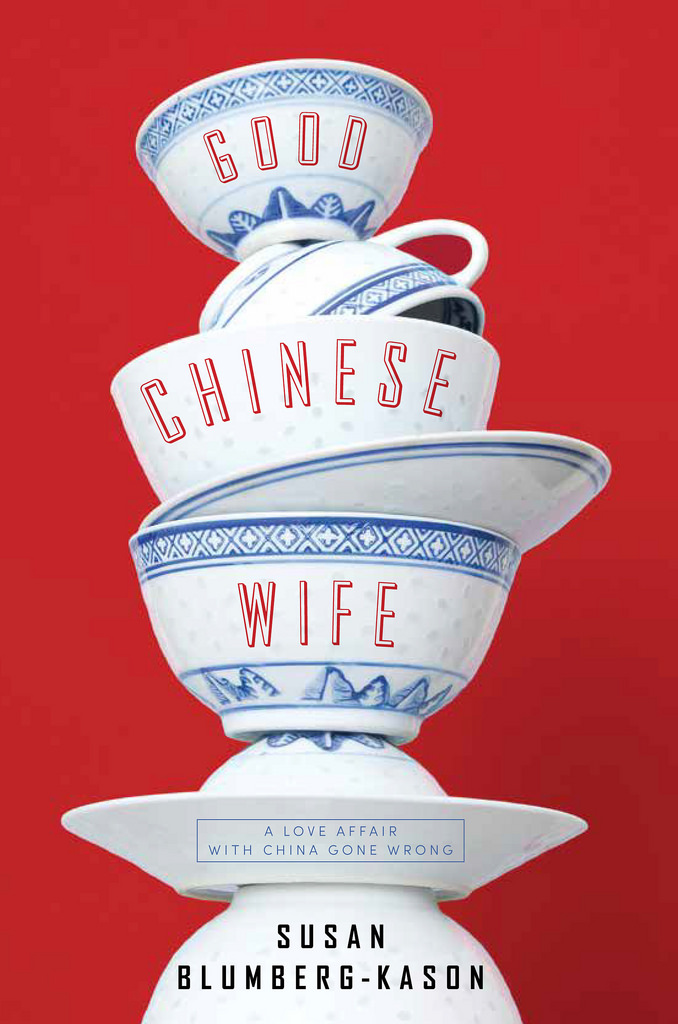
Susan Blumberg-Kason’s new memoir Good Chinese Wife comes with a revealing subtitle: A Love Affair With China Gone Wrong. Before you even open the book, you already know what kind of love this is – a marriage between a white American woman and a Chinese man that doesn’t end well.

But as I’ve learned over time, there’s tremendous value in sharing the stories of couples that didn’t work out. That’s why I sent out a submission call for stories of love lost and unrequited love. And that’s why Good Chinese Wife should be on the reading list of everyone who follows this blog.

I’m calling it the AMWF memoir of 2014 and you shouldn’t miss it.

Good Chinese Wife: A Love Affair with China Gone Wrong

This book has it all. A Chinese love interest with movie-star looks. A romance set in glitzy Hong Kong. A huge red wedding in Wuhan. A fascinating journey across China in the mid-1990s. And a transformative tale of how one shy young woman eventually finds the courage to make a dramatic escape.

But most importantly, Good Chinese Wife is just an incredibly entertaining memoir. It’s the kind of book that you’ll open, thinking you’re only going to read for a little while, and before you know it you’ve devoured the whole story in one sitting.

Susan Blumberg-Kason

As someone who has known Susan for several years, I’ve had the privilege to witness the inspiring metamorphosis of Good Chinese Wife from manuscript to published memoir. It is an extraordinary honor to introduce you to Good Chinese Wife and Susan through this interview.

A freelance writer in Chicago, Susan has written for the Chicago Sun Times, the Journal of the American Dietetic Association, and Chicago Parent magazine. Her essay “Ninety Minutes in Tsim Sha Tsui” is included in the fabulous new anthology How Does One Dress to Buy Dragonfruit. She also wrote All the Tea in Chicago, the ultimate guidebook to the city for tea enthusiasts.

I talked to Susan to learn more about her memoir – from what inspired her to write it, to her experiences as a yangxifu (the foreign wife of a Chinese man) in the mid-1990s, to what she hopes readers will come away with from her story.

—–

When did you first realize you wanted to turn your story into a memoir? What ultimately inspired you to write it?

I first thought about writing this memoir after my divorce attorney in California asked me to write out everything that went wrong in that marriage. She needed all the details in case we went to trial. It was 14 years ago and I was living with my parents. They didn’t have a laptop connected to a printer and I wasn’t in the mood to camp out in front of the basement desktop—after having felt so isolated for the past five and a half years—so I hand-wrote it over the span of a week in the company of my family. This document was sixty-seven pages! When I proofread it before sending it off to my lawyer, I thought, “Wow! This would make a great book.”

A week later I saw the movie “Not Without My Daughter” for the first time. It was about a woman who almost lost her daughter when her family traveled to Iran to visit her husband’s family. The husband had lived in the US for 20 years, but when he returned to his motherland, he suddenly wanted to stay there and keep his daughter there. I cried because the same thing could have happened to me. I wanted to share my story with others and hoped it would give parents in cross-cultural relationships something to think about if they’re in similar situations.

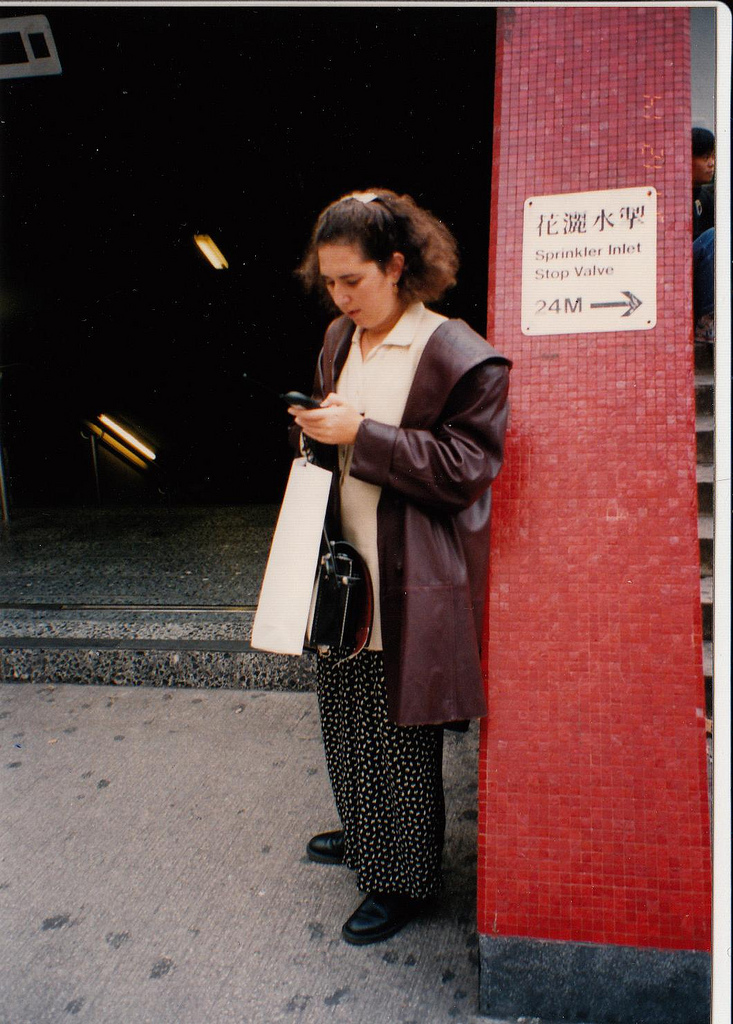
Susan at the Tsim Sha Tsui metro stop in Hong Kong.

Your love affair with Cai, a man from Wuhan, China, takes place in Hong Kong in the mid-1990s, at a time when you were mainly a graduate student. What are some of your most interesting memories about dating in Hong Kong back then?

Hong Kong was magical back then! I was so happy to be back (I’d lived there for a year in 1990-91) and open to new opportunities, including dating. Maybe it was the thrill of being back and the comfort I felt around Hong Kong people, but I definitely took more chances there than I had back in the US. There was a new confidence in the air as people who had left Hong Kong in the 1980s were returning. One was a friend of a friend who confided some pretty heavy personal history to me on our one and only date. At one point he became violent as he grabbed my arms and squeezed them as if in a vice. I was scared about leaving that bar—we were out in the middle of the New Territories—but in the end he paid for my taxi ride home, which was two hours away. I also went out with a television anchorman who promised a weekend away in Macau, but canceled at the last minute. And then there were the two guys I wrote about in the book, the two I went out with before I met Cai.

Hidden River, China - Cai's hometown
Hidden River, China – Cai’s hometown in Hubei Province

How did people react to yangxifu back in the mid-1990s?

It was a novelty for Chinese men to have a foreign wife. In Hidden River, Cai’s hometown in Hubei province, his parents had a friend whose son had married a Japanese woman. She was a legend in that danwei—whether or not people had met her—because she was a foreigner. So my inlaws were very accepting of me and liked to brag about me with their friends. When I walked around Hidden River, people were all very polite, even when they stared and pointed at my curly hair and western nose.

14583639023_393094e530_oYour wedding in 1995 was special compared to the average wedding banquet in Wuhan. Could you share with us some of the things that made your celebration different?

Well, back then children of Communist Party members had to have modest wedding celebrations. For instance, they could only use a couple of cars in their motorcades and could only have ten tables at their banquets. But because I was a foreigner, those rules didn’t apply to my wedding even though my father-in-law was a Party member. We had twenty tables at our wedding and five or six cars. Traditions were still low key in China then, so weddings were simple and quick. There weren’t tea ceremonies and the like. And women in Hubei didn’t wear red qipaos. It was all big poufy white wedding dresses. I had a difficult time finding a red qipao in Suzhou!

Cai’s parents also play a major role in your story. Give us one of your favorite scenes from the book featuring your inlaws.

I think my favorite scene in the book was when they were leaving San Francisco to return to China. They had lived with us for ten months and after many clashes about childcare, I realized too late, of course, how much I had appreciated their presence at home. Every night we watched Chinese soap operas and news from Beijing while Cai went out. And they were often my only adult interaction at home. As we said goodbye at the airport, I also thought about how difficult it must be for them to leave Jake, their beloved grandson. So this scene is full of contrasts and difficult emotions.

Susan and Jake in San Francisco in 1999.

Your book includes many memorable characters, but none more so than “Japanese father” — a rather unconventional father-figure to Cai. Without giving everything away, could you tell us something about this fascinating character?

Japanese Father was a music professor who visited China one summer and met Cai in Wuhan. The two became pen pals and wrote long letters to each other almost every week. The Japanese economy was so far ahead of China’s at the time—it wasn’t even comparable—so the opportunities that Japanese Father could offer Cai, and later his friend Rui, were very attractive to young teachers who had no other way of making more than US$75 a month. Japanese Father had a lot of time to spend on his Chinese protégées because he was estranged from his wife and son. His daughter still spoke to him, though.

Susan at the Miramar in Hong Kong.

As the subtitle explains, your story is “a love affair with China gone wrong.” Some people may see your book as yet another story that casts Asian men in a negative light, as well as AMWF relationships and even China itself. How would you respond to those concerns?

The subtitle refers to my initial attraction to China and how that all changed. It wasn’t necessarily a bad thing; it just didn’t go according to plan. As for a negative portrayal of Asian men, I can only see two Asian men who don’t come out looking great. Some reviewers think that Cai is sympathetic, and I can see that, too. But the others—Baba, Cai’s friend Rui, my former brothers-in-law, and even the guys I dated in Hong Kong—are portrayed just as men in any other countries. They have a variety of positive traits and aren’t lumped into one general category. And as one friend pointed out, at the end I go to lengths to protect the Chinese male who matters most to me—my son Jake. As for AMWF relationships, I clearly do everything I can to make mine work. In writing my story, I hope that people will see how not to conduct an AMWF relationship! And as for China, I felt aligned with many young Chinese at that time. Every time Cai and I returned to China, he was heartbroken that it was changing so quickly and wasn’t like the China of his childhood. I echoed his feelings and could see how things were different even from my first trip to China in 1988. To me, that’s not being anti-China, but rather wishing for a smoother transition, for China to have eased into the twentieth century instead of leaping into the twenty-first in one blink!

In Hidden River, Cai’s hometown near Wuhan.

Could you share some of the lessons you’ve learned from your courtship and marriage to Cai, and what you hope readers take away from your book?

From the courtship, people will probably conclude that I married Cai too quickly. But I think it’s more than that. He told me from the get-go that he had certain conditions for our marriage. Those are things I ignored or thought I could eventually get him to change. That should have been my red flag, not the time in which we became engaged and married. And from the marriage, I hope people can see that it’s not a good idea to justify bad behavior in the name of cultural differences, whatever those may be. (Unless we come from the exact background as our partner, we will have cultural differences. My new husband and I are from different religious backgrounds.) If something doesn’t sit well, it doesn’t sit well and shouldn’t be tolerated. It doesn’t matter if the person is from Asia or the US or wherever. One more thing: just be yourself and you’ll be fine!

—–

Thanks so much to Susan Blumberg-Kason for enlightening us about Good Chinese Wife!

Want to win a FREE copy of Good Chinese Wife? I’m giving one away on Twitter to anyone based in the US or Canada. And it’s simple to enter! Just tweet the following:

[Tweet “@jossailin is giving away the new memoir #GoodChineseWife and I want to win!”]

Entries must be received by 12 midnight Pacific Time on July 16, 2014! I’ll then notify the winner via messaging on Twitter. Good luck!

UPDATE: Congratulations to @JohnWGuise for winning the giveaway!

Double Happiness: “He just never thought a Western girl could [love] him”

Marghini and Mr. B (photo courtesy of Marghini)

When Marghini wrote that her Chinese boyfriend “just never thought a Western girl could ever be interested in him,” it was as if she channeled my good buddy Xiao Yu from 2002. Back then, he offered a nearly identical explanation for the frustrating experiences I had with a number of Chinese men who drifted in and out of my life — and never responded to my subtle flirtations. (I would meet John only months later, who ended all of those frustrations for good!)

Marghini’s story speaks to a reality that, like it or not, exists not only in China but around the world. But it’s also inspiring to see how she and Mr. B still managed to fall in love in spite of it!

Do you have an inspiring story or guest post that you’d love to share on Speaking of China? Check out my submit a post page to learn how.

—–

The first thing I thought when I met Mr. B for the first time was that he looked very weird. I had arrived in Beijing only few days earlier and I quickly noticed how Chinese guys usually looked, behaved, dressed, and spoke English. Then I met this guy, who didn’t look, act, dress or speak they way the other Chinese boys did, yet sported a Chinese looking face.

Coming from a small Italian city, I was never really exposed to Asian Americans or simply to people with a very international upbringing. Therefore I just assumed that face and identity had to correspond. That is the reason why I was so confused at first; I couldn’t fit that funny looking guy into any of the categories I was used to. This confusion quickly turned into curiosity, which quickly became attraction. I was captured by the fact he looked so different from anyone else and my inability to decipher him just added to my attraction. His reserved personality, coupled with my inability to fully comprehend his American accented English, didn’t make it any easier for me to understand who this charming Chinese-non-Chinese was.

Time went by and slowly I got to know the guy better. I discovered why he looked so “mixed”, being born in Hong Kong but raised in Singapore, New Zealand and the US. My attraction grew bigger and bigger and I started thinking about how to show my interest to him. Being a hot-blooded Italian lady, I was used to being very direct and open about my feelings, but this time I found myself scratching my head. I didn’t know if I had to consider him Chinese or a Hong Konger or a New Zealander or an American, and I didn’t know if any of these identities would require a different approach from what I was used to. Groping in the dark, I decided I had to keep my Italian outgoing nature at bay. I bit my tongue and tried to approach the guy in a more delicate and indirect way — just few glances here and there, a couple of sweetish emails and a lot of eagerness to engage in conversations with him. Yet I felt so lost in translation! This soft strategy kept going for longer than a month and even though I sometimes felt like I spotted some sign of interest in me, nothing really meaningful happened. Then I tried to be a bit more direct, leaving a small present on his desk with a nice encouraging note, obtaining no reaction but a “thank you”.

I started considering the idea that maybe he was just not that into me. I tried to feign indifference, but in reality I felt incredibly sad and disappointed that the Chinese-non-Chinese boy didn’t share my same interest. At some point, I just stopped trying. I thought that my attempt to date out of the box just didn’t succeed and that maybe it was not my cup of tea. Maybe I had to stick to Italians as I always did.

I would have never ever guessed that Mr. B was actually very into me! He just never thought a Western girl could ever be interested in him, so therefore he just assumed he was misunderstanding my behavior. Funny enough, this handsome, smart, talented, kind and well-educated boy was convinced he was not attractive enough to date out of his race. His upbringing in New Zealand and the US, where he had to face some nasty jokes about his ethnicity, made him believe that Western girls would never even consider dating an Asian guy. He had been struggling for his whole life, feeling too Chinese in the Western world and too Westernized in China. He felt like he never really fit. Therefore, during the whole month I spent trying to communicate my interest, he was just trying to convince himself it was not possible that a girl like me was actually attracted to a Chinese boy.

Long story short, eventually Mr. B woke up and realized that he had to take a leap of faith. So he finally invited me out. We have been together ever since our first date.

Sometimes I still don’t understand whether he is more Chinese or New Zealand, or American. I would say that different sides of his personality reflect different cultures and identities, like a crystal prism projects different colors according to the edge. That is why I fell in love with him, and why I choose him everyday — because he is offbeat, different from anyone else and really unique.

Marghini is an Italian architect who accidentally stumbled into a life in Asia and has never been the same since. She currently lives in Hong Kong with her boyfriend while they figure out what’s next for them.

—–

Speaking of China is always on the lookout for outstanding guest posts and love stories! If you have something you’d like us to feature, visit the submit a post page for details — and then submit yours today.

Double Happiness: How one “foreign student turned party boy” found love in New Zealand

Jo and Kane (photo courtesy of Kane Gu)

When it comes to the love stories I’ve shared here, a lot of readers ask me, “Where are the Asian men?” Well, I’ve got a treat for you this Friday — the story of how Kane Gu, a self-described “foreign student turned party boy” snagged himself one special lady in New Zealand. 

Thanks so much to Kane for this submission!

Want to be like Kane and have your guest post or story published on Speaking of China? Check out my submit a post page for details.

—–

It is true that love can be found in the most unusual places, or in my case, two islands in the middle of the South Pacific Ocean.

I first arrived on the Kiwi shores 11 years ago at the age of 17. You could say that I fit the archetypal image of a young Asian international student: young, anxious and being the only child of the family. At the peak of New Zealand’s campaign in promoting its education system abroad, I was but one of the tens of thousands of students who left mainland China to study here. However, having lived and gone to school in Texas prior to my arrival also conditioned me better than most for my new life here.

Seven years later, after finishing school and tertiary education, I landed a job I was happy with. And with a few failed relationships thrown into the mix, I — the once clueless foreign student turned party boy — was anything but a stereotypical Chinese male. I had dated Aussie, British and of course Kiwi girls. Years of exposure granted me a social circle of almost exclusively Kiwis, and that meant, sadly, regularly consuming rather large quantities of the happy juice. My first attempt at a serious relationship was with a young Kiwi lass. We dated for one year before moving in together and things quickly turned sour because of things beyond my control. We called it quits just before we reached the two-year mark.

Having sunken into such low spirits, I in turn partied even harder than before. No amount of alcohol could alleviate the feeling of a terrible loss. I was such a mess and thoughts of returning home were already lingering in the back of my mind.

Time went slowly as the wound healed. Christmas came once again and I was invited to a friend of a friend’s party as usual, except this time, it proved to be the turning point of my life. There she was in an elegant pink dress, my future wife to be: tall, curvy and with long blonde hair. We had our eyes on each other instantly and my feeling was apparently shared by a few other guys at the party too. A little competition for her affections had started but it didn’t bother me for long because I won. As the drinks got flowing, we got talking. After expressing a mutual interest in each other, things quickly fell into place. We chatted all night and had so much in common that every sign was pointing in the right direction.

Things went great for two months, then came the hard times. Because of earthquakes combined with issues in regards to my visa, we both lost our jobs. Arguments started to flare, tensions were high but the mutual support never ceased. We had found a soulmate in each other and these tough times forged us into a stronger couple. We always believed there was light at the end of that tunnel, however long that tunnel might be, and we would make it through holding each others’ hands. When everything eventually took a turn for the better, we made the decision to move away from Christchurch to get Jo’s career on track again. Life in Auckland turned out to be very fulfilling for us, and we soon become engaged. Jo had the opportunity to return to Xi’an with me for a month in 2012. She was adored by my parents who started referring to her as their “xifu” even though we weren’t married yet.

With our four-year anniversary coming up at Christmas this year, our now one year old daughter will be joining our celebration. We have also planned a second visit to my parents in China this October, where our wedding will also take place.

Looking back now, it almost feels like things have always been this way. We found our missing puzzle piece in each other, even though we were once kept thousands of miles apart. Sometimes love just comes so naturally as though it had all been decided for you. The distance, the cultural differences and the color of our skin didn’t matter. Maybe that’s exactly what we Chinese call “yuanfen”.

Kane Gu found his true love in Aotearoa, the land of the long white cloud.

—–

Speaking of China is always on the lookout for outstanding guest posts and love stories! If you have something you’d like us to feature, visit the submit a post page for details — and then submit yours today.

12 reasons you should read “Dragonfruit” anthology of true stories of expat women in Asia

Last week, I shared a photo essay as a companion to “Huangshan Honeymoon“, my own true story of the honeymoon vacation where my husband and I brought his father along to view one of China’s most breathtaking mountains. (Well, thanks to the lousy weather, I’ll have to take someone else’s word for just how breathtaking Huangshan can be.)

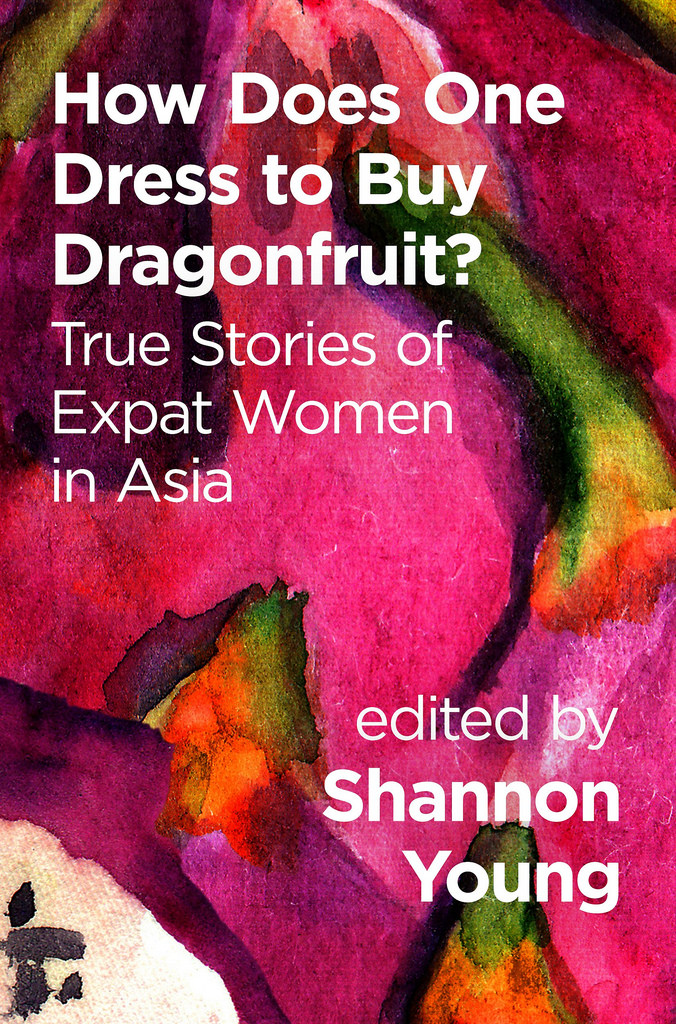
Yet that’s not the only reason you should pick up a copy of How Does One Dress to Buy Dragonfruit? True Stories of Expat Women in Asiaa collection I can’t stop raving about because of how personal and soulful every single essay is.

For me, this is the rarest of all anthologies. I actually devoured it from cover to cover in record time, and found something to love in all the essays — regardless of the story. But if you’re looking for the sort of stories that drew you to this blog, well, you’re in luck.

Love reading about cross-cultural relationships? Or dating and marriages and families in Asia? Or just want some great stories from AMWF writers? This anthology is also for you! Specifically, you’ll enjoy these 12 other essays I’d like to introduce to you. Think of them as 12 more reasons (besides, of course, “Huangshan Honeymoon“) why you should buy How Does One Dress to Buy Dragonfruit? True Stories of Expat Women in Asia.

Here they are in order of appearance:

(photo by Giorgio Minguzzi via Flickr.com)

1. “The Weight of Beauty” by Dorcas Cheng-Tozun

Dorcas instantly became one of my favorite writers when I discovered her funny and moving essay last summer titled How to be Mistaken for a Prostitute in China. Her contribution to this anthology is yet another exploration of her experience as the Chinese-American wife of a white American guy in China, but it also delves into issues all-too-familiar to many of us — how we view our bodies and ourselves. You can actually read it in the sample chapters featured Amazon.com — and chances are, you’ll love her writing as much as I did.

(photo by LeeAnn Adams via Flickr.com)

2. “Finding Yuanfen on a Chinese Bus” by Kaitlin Solimine

When Kaitlin steps onto that rickety, sleeper bus for a two-day journey from Kunming to Guangzhou, she ends up finding the ultimate road buddy (or should I say, “road gal”?). In the process, she ends up reflecting on her dating experiences in China with expats and locals alike. Kaitlin’s essay is so refreshingly honest, delving into all of the off-and-on madness, the one-night stands, the “just for sex” experiences…things most of us would rather keep locked away in our journals and minds. It’s this, plus her beautiful writing, that makes you fall in love with her essay — and long for more.

(photo by Shoko Muraguchi via Flickr.com)

3. “Love and Polka Dots” by Suzanne Kamata

Suzanne  has a different kind of AMWF family experience in Japan because of her special needs daughter Lilia, who is deaf and uses a wheelchair. Suzanne promised to take Lilia to an exhibition of artwork from the internationally renowned artist Yayoi Kusama in Osaka (which requires a two and a half-hour bus ride), and you can imagine the challenges involved in taking out a wheelchair-bound child and communicating in a language (signing) that, for Suzanne, can be tiring. Ultimately, they make the journey together to appreciate what Suzanne describes as Kusama’s “playful and whimsical” works of art (with, you guessed it, polka dots) and come away feeling stronger, inspired and even hopeful.

(By the way, many fans of this blog will enjoy Suzanne’s anthology Call Me Okaasan: Adventures in Multicultural Mothering.)

(photo by Jo Schmaltz via Flickr.com)

4. “Happy Anniversary” by Stephanie Han

While this essay tells the story of how one Korean American woman happens to fall in love with a white British man in Hong Kong on the eve of the turnover, it’s also an excellent meditation on the peripatetic nature of expat life (especially in an international family). It’s the details that make Stephanie’s essay a joy, from screaming “Kill it!” to the cobra coiled before her door (which challenges her identity as an “animal-lover”) to the $5 gold ring she got as a freebie from a Turkish rug salesman (which she subsequently uses when she gets married).

(photo by Jonathan E. Shaw via Flickr.com)

5. “Giving in to Mongolia” by Michelle Borok

A lifelong horseback riding enthusiast, Michelle once again returns to the saddle in her thirties and ultimately her passion draws her to Mongolia for a solo vacation. There she discovers a braver, stronger side of herself and finds herself gradually falling for “a man with golden eyes, a gentle voice, broad shoulders, and close-cropped salt- and-pepper hair” who speaks no English. It’s an epic story of love and personal transformation, and it stars an incredibly handsome Asian guy. What’s not to like?

(photo by Vanessa Berry via Flickr.com)

6. “An Awkward Phone Call” by Christine Tan

When she used to blog at Shanghai Shiok, Christine dished out some of the smartest (and most addictive) essays I’ve ever encountered about the experience of being an Asian woman dating a White man. And this contribution doesn’t disappoint, as she continues that conversation and deepens it with completely new and unexpected layers (including the shocking comment that drove her to abandon Shanghai Shiok). It’s moving, confessional and incredibly brave — and personally, I hope we’ll hear much more from Christine (such as finishing the memoir she alludes to in her essay).

(photo by Sarah Kim via Flickr.com)

7. “How to Marry a Moonie” by Catherine Rose Torres

Stereotypes about cross-cultural relationships don’t end with “yellow fever”, as Catherine reminds us. “…the term moonie came to mean all Korean men seeking mail-order brides from poor countries like the Philippines. But I expected my friends to know the difference—to know I wasn’t mail-order bride material.” She’s Filipino, Jay is Korean, and the challenges they face go far beyond stereotypes. A terrific essay for anyone who has ever had the bride-to-be jitters (like me!) or managed to survive the kind of “our family will handle everything”, big, fat wedding I had in China.

(photo by Eric Hunt via Flickr.com)

8. “The Rainiest Season” by India Harris

As longtime readers know, I’ve railed against the whole “Asian women are stealing our husbands” stereotype that makes its rounds in the expat world. Still, you’ve heard the stories — how some white guy relocates to Asia with his wife in tow, only to toss her aside for a local woman. For anyone wondering what could happen when a marriage blows up this way (and for that matter, how the woman comes to reclaim her own life) here’s your essay. If you’re anything like me, you’ll keep turning the pages and thinking, “Oh. My. God.”

(photo by Jose Javier Martin Espartosa via Flickr.com)

9. “Moving to the Tropic of Cancer” by Philippa Ramsden

Living abroad doesn’t make you immune to the ravages of life, such as a potentially life threatening illness. That’s not what Philippa, who hails from Scotland, expected when she moved to Burma with her Himalayan Tamang husband. But suddenly, she’s forced to navigate hospitals, appointments and tests in a completely foreign world — and must find the courage to face one frightening diagnosis. A moving essay from an AMWF sister.

(photo by Sarah Joy via Flickr.com)

10. “Ninety Minutes in Tsim Sha Tsui” by Susan Blumberg-Kason

A stroll through this neighborhood in Hong Kong transports Susan right back to the days when she was still the “Good Chinese Wife” to her husband from Wuhan, and all of the challenges she faced back then. While you’re waiting for Susan’s book to come out in late July (titled, of course, Good Chinese Wife), this essay is the perfect introduction to what I’m calling the AMWF memoir of the year.

(photo by Boff Hiroshi via Flickr.com)

11. “Here Comes the Sun” by Leza Lowitz

Not every country and culture encourages adoption, including China…and Japan. That’s where Leza and Shogo, her Japanese husband, decide pursue this unconventional pathway to parenthood. It’s a tale of determination, silver linings, and what happens when a little boy suddenly becomes a new ray of sunshine in your life. And if you enjoy this essay, watch for Leza’s forthcoming memoir which covers her adoption experience.

8413571054_5b64023fed_z
Guo Jian and Ember Swift (photo by Luna Zhang)

12. “Chinese Stonewalls” by Ember Swift

Going abroad has a way of teaching us new things about ourselves. For Ember, who had only ever been with women, falling for a man (Guo Jian, the lead singer of Long Shen Dao) takes her by surprise in Beijing, and eventually pulls her into a life she never imagined for herself. Anyone who has followed Ember’s writing will enjoy the beautiful and life-changing story of how she came to be the queer girl who got married in China.

So what are you waiting for? Pick up your copy of How Does One Dress to Buy Dragonfruit? today and get swept away by these and the many other outstanding stories!

P.S.: On Facebook? Follow How Does One Dress to Buy Dragonfruit? now!

How Does One Dress to Buy Dragonfruit?