The Plum Blossom, Our Greatest ‘Friend’ of the Winter – Pub’d on China Daily

Recently, China Daily published my latest column titled The plum blossom, our greatest ‘friend’ of the winter. Here’s an excerpt:

If anyone had ever told me as a child growing up in the United States that a flower could flourish in the coldest days of winter, a flower that bloomed straight from the bare branches of a tree, I would have thought they had a vivid imagination or a penchant for spinning tall tales.

Yet years ago in late February, while strolling the eastern shores of the West Lake in Hangzhou, Zhejiang province, with my husband, Jun, I encountered a spray of brilliant pink petals cascading over tree branches, which looked as artfully windswept as a bonsai. That striking shade, more typical of spring and summer flowers, seemed utterly defiant against the melancholy gray of the overcast sky and the mournful silhouettes of other trees, their leafless limbs stretched upward as if praying for an end to the chill of the season.

I almost didn’t believe my eyes at first. Surely flowers couldn’t bloom like that, direct from the branch, without the usual green leaves? And how could they thrive in this weather, where temperatures that hovered just above freezing had led us to don our warmest down jackets and even hats?

After my astonishment, I felt a certain appreciation for this ethereal beauty before me, painting the otherwise dreary February landscape into such a gloriously hopeful hue, promising better times just around the corner.
That is the power of the plum blossom, one of the most distinctive and cherished flowers in China.

You can read the full article here. And if you like it, share it!

Twas the Night Before Chinese New Year’s Day

Twas the night before Chinese New Year’s Day, and all through the house

We were busy preparing for the Year of the Mouse

The red couplets were hung by the doorway with care

In hopes of a lucky year for all who lived here

We had taken a moment to reflect and pray

As we remembered ancestors at the start of the day

The place had been tidied up just great

So we could start off the new year with a clean slate

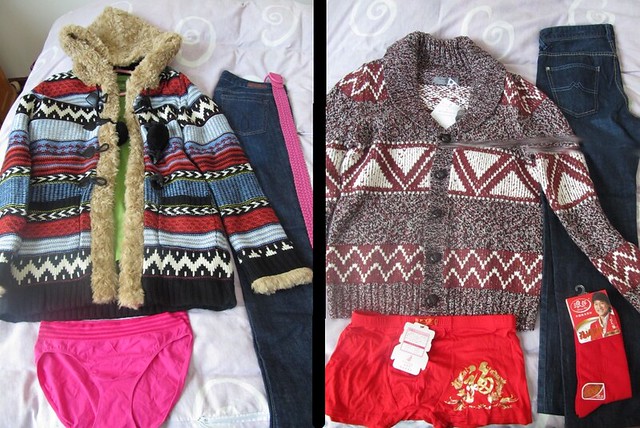
We had laid out new clothes and dressed in red

To ensure auspicious times for the days ahead

The red envelopes were all stuffed with plenty of money

To promise a new year filled with prosperity

We had cooked up a feast for the year’s most important meal

Which we enjoyed among company with much gusto and zeal

On our comfiest couch did Jun and I stay

As the grand Spring Festival Gala on TV did play

IMG_5743-1

At midnight, across China there arose such a clatter

But no need to spring up to see what was the matter

After all this was one of those holiday “perks”

Because people love to welcome the year with fireworks

IMG_2129

But since Jun and I live in Beijing, where they are banned,

Surrounding us was a relatively quiet and serene land.

That was just fine, given our exhaustion was deep

And we desperately wanted a little good sleep.

And as we settled into bed, with the new year now in sight,

We said, “Happy Chinese New Year to all – and to all a good night!”

Was Kim Lee, Domestic Violence Victim in China, Right to Forgive Her Abusive Ex-Husband? – Pub’d on WWAM BAM

The group blog WWAM BAM just published a collaborative post I worked on titled Was Kim Lee, Domestic Violence Victim in China, Right to Forgive Her Abusive Ex-Husband? Here’s an excerpt:

Back in 2011, Kim Lee made headlines after posting shocking photos of her bruised and beaten face, the result of domestic abuse by her husband. This incident would catapult her into the public spotlight, and she would go on to divorce him and win a landmark case in China that would pave the way for others.

But now, after years of being hailed as a hero for domestic violence victims, Lee has been under fire since her public post expressing forgiveness to her ex-husband.

To get the full story, as well as our opinions, head on over to the group blog WWAM BAM. And if you like it, share it!

Photo credit: By Airman 1st Class Ericka Engblom – https://www.dvidshub.net/image/615267, Public Domain, https://commons.wikimedia.org/w/index.php?curid=41696119

Should You Cave to Pressure to Drink, Smoke at Chinese New Year?

Should you cave to family pressure at Chinese New Year to drink or smoke, even if you’ve never done either, out of politeness to your hosts?

For the author of an article published in Beijing Kids, detailing how she brought her Beijing-born husband to see relatives for one Chinese New Year, the answer was, shockingly, yes:

Now I don’t know whether you’re familiar with Dongbei (Northeastern) hospitality, but it’s intense. If I had to describe it in one word, it would be excess. According to one of my aunts, Dongbei people give their guests the best that they have to offer which, in my family, translated to the most expensive baijiu, extravagant meals breakfast, lunch, and dinner, and non-stop smoking even for my non-smoker husband. According to my husband, it’s impolite to turn down gestures of hospitality, so for a week, he became a smoking baijiu day-drinker.

I understand how sitting around a crowded table at Chinese New Year can function like the social equivalent of a pressure cooker, where people get passed cigarettes or poured baijiu even after multiple refusals. And yes, sadly, many Chinese feel bound by an unhealthy culture, especially in northeastern China, as chronicled by China Daily in the article Learning to Refuse Toasts in the Season of Ganbei, published Jan 26, 2012:

Li Li, 36, from Harbin, Northeast China’s Heilongjiang province, said she often feels pressured at business banquets to drink too much with friends and clients and the problem get worse during the holidays.

“Repeatedly, and I mean repeatedly, clients come to me proposing toasts, and they won’t stop until I’m drunk,” she complained. “Unfortunately, in our culture, you just don’t turn down a toast-people would feel humiliated and consider your rejection a put-down. But it seriously hurts my health.”

And among family, people you’ll end up seeing again and again over the years, drinking or smoking, even when you don’t want to, creates a potentially binding precedent that will haunt you every time you return. Everyone will point out how you raised your glass or lit up last time, and clamor for you to fall in line once again.

But who says you have to say yes?

My husband, who is Chinese, doesn’t smoke or drink, and won’t make an exception for holidays merely because of family pressure. Granted, he hails from Zhejiang province, which perhaps has a more tolerant attitude toward people who pass on the cigarettes or baijiu. But he has also found it helpful to trot out this brilliant excuse, which always works: “I have a foreign wife!”

In fact, pointing to a spouse who wouldn’t approve has actually become a bona fide reason for many Chinese to turn down alcohol, as chronicled among the tips mentioned in the China Daily piece Learning to Refuse Toasts in the Season of Ganbei:

Strategy 1: Drive to parties. Since drunken driving has been classified as a major criminal act, even the most enthusiastic drinker would not force a driver to break the law.

Strategy 2: Bring up your spouse, even if he/she is not present. Tell those urging you to drink that your significant other considers drinking too much absolutely unacceptable.

Strategy 3: For health reasons. If you were told for medical reasons to steer clear of alcohol, telling the group, in your doctor’s words, can get you out of forced drinking.

Strategy 4: Complain about your workload. You need not go into much detail, just tell your friends or clients that you have too much work to do after the dinner.

Most of these strategies could also help you say no to cigarettes too. (And you could even use the “health reason” strategy to craft your own “white lie” of a doctor’s excuse.)

Plus, anyone facing forced drinking might also bring up that time-honored Chinese saying – yĭ chá dài jiŭ (以茶代酒, substitute wine with tea) – which has allowed many a person in China to escape that dreaded baijiu.

And if you feel especially courageous, consider reminding your host of the expensive lessons that could ensue from coercive imbibing, such as the case chronicled in the China Daily article Don’t Force Others to Drink:

A court has ordered a 69-year-old woman in Kai county, Chongqing, to pay a fine of 330,000 yuan ($53,000) to her brother, who fell down and injured himself after being coaxed by her into drinking about 600-ml of homemade liquor at her birthday party. The fine should be a warning to people who are in the habit of forcing others to drink beyond their capacity, says an article in Legal Daily.

If you plan to spend Chinese New Year with your family or that of friends, don’t assume you must succumb to pressure to drink or smoke. You can say no, following one of the many strategies I’ve listed in this piece, and still remain in the good graces of your hosts, while leaving the vices to others.

So when it comes to “cheers”, I hope your Chinese New Year is filled with those of happiness!

What do you think?

Photo credit: https://commons.m.wikimedia.org/wiki/File:Vertreter_der_vier_Baijiu_Kategorien.jpg

Don’t Marry in a ‘Widow Year’? On a Chinese New Year Superstition

Did you know that 2019, the Year of the Pig, was a widow year, and it was supposedly “unlucky for marriage?

A “widow year”?

I’ve heard the term “widow”, a woman whose husband has died, used to describe all sorts of things, from the “widow’s peak” on your hairline to, of course, the deadly “black widow spider”. And given the original meaning of “widow”, the term, when paired with a year, struck me as a rather ominous combination.

This piqued my curiosity, which prompted me to do a little research and learn more about this superstition.

Why do people call it a “widow year”? And why is it supposedly bad for marriage?

A “widow year” means any year in the Chinese lunar calendar without lichun or Spring Commences, one of the 24 solar terms that divide up the lunar year. Specifically, lichun or Spring Commences marks the coming of the spring season.

According to the China Daily article Couples Rush to Tie Knot Ahead of “Widow Year” (published Feb 3, 2010), some Chinese people think of lichun or Spring Commences as “a time of Yang (masculine) energy.” To them, a year without lichun or Spring Commences equals a year without Yang energy as well.

The article provides further clarification:

Superstitious people believe women who get married in a year without the “Spring Commences” day will become widows. … Tradition-bound parents also fear consequences like husbands coming to harm, marriages breaking down and children getting bad luck.

Should you postpone your wedding plans during a “widow year”?

If you’re newly engaged, should you put the nuptials on ice or opt for a speedy elopement before the “widow year” begins?

Well, consider what that China Daily article also said:

Regarding the idea of a “widow year”, Guo Hu, director of Beijing’s Bureau of Meteorology, says that on average, there are seven so-called “widow years” every 19 years. But there are also seven years with two “Spring Commences” days in the same 19 years.

“It is totally groundless to say a year without a Spring Commences day is unlucky,” Guo told the Beijing Daily.

In other words, it all depends on your perspective and what you consider auspicious.

After all, imagine all the hundreds of thousands of people who marry in any given “widow year” around the world. Every single one of these couples could not possibly suffer the same marital misfortune. If a “widow year” truly posed a threat to people everywhere, then why didn’t anyone ever pass the warning on to me while in the US?

And, apparently, a growing number of young Chinese people don’t mind flouting this superstition either, as the China Daily article Vowing to be different with the nuptials notes:

Wang Xiaoqiang, a 26-year-old white collar worker in Shanghai, doesn’t really care that the Year of the Snake 2013 is not regarded as a propitious year for weddings.

“I was told Lunar 2013 is not a good year to get married but that is something believed by elderly people,” said Wang.

In other words, when a “widow year” comes, worry less about the superstition — and follow your heart instead.

What do you think about the “widow year” superstition for Chinese New Year? Would you marry in a “widow year”, or would you postpone your wedding?

Correction: Updated original post, which incorrectly named 2020 as a widow year.

Red Clothes, a Perfect Chinese New Year Gift for Someone’s Zodiac Year

Usually when we send anything for Chinese New Year to my husband’s parents here in China, it invariably elicits a very standard response that shouldn’t surprise anyone familiar with Chinese culture: “You shouldn’t have spent that money!” In fact, Jun’s parents already used this phrase on us twice – once after receiving the Chinese New Year gift boxes of Chinese jujube dates and walnuts, and then again after sending some whole root ginseng.

But when Jun told his father in a phone conversation that a gift box of auspicious red socks were also headed his way, he perked up with an uncharacteristic note of excitement in his voice. “Eh, your mother told me to buy some red socks and underwear!”

(That was my father-in-law’s way of saying: I love it, thank you!)

Those who know something about Chinese New Year culture and superstitions won’t find it surprising that he embraced this delivery more than the others.

First of all, wearing red in your Chinese zodiac year supposedly wards off the potential bad luck that might threaten anyone born under that zodiac sign. And second, people say the red clothing offers stronger protection if someone else buys it for you.

So since I bought him pairs of red socks, that could make these an especially propitious and welcome way to ring in this Chinese New Year, his own zodiac year.

Red socks or underwear (from actual briefs, boxers or panties to long johns) can present easy options to buy for your friends and family, provided you know their sizes. But when in doubt, go for anything painted in brilliant red: hats, scarves, gloves, wraps and even necklaces or bracelets.

Have any Chinese family or friends about to enter their zodiac year? Don’t forget them on your Chinese New Year shopping list – and remember, this is one time that someone might actually cheer to receive underwear or socks! For ideas, visit my post Great Gifts For Your Chinese Zodiac Year (Ben Ming Nian).

Need more Chinese New Year gift ideas for your Chinese loved ones? I’ve written extensively on the subject of gift-giving and recommend the following posts:

P.S.: If you’re shopping this Chinese New Year on Amazon.com, you can actually support Speaking of China — at no additional cost to you — by making a purchase through one of my affiliate links. Thanks!

Step on Villains? A Curious Find While Buying Lucky Red Socks for Chinese New Year – Pub’d on WWAM BAM

The group blog WWAM BAM just published my most recent post Step on Villains? A Curious Find While Buying Lucky Red Socks for Chinese New Year. Here’s an excerpt:

2020 will welcome the Year of the Rat, the Chinese zodiac sign for some family members, which has prompted me to sift through online stores in search of a very traditional Chinese New Year gift for those about to enter their Chinese zodiac year: red socks.

I always thought that only the color mattered. After all, superstition claims that wearing red in your Chinese zodiac year – from red underwear and red long johns to red jackets and almost anything else painted in this brilliant hue – supposedly bestows luck upon the wearer, along with an extra layer of protection from any misfortune in the coming year.

But then, while perusing the endless red socks listed in Alibaba’s Tmall, I kept noticing a curious decoration on the bottom of many of the options – the characters cǎi xiǎorén (踩小人, step on villains) and an image either of a tiny person.

Read the full post at WWAM BAM — and if you like it, share it!

7 Favorite Chinese Brands for Chinese New Year Gifts

As Chinese New Year will light up homes and skies around the world at the end of this month starting Jan 24 (the eve of Chinese New Year), many of have already begun the annual shopping “shuffle” to find those perfect Chinese New Year gifts. And many Chinese brands you might not know happen to shine as splendid gift choices for Chinese New Year.

Here are 7 favorite Chinese brands – featuring foods and supplements — that you should consider while shopping for Chinese New Year, along with links to online stores in China and also around the world, including Amazon (where your purchases help support this site).

Three Squirrels (三只松鼠)

Chinese have gone nuts (pun intended!) over this label, which reigns as one of China’s best-selling snack brands and boasts an adorable trio of squirrels as its mascots. Naturally, things such as pecans, macadamias, pistachios, almonds and more stand out as favorites, but Three Squirrels also sells dried fruits, fruit and nut combos, plus a wide array of products that cover practically every snack category in China (from cookies, crackers and cakes to smoked/dried tofu and, yes, even potato chips). If you live in China, buy from the official Three Squirrels online stores on Alibaba’s Tmall or JD; you can also find Three Squirrels on Amazon.

Prince of Peace (太子牌)

This Hong Kong brand has won fans across the world and become one of the most ubiquitous ginseng brands in Chinese supermarkets across America for its quality and potent American ginseng products. While Westerners tend to like the convenience of the teas, capsules and powders, most Chinese will prefer whole root ginseng or ginseng slices. In China, you can buy on JD’s online marketplace. Otherwise, visit the Prince of Peace online store or Amazon.

Honey West (楼兰蜜语)

This brand name captures the sweet allure of the many popular snack foods of western China that have enchanted peoples’ tastebuds. Unlike Three Squirrels, Honey West specializes in western Chinese snacks such as large Chinese jujube dates, walnuts, raisins, figs and much more. As much as I love Three Squirrels, Honey West has become my go-to choice for Chinese New Year gifts for the family – their boxed Chinese jujube date/walnut combos always bring a delicious helping of joy (and good fortune, thanks to their clever packaging design) to the table at the holidays. You can find Honey West on Alibaba’s Tmall or on JD.

By-Health (汤臣倍健)

As vitamin brands from abroad have multiplied in the Chinese market, the domestic brand By-Health still flexes its muscles as one of the top choices for Chinese consumers looking for quality supplements at a good price. And since By-Health imports many of its key ingredients, buying from them can be like opting for an overseas brand. Even better – By-Health offers a selection of nearly every major vitamin, from vitamin B and C to multivitamins and calcium to even specialty supplements such as spirulina and garlic oil. You can purchase By-Health online at their Alibaba Tmall official store or their JD official store, and also visit its English website.

Olivoila (欧丽薇兰)

For years I’ve watched olive oil pour into supermarket shelves – and kitchens – across China, to the point where the country has risen to become one of the world’s major importers of this product. While Spanish and Italian imports vie for customers, the Chinese brand Olivoila, which promotes its own blend of imported olive oils tailored to the Chinese market, continues to sizzle among leading choices. In fact, my employer even gave a special boxed set of Olivoila olive oil for Chinese New Year. Here in China, you can purchase Olivoila at the Alibaba Tmall official store or its JD store.

Great Wall (长城葡萄酒)

The Alibaba Tmall supermarket listed a gift box of Great Wall red wine among its hottest selling products for Chinese New Year, a testament to how beloved this time-honored brand remains, despite the diverse range of imported wines that have flooded the Chinese market. For Chinese New Year, choose wines in red, the most festive color of the season. You can purchase Great Wall at the Alibaba Tmall official store or its JD official store.

White Rabbit (大白兔)

For many Chinese, White Rabbit candies, which date back to 1959 and represent one of the first treats in modern China, recall the sweet taste of nostalgia with every bite. And since generous bowls of candies always feature in Chinese New Year celebrations, consider surprising your Chinese loved ones with a box or some bags of these. They come in the traditional white milk candies as well as some newer and more innovative flavors (such as wasabi!). You can buy White Rabbit candies at the Alibaba Tmall official store or the JD official store, as well as on Amazon.

Photo credit: By David290 – Own work, CC BY-SA 4.0, https://commons.wikimedia.org/w/index.php?curid=77127042

What do you think? What are some other favorite Chinese brands you would recommend for Chinese New Year gifts?

Need more Chinese New Year gift ideas for your Chinese loved ones? I’ve written extensively on the subject of gift-giving and recommend the following posts:

P.S.: If you’re shopping this Chinese New Year on Amazon.com, you can actually support Speaking of China — at no additional cost to you — by making a purchase through one of my affiliate links. Thanks!

Actor Liu Ye, Wife Anais Martane Stand Up for Sea Turtles with WildAid

While reading China Daily’s newspaper recently, I came across a public service ad starring a rather familiar couple:

Sure enough, I recognized actor Liu Ye and his wife Anais Martane, one of the most beloved celebrity Chinese-foreign couples here in China — and now ambassadors for the nongovernmental organization WildAid:

WildAid released a new series of TV messages and billboards featuring popular actor Liu Ye and his wife Anais Martane to raise awareness about the threats while calling on the public to stop buying sea turtle products. Speaking at the launch event this week, Liu Ye said “we can all do something really simple to help protect sea turtles, and that is simply not buying sea turtle products. We should all also reduce our use of plastics, and keep plastic waste away from coastlines.”

Liu Ye, considered one of the top actors in the Chinese mainland, remains best known in the West for his breakout performance in the 2005 release of Balzac and the Little Chinese Seamstress, the 2006 Curse of the Golden Flower and the 2007 Hollywood film Dark Matter. He and Anais Martane, a French photographer, married in Beijing in 2009.

According to a China Daily interview with Liu Ye — Heartthrob Liu Ye Now Enjoying Work and Married Life, published March 11, 2010 — Liu said, “We decided to get married because we share traditional views of the family. I am over 30 and she is one year younger than me. I want to be responsible for her and marriage is a promise.” In response to a question about what he found most attractive about Martane, he said, “She is a very nice woman. She gives me lots of peaceful feelings. She likes reading and has read many classics. She likes Israeli and Russian music.”

And another China Daily article notes Anais Martane stands as “more than just a Chinese celebrity’s wife” as she has become involved in public service projects and cares very deeply about the environment. She told China Daily, “My relationship with environmental protection began with a connection to the sea, as my childhood was spent in a coastal town, and I am crazy about everything to do with the sea.”

You can learn more about the WildAid campaign for Sea Turtles involving Liu Ye and Anais Martane at the WildAid website.

The Best Posts on Speaking of China in 2019

The end of the year is near! If you’re looking for a few great reads, why not peruse my roundup of the best posts from 2019 on Speaking of China?

The Top 5 Posts by Views:

Velma Demerson, Arrested for Having Chinese Boyfriend in Canada

Loving a Chinese man and expecting his child shouldn’t be a crime. But white Canadian Velma Demerson got arrested in Canada in May 1939 because she was pregnant at 18 with the child of her fiancee Harry Yip.

A Trip Backwards: How People Thought of Interracial Marriages With Asian Men in the Past

As I compiled this post, I found it disconcerting (but not surprising) that a number of the opinions described below still endure, including in dark corners of the internet. A lot of people still believe interracial love is wrong.

Are Dating Apps Best for Chinese, Foreigners to Pair Up?

What dating apps or websites should I use? That’s the question a young Chinese man, who was looking to meet women from Western countries, posed to me recently.

But it’s also worth asking, are dating apps the best way for Chinese and foreigners to find love together?

‘How I Became Russian’ Movie Pits Shanghainese Man Against Future Russian Father-in-Law

Years ago, when Philip Wong of Wongfu Productions cited Meet the Parents as a movie that should have starred Asians in one of the major roles, the universe must have heard his plea. That’s because a new Sino-Russian collaboration How I Became Russian (Как я стал русским), which hit the theaters in China on Jan 25, stands as a perfect example of a Meet the Parents-style tale, with a Sino-Russian twist.

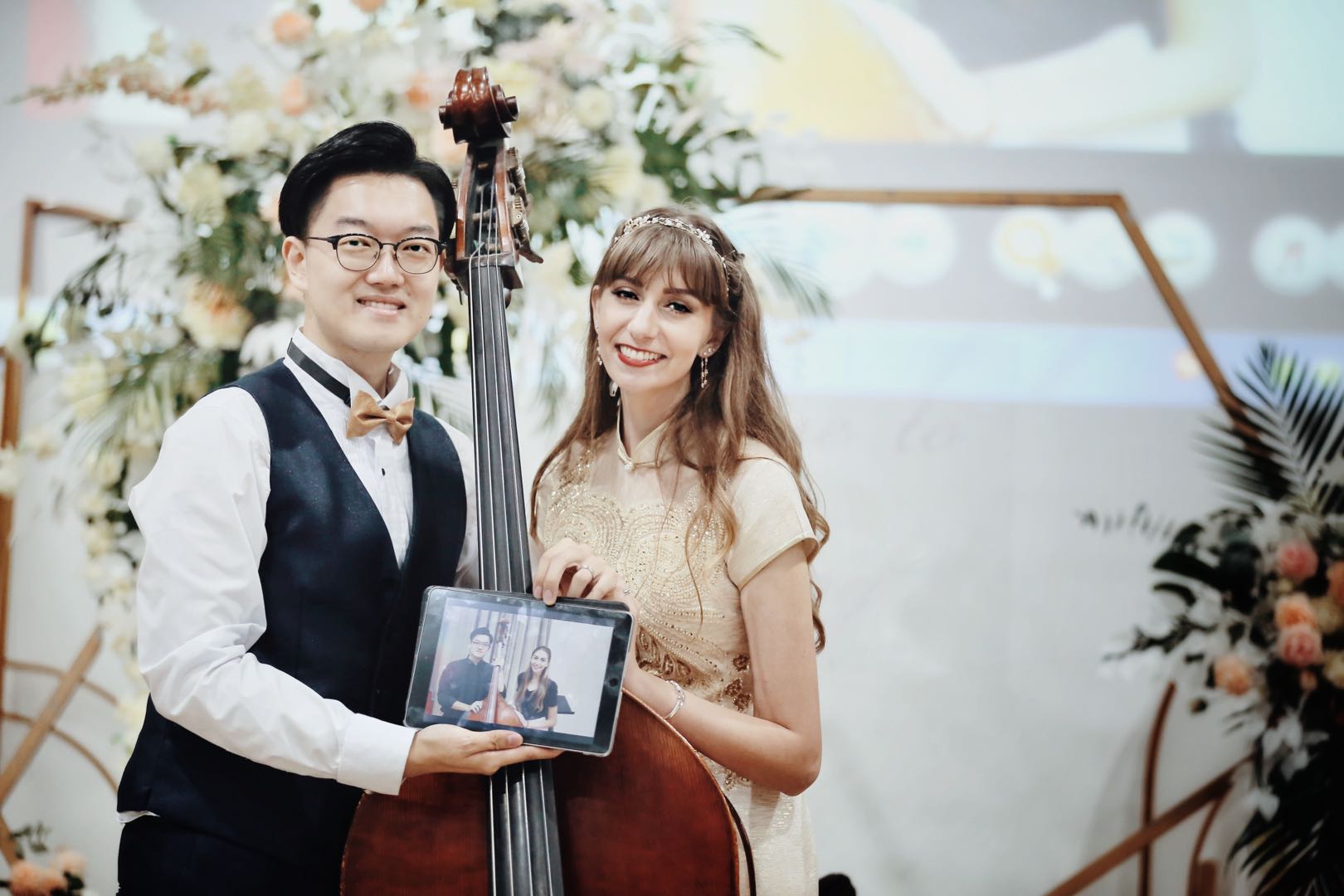
Chinese Bass Player, American Woman Start Lifelong ‘Duet’ in Guangzhou

Girl sees boy performing at a concert, longs to meet him, and somehow destiny helps kickstart a lifelong duet. That’s the heart of this story from a US woman living in Guangzhou.

My 5 Personal Favorites (in Order of Appearance in 2019):

Should Foreigners Who Marry Chinese Also Learn the Language?

If you’re a foreigner with a Chinese spouse or loved one, should you learn some Chinese? Even just at a conversational level? Do we have an obligation to do so because we’re intimately connected to this country and culture?

Are Highly Sensitive People More Accepted in Chinese Culture? One Study Says Yes

Over the years, I’ve found myself more at ease in China, and I would often attribute it to a number of things, including this sense that I felt my personality was more accepted in the culture. Imagine my surprise to read Elaine Aron’s The Highly Sensitive Person and discover a study that actually revealed that Chinese culture appears more welcoming to sensitive individuals.

‘African Jasmine Flower’: Ruth Njeri Finds Success, Love on Chinese Stage

Among the many talented foreign women who happened to marry Chinese men, there’s Kenyan Ruth Njeri, who rose to fame – and found love – on the stage in China.

The Unglamorous Reality of Citizenship in Chinese-Foreign Marriages

The clunky reality of how citizenship actually works — especially when Chinese and foreigners wed — is nothing like all of those gossamer hopes and dreams you might have had about international marriages.

Intercultural Love Leads to More Creativity? Study by MIT Prof Says Yes

Creativity doesn’t usually come to mind when we think of intercultural love — but it should, thanks to a 2017 study from MIT assistant professor Jackson G. Lu.

Wishing everyone a very Happy New Year!