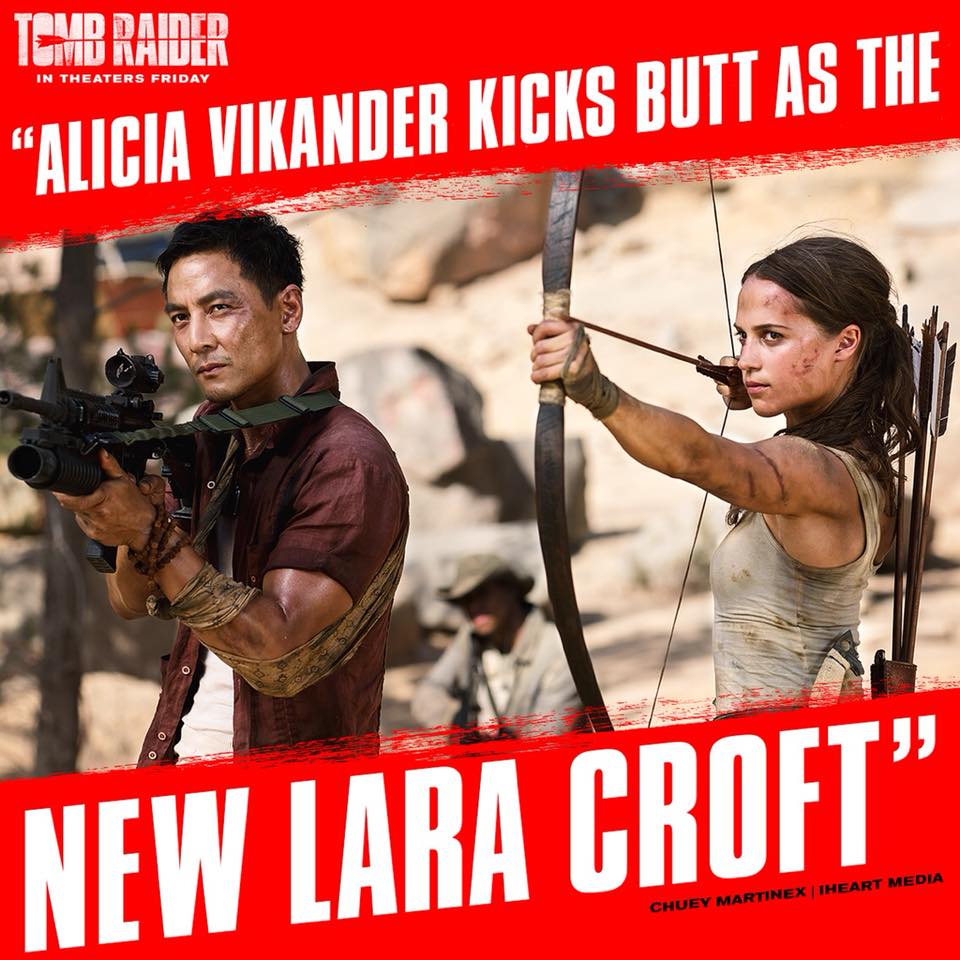
When I heard that Daniel Wu of “Into the Badlands” would star with Alicia Vikander in “Tomb Raider,” the latest reboot of the “Lara Croft: Tomb Raider” series, the movie immediately became one of my must-see films for 2018. I love a good action movie, especially if the film is reminiscent of the Indiana Jones films that have become personal classics. Add to that the fact that they cast a Chinese-American man opposite the white female lead – and in an action movie, no less. Plus, this is 2018, a year that has witnessed progress in representation with the release of “Black Panther” and the forthcoming film “Crazy Rich Asians.” So I hoped this might be another push from Hollywood to open up better roles to, in this case, Asian male actors.
First, the positive – “Tomb Raider” is great entertainment, especially for anyone looking for a fun movie to while away your summer afternoon or evening. Vikander makes for a terrific Lara Croft. And in the era of #MeToo, where women’s empowerment is taking center stage, it’s refreshing to see a young woman kicking some serious butt and fearlessly embarking on archeological adventures in the style of Indiana Jones. While the film loses a bit of its momentum in its second half, I still found it solidly entertaining and worth the time. My husband and I are both hungry for the sequel.
Daniel Wu, who stars as Lu Ren, is another story.
A Forbes critic called his performance “winning if underused,” which underscores the problem here. Without giving too much away, Wu’s character functions more as a means to a destination than anything else – and once there, he largely faded into the background.
Meanwhile, Daniel Wu is the first leading man in a Lara Croft movie who isn’t her love interest. A writer for Time noted, that, in past movies, “every time any man tries to work up the courage to ask Lara out in the movie, she’s already biking away on to another adventure,” which doesn’t happen here. I’m all for more movies starring women who aren’t defined by their romantic lives. But still, you can’t help but notice the filmmakers made this choice when they cast an Asian man opposite Croft. It’s like business as usual for Hollywood, yet another asexual Asian guy in the movies. In some ways, Daniel Wu’s presence feels like a cheap attempt to appeal to moviegoers in the growing China film market, which overtook the US earlier this year to become No 1 in the world.
Given that the Lara Croft movies never stick with the same leading men, I don’t expect we’ll see Daniel Wu in any sequels. It’s a shame. They could have done so much more with the star of “Into the Badlands,” a brilliant show on AMC (that, incidentally, isn’t getting the promotional attention it deserves).
Here’s wishing that, if the producers want to continue courting the Chinese market with more Asian actors, they might actually allow these Asian leading men to inhabit full-bodied characters that can truly complement Vikander’s Lara Croft.
Have you seen “Tomb Raider“? What did you think of the film?
P.S.: This post includes links to Amazon, where your purchases help support this blog.
Well, readers took to this blog and social media to share their own experiences of mistaken identity as part of interracial couples of Asian men and non-Asian women (AMXF). The comments were fascinating, highlighting a number of “mistaken identity” situations that I’ve either heard of or experienced myself.
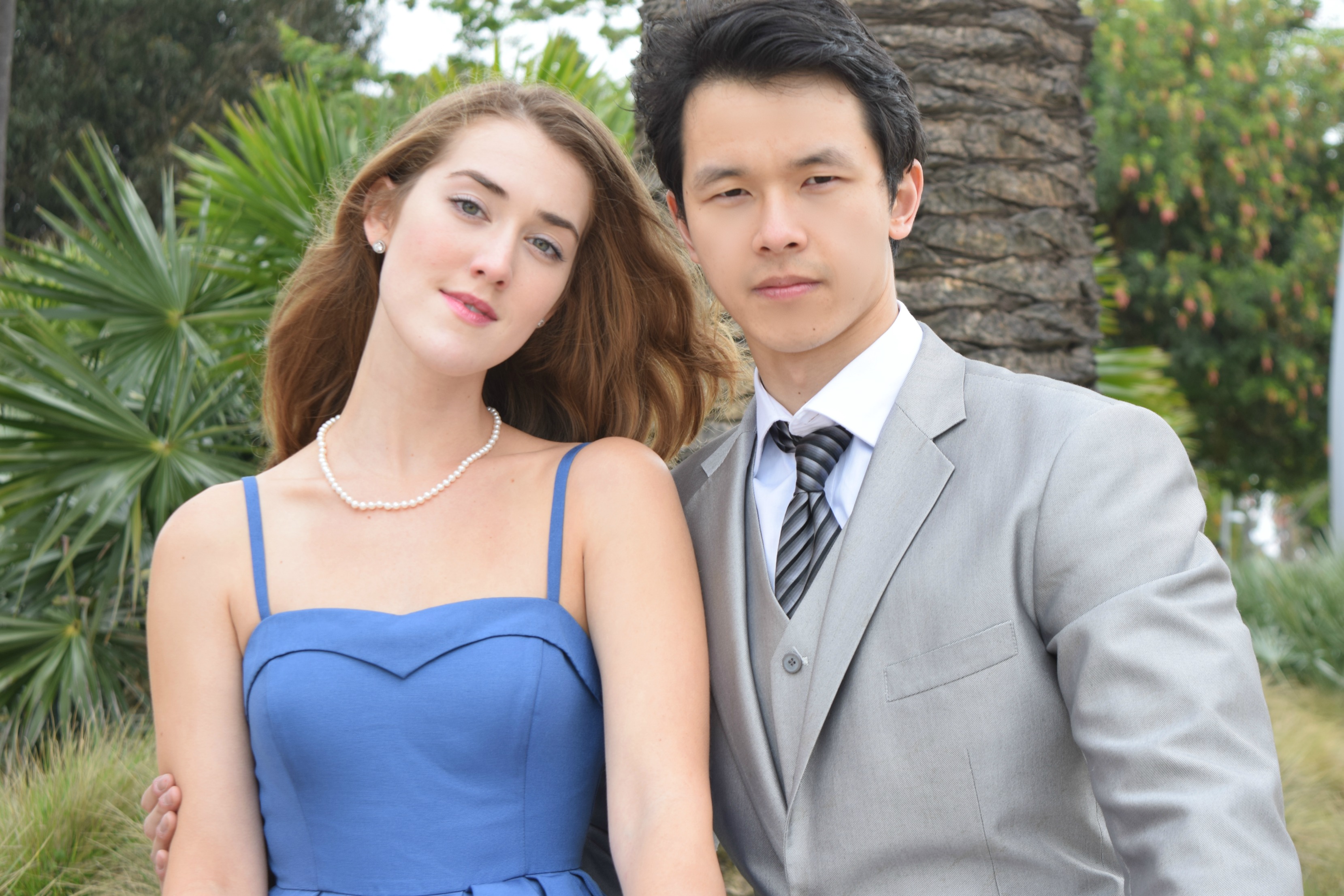
Here are a few common themes, inspired by your comments. (Note: A big thank you to Ana Hudson (IG: whitechocolateplayer) for permission to run the her photo with this post, featuring models Justin Zhang (IG: NoobStrength) and Marina Bruzadin (IG: marinabruzadin). You can see more of these photos in the post 13 Sexy, Fun ‘AMXF Deadpool’ Photos to Make You Smile.)
Is he your translator?
One fellow on Facebook chimed in with what must surely be the No 1 thing that comes to mind when people in China happen to see Chinese men walking around with a woman of a different race: “I have been considered as her interpreter more than husband ????”
This actually happens all the time to me and my husband as well — so much so that I’ve come to expect it from people in China, particularly when we’re in places like banks or stores!
Is he your tour guide?
Similar to “Is he your translator?”, a “tour guide” is another form of mistaken identity frequently experienced by AMXF couples together here in China. Especially if you happen to be together at any tourist attractions in China. As a woman commented on Facebook, “When we were young people thought my husband was a tour guide ????”
Is she your teacher?
As everyone knows, English teacher is the most common profession for foreigners in China. Well, when some folks in China see a Western woman walking with a Chinese man — two people who are actually in a couple — they might assume she’s his English teacher.
That’s what happened with one woman who commented on Facebook, noting, “My husband is always asked if I’m his English teacher but actually he used to be my Mandarin teacher!”
And more…
A Chinese man and a white woman, who were husband and wife, walked into a restaurant…but – no joke here — the staff didn’t take them for a couple, as one woman took to Facebook to share: “I get this constantly when we eat out together. ‘Is this one check or two?’ – to which my response is always, ‘Since he is my husband, yes I will be paying the check for us together.’”
Then again, speaking of jokes, sometimes the best response to all of this is a smile and good sense of humor.
Have you ever been mistaken as something other than a couple?
My husband shared with me an article published on the Beimei Liuxuesheng Ribao (The North American Overseas Student Daily) here in China — and it happened to be about a topic dear to my heart. Why do so few Chinese men end up with white women? But this time, from a Chinese perspective. They widen their exploration to consider the rarity of Asian men and white women together, and while their conclusions are mostly what you might expect, there are some surprises along the way.
Below is my translation of the original piece in Chinese. In a few areas, I’ve added my own comments as well as relevant links to cited materials and topics. The piece also includes some links to Amazon, where your purchases help support this blog.
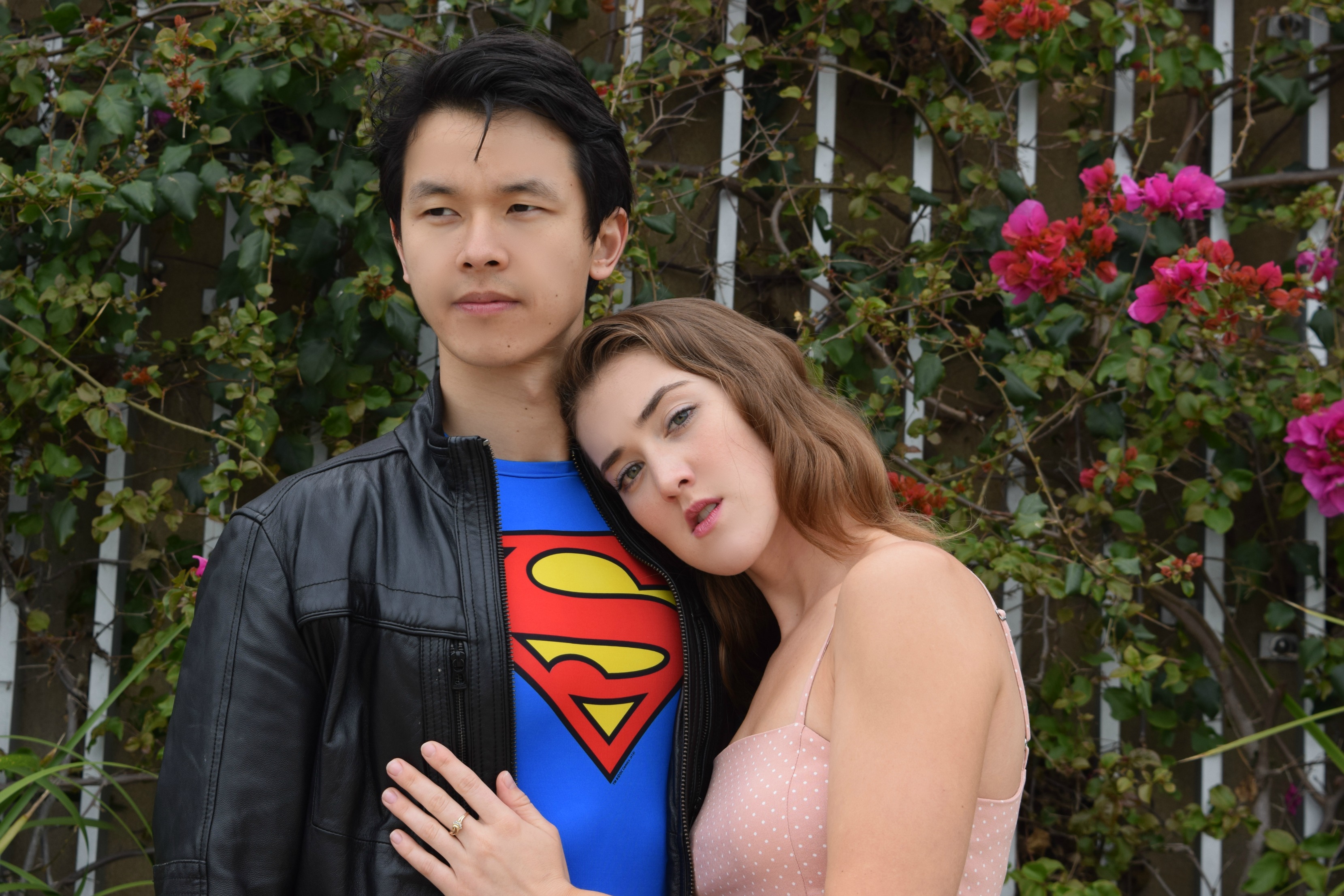
Also please note the following credit for the featured photo up top, first seen in the post 9 Powerful ‘AMWF Superman’ Photos to ‘Save’ Your Day: (Photo by Ana Hudson (WhiteChocolatePlayer), featuring Justin Zhang (IG: NoobStrength) and Angelina (IG: musicloveandlies))
—–
Whenever walking through Beijing’s most international Sanlitun area, from time to time you will see “yellow and white pairs” – foreign men and Chinese women together as couples. But there’s another kind of “yellow and white pair” – couples of white women and Chinese men, which are extremely rare to see.
(Photo by Ana Hudson (WhiteChocolatePlayer), featuring Justin Zhang (IG: NoobStrength) and Angelina (IG: musicloveandlies))
Those who are good at analyzing the inherent ethnic flaws of Chinese people will more or less have seen or heard something like this. There are people who believe Chinese women have a “white” allegiance and throw themselves at these foreign men, characterizing them as the very “easy girls” foreigners say they are.
There are also those who believe the problem is with Chinese men. Shanghai Academy of Social Sciences Professor Zhang Jiehai published the results of his own Survey of Chinese Men and directly gave Chinese men a “death penalty”: suffering from a collective mental impotence. Foreign women don’t look for Chinese men because the men lack confidence, and this however was “the result of China’s backwardness over the past century, because of ceding territory and losing money.” The analysis of Chinese-foreign differences had a master key. Anything, as long as it was backward, was because of inherent ethnic flaws; and these inherent ethnic flaws could all be traced back to the late Qing Dynasty.
The truth is what people see – that there are many more pairs of white foreign men and Chinese women, and very rarely do Chinese men get together with white European or American women. But you cannot merely blame this on Chinese men. In all of Asia, especially East Asia, it’s rare to see the men paired with white European or American women.
Asian men – at the bottom of the food chain
Overall, the ratio of Asian women and white men together is much higher than Asian men and white women.
But this was the opposite for African American men – 24 percent of the men were married to spouses of another race, compared to only 9 percent of the women. For white and Hispanic people, the situation was not that different.
In the dating market, for Asian men it’s even crueler. The online dating site OKCupid found that Asian women were the only group that all men (Asian, white, black, Hispanic) considered attractive at a rate that was higher than average – not even white women reached that level of popularity. Meanwhile, Asian men were rated far lower than the average by all other races, except for Asian women.
The OKCupid data also gave this kind of result – that men who weren’t black didn’t like black women. The racial preferences of black men weren’t obvious, and all women liked men of their own race. Relatively speaking, women were less attracted to Asian men and black men. Black men and Asian men were at the bottom of the marriage food chain.
So, when it comes to interracial marriage, white men and Asian women are the most common pairing. Both stand at the top of the marriage and love food chain. In the interracial dating marriage market, Asian men are most thoroughly a case where “women are superior to men”.
This phenomenon of the women marrying other races more than the men is almost peculiar to Asians. Even men from Korea and Japan, developed countries with living standards and educated populations, cannot overcome whites. What is it that caused such a great divide between Asian men and women?
Is it that from the perspective of other races, Asian men are not attractive enough? Research by Cardiff University in the UK found that, among whites, blacks and Asians, Asian men were considered the least attractive, with a rating of 3.781 (a perfect score was 10). But the study also found that Asian women were considered the best looking group, with a rating of 5.511, higher than the 5.065 for white women and the 4.720 for black women.
The sex appeal of Asian women has been called “yellow fever” (a term that originally referred to a disease). The Chinese American playwright David Henry Hwang’s “M. Butterfly” proposed this for the first time. And Asian women also flock to Western men. William Somerset Maugham wrote in “The Moon and Sixpence” that “You know what these girls are; they’re always pleased to go with a white man.” This phenomenon has been named the “Pinkerton Syndrome”, and is also called Madame Butterfly Syndrome, borrowing its name from the opera “Madame Butterfly”. [Jocelyn’s note: it’s important to recognize that the Asian fetish has a negative effect on Asian women in particular, and that Asian women can face harsh and unfair judgment in interracial dating.]
While both are Asian, why is it that Asian men are at the bottom of the dating food chain, while Asian women are at the top? Perhaps through the typical images of Asian men in Western movies and TV, we can see some underlying reasons.
What’s the use of studying well?
Before the 1960s, evil like Fu Manchu and emasculated like Charlie Chan were the typical images of Asian men that thrived on screens big and small. But since the 1960s, against the backdrop of counterculture and civil rights movements in Europe and America, the images of Asian men became more diverse. On one side of the equation you had evil, crafty, emasculated and low-status Asian men; on the other were smart, studious, high-achieving and increasingly “model minority” examples.
But this high-achieving attribute did not make Asian men more attractive. At best, they’re high achievers; at worst, nerds without social skills who have strange behavior and never talk. Even in countries that value education like China, it’s hard for nerds to find a partner, let alone in the United States of America.
Today, the images of Asian men in mainstream Western culture have become more abundant, but they tend to stick to only a few types. They can do kungfu (like Bruce Lee, Jackie Chan or Jet Li), they’re pedantic (like Charlie Chan), they’re high achievers (as seen on almost any American university), their role is the punchline of the series (like the Korean boss in “Two Broke Girls”). These roles might on some level inspire admiration, but they are entirely without sex appeal.
In fact, the dominant images of Asian men in American media are not sexual roles. Research has found that Asian American men on the screen are only 25 percent as likely to have a romantic or family relationship as other races, overall portraying Asian American men as “asexual”. Even the most masculine martial arts stars are usually only responsible for those hand-to-hand fights among men, and sex scenes are rare for them.
For example, in the American movie “Romeo Must Die,” the film originally had the American female lead Aaliyah kiss the male lead played by Jet Li. But during a screen test, audiences were really not used to it. So the film company changed the ending, having Aaliyah and Jet Li hug. In discussing “The Slanted Screen,” the documentary about the portrayals of Asian Americans on the screen, its director said, “Mainstream America, for the most part, gets uncomfortable with seeing an Asian man portrayed in a sexual light.”
This may have something to do with the perceived lack of masculinity among Asian American men. The earliest Asians in America, particularly Chinese immigrants, were more engaged in washing clothes, caring for children and cooking, business pursuits considered more feminine. Add to that short stature and wearing a long braid, which was very unpopular in mainstream society. This perceived effeminate character has continued to the present without much change. Even Asian actors with outstanding capabilities such as Bruce Lee and Jackie Chan are only permitted to be “hired fighters”, where there’s no opportunity for romance.
At the moment, Asian men are mainly portrayed in mainstream America as idiotic nerds or as someone with eccentric behavior meant for comic relief. Although this is a significant improvement over the 1st half of the 20th century with its “evil Fu Manchu”, it’s nevertheless still not that likeable. For example, Asian men play characters that are meant to be laughed at. Consider Han Lee, the short boss who owns the diner in “Two Broke Girls”, the gay Asian boss in “The Dictator” who screwed Edward Norton, Leslie Chow in “The Hangover”, or the Asian man in the US version of “The Office”.
Asian men like that could hardly meet the European or American women’s standard for guys – a fully masculine “Marlboro Man”. Think of how odd it would be for an Asian man to dress up as a Western cowboy, while a black man or a latino could surely pass. [Jocelyn’s note: Actually, an Asian man, Lee Byung-hun, did star as a Western cowboy in the movie “The Magnificent Seven“.]
Demand determines supply, and there’s such a small number of Asian American actors playing a narrow range of characters because audiences don’t accept them. Popular entertainers in Europe and America are also popular in Asia, while Asian entertainers rarely make it big in Europe or America. If you were asked within five seconds to name an Asian male star in the American and European entertainment industry, most people would be tongue-tied.
There are some TV shows and movies that include love affairs between Asian men and white women. Chinese people are most familiar with Tony Leung Ka-fai and Jane March in “The Lover,” and Chow Yun Fat and Jody Foster in “Anna and the King”. But when Annaud, the director of “The Lover”, was selecting the male lead, he experienced some difficulties. As there was no one who could meet the requirements among Hollywood’s Asian actors, who mainly played bit parts and had difficulty conveying the emotional drama of the character, after much struggle the actor settled on Hong Kong actor Tony Leung Ka-fai.
Lucy Liu. By Georges Biard, CC BY-SA 3.0, https://commons.wikimedia.org/w/index.php?curid=14301219
Asian women are the most likeable
Research has found that the image of Asian Americans is overall perceived as more feminine. This has impacted Asian men, where “at best they’re an effeminate queen of the deep, like Charlie Chan; at worst, they’re a homosexual threat like Fu Manchu.” But at the same time this has benefited Asian women. As America’s “model minority”, this perceived subservience, kindness and loyalty are considered good qualities for women. [Jocelyn’s note: However, these stereotypes have negatively impacted Asian women, so this isn’t really a benefit.]
In addition, Asian women are thought to be mysterious and exotic. The famous opera “Madame Butterfly” fully satisfied the fantasies of white people about Asian women. Butterfly is a Japanese geisha who meets the American military officer named Pinkerton stationed in Japan and falls in love with him. Even after Pinkerton returns to his country, Butterfly still deeply loves him and believes that he will return. Finally Pinkerton returns to Japan but brings with him his American wife. Upon learning the truth Butterfly committed suicide — thus Asian women are subservient, kind, loyal and full of Eastern character. “Madame Butterfly” was later adapted to “Miss Saigon” — the story and background was moved from Japan to Vietnam, but the essence of the story remained the same.
In addition to being perceived as submissive, Asian women have a fortitude and sex appeal that is considered rare among Asian men. For example, there’s Lucy Liu’s role in the 1997 to 2002 American TV series “Ally McBeal”, Maggie Q’s lead role in the 2010 to 2013 TV series “Nikita”, or even Lucy Liu’s main role as a female Watson in the TV series “Elementary”. These characters have not only the excellent qualities attributed to Asian people, but also a sex appeal that Westerners prefer.
Then again, if you really want to win the hearts of foreign women, take a look at movies like “The Lover” and “Anna and the King” with Asian men paired with white women, and you will realize a truth: as long as you have money, the color of your skin isn’t a problem anymore.
But I have to say, nothing could have prepared me for the remark I heard the other day, when Jun and I were assisting a man in the community.
We offered to help carry his bags, and in the process also introduced himselves. After I told him our names and shook hands with him, he said:
“So, are you mother and son?”
Yes, this man actually believed my loving husband was my “love child”. Granted I am older than Jun by over a year — but whenever people joked about me “robbing the cradle”, I don’t think they meant it in the “your husband could be your son” sense.
I glimpsed a look of guilt in his eyes over the remark, but of course it was too late. This man thought I was easily 10 or 15 years older than the man I’d married. Or worse, he thought I appeared “old” for my age.
In a world where women are told not to “look their age”, this is the sort of thing that should have triggered a flurry of insecure thoughts about appearances. I know those thoughts all too well. I’ve written before about coming to grips with being a curvier woman, unlike the images of ultrathin models that we’re bombarded with in the media. And while I’d love to tell you that I’m some “wonder woman” who has conquered every single insecurity about her body or appearance, that’s just not true. I still have those moments when I struggle with aspects of how I look.
So you can imagine my surprise to find that I didn’t feel embarrassed or ashamed by what he had said about me. Was it wisdom from deep within, or just plain shock?
Whatever it was, for once in my life, my internal reaction was — f*** it. And boy, did it feel empowering.
…the older I get, the more I realize the importance of accepting myself, warts and all. After all, aging is a reality for everyone. Maybe some of us are lucky enough to look younger (ahem, John), while others are not so lucky (ahem, me!). But in the end, we’re all headed in the same direction.
And honestly, who hasn’t seen the person with the dyed hair that’s obviously there to hide the gray and isn’t fooling anyone? Or someone like the late Joan Rivers, with so much plastic surgery and botox she doesn’t even look real anymore?
I cringe over the extremes we turn to just to hide our real age, when the treatment we really need is simple — accepting ourselves exactly as we are.
Chances are, this won’t be the last time I’ll run into someone who thinks my husband is just a child under my care (whether someone else’s or my own). But if my reaction this time is any measure, I feel like I’ve taken a great step forward in acceptance of myself and how my relationship looks to the world. And for now, that’s enough.
Has anyone ever mistaken you or your partner for being older or younger than you actually are?
As soccer fever grips the globe with the start of the World Cup, it’s the perfect time to remember some long-forgotten soccer greats from the past, such as Frank Soo, the first Asian soccer player in the English football league as well as the first person of color to represent England in international matches.
By all accounts, Frank Soo – who was born in 1914 to Our Quong Soo, a Chinese sailor, and Beatrice Williams, a white English woman – was a spectacular player of his time:
“Anyone reading match reports from the time or interviews with supporters who watched him play can see how highly regarded he was for the elegance and skill of his play,” she says.
“In his time, he was also regarded as one of the best by his fellow players, like Joe Mercer and Stan Mortensen and it wasn’t uncommon for Stoke City fans to say that Frank Soo was ‘better than Matthews’.”
…
Soo broke into the first team not long after Matthews, and Stoke fostered a reputation for intelligent, skillful football that made them one of the most celebrated sides in the country.
In the sides of Mather and his replacement Bob McGrory, Soo was a star in the Potteries and would later captain the men in Red and White.
Frank Soo’s soccer career spanned the 1930s and 1940s, eras known for overt and aggressively racist behavior against minorities in England. Given that many of today’s nonwhite players must still endure racist treatment on the field, Soo surely had it harder, despite how there are few records of racist incidents against him, beyond slurs (such as “Chinaman”). And did race impact his soccer career? “Soo himself suggested in 1975 that his relatively few appearances for the national team came down to his “oriental blood”,” as reported by Planet Football.
Following in the footsteps of his father, Frank Soo also married a white English woman (Beryl Freda Lunt) in 1938, though their relationship ended in tragedy when she died of a drug overdose in March 1952.
You can learn more about Frank Soo by reading The Wanderer: The Story of Frank Soo by Susan Gardiner, watching this BBC video and also by visiting The Frank Soo Foundation, an organization that aims to continue Soo’s legacy in the UK by supporting “a player of Chinese or East Asian descent to an official home nation cap.” (Let’s hope the foundation makes it happen!)
A broke, “untouchable” art student from India and a woman descended from Swedish nobility fell for each other during a chance meeting in Delhi in 1975. And their seemingly improbable love affair eventually paved the way for him to travel 3,600 kilometers from India to Sweden in 1977, with only $80 in his pocket, a bicycle and a promise of marriage to her upon arrival.
If this doesn’t count as one of the most romantic gestures ever witnessed across the world, I don’t know what does.
CNN reported on the love story of Charlotte Von Schedvin and PK Mahanandia, noting that his mother even predicted early in life that he would marry a white woman. So when they had their second encounter in Delhi, India, here’s what happened:
When she returned, a realization dawned on Mahanandia. Could Von Schedvin be the western woman in his horoscope?
For the first time, that night Mahanandia says he prayed to the elephant god Ganesh. He wanted Von Schedvin to come back so he could ask if she was a Taurus.
“When I saw her at the traffic lights, I got nervous in the stomach. I put on my easel, ‘artist is sick’,” he said.
Then came the questions.
She was a Taurus.
She played the piano.
She owned forests — indeed, Von Schedvin’s ancestors had been given a portion of Swedish woodland after helping the King in the 1700s.
“I became shaky,” said Mahanandia. “I said: ‘It’s decided in the heavens, we are destined to meet each other.’ She was shocked!” …
Trusting her instinct, Von Schedvin followed Mahanandia to meet his father in Odisha, where the couple received tribal blessings.
“I didn’t think, I just followed my heart 100%. There was no logic,” she said.
“When I was with her, I felt taller than the sky,” said Mahanandia. “I was no longer an outcast. It changed my attitude to myself inside.”
After spending a month together in India, the two remained in touch through written letters – and eventually Mahanandia proposed his epic bicycle journey to reunite in Sweden and get married.
His trip would take him from Delhi, India, through Pakistan, Afghanistan, Iran, Turkey and the former Yugoslavia into Europe. At the time, it was a safe and well-established route known and the “Hippie Trail” and travelers didn’t require visas to pass through, facilitating Mahanandia’s extraordinary feat to bicycle so far for love:
Setting off on two wheels, Mahanandia left Delhi with just $80. But he arrived in Sweden with more than $800 — painting portraits for food and money along the way.
Though some days he cycled up to 70km, the artist admits he got lifts wherever possible — even being gifted a train ticket from Istanbul to Vienna.
“Sometimes you’d get two or three hitchhiking offers and you’d have to choose!” said Mahanandia. “I bicycled for love, but I never loved biking.”
He arrived in Boras on 28 May 1977, over four months after his departure.
The couple have been married for over 40 years, with two children, and continue to pass on the power of love to others, such as through offering cultural scholarships to others of the “untouchable” caste in India.
In particular, the statistics on Asian Male/White Female (AMWF) couples appeared rather alarming. Based on data from the 2008 study, AMWF marriages had a 59 percent greater chance of ending in divorce.
Whoa.
Granted, this wasn’t as high as the divorce rate for marriages between Black men and White women, deemed 200 percent more likely to split. But it also didn’t compare favorably with White Male/Asian Female (WMAF) marriages, with only a 4 percent likelihood of divorce.
So was the data illustrated in the “cute, handy chart” right about interracial marriages of Asian men and White women? Are our relationships really that vulnerable to divorce?
The short answer is, not necessarily.
Driven by curiosity, I headed over to the very Wikipedia article the Thought Catalog piece referenced to look at the section on marital instability among interracial and same-race couples.
In this 2009 study, Asian-White marriages were the least likely interracial pairing to result in divorce, with even lower divorce rates than White-White marriages.
Or, as the authors of the 2009 study put it, “Mixed marriages involving Blacks were the least stable followed by Hispanics, whereas mixed marriages involving Asians were even more stable than endogamous White marriages.”
I was stunned.
The new data from the 2009 study in the Wikipedia page.
Why did the author of the Thought Catalog article and subsequent “cute, handy chart” ignore the 2009 data?
Well, it’s true the data wasn’t in Wikipedia when he was working on his article. (See screenshots of the page for Feb 13, 2014 and July 14, 2014 as proof.) But seeing as the 2009 study was already published and available in 2014, you can’t blame this on a Wikipedia omission alone.
And while we could sit around and ponder why the author of the Thought Catalog failed to do his due diligence on the subject of interracial divorce, I feel that his “cute, handy charts” (which probably should be renamed “cute, misleading charts”) are symbolic of our human tendency to want black and white answers, even when the reality isn’t so clear cut and conclusive.
Research on the outcomes of interracial relationships is inconclusive, with some evidence showing that Asian-White relationships are at less risk for relationship dissolution. Some research on interracial romantic relationships has found that interracial relationships involving Whites and Asians do not necessarily have worse outcomes than their same-race counterparts (Gaines & Agnew, 2003; Gaines et ah, 1999; Troy et al., 2006), challenging the long held notion of relationship dysfunction among interracial couples (Bratter & Eschbach, 2006; Bratter & King, 2008; Eeckhaut, Lievens, Van de Putte, & Lusyne, 2011; Heaton, 2002; Zhang & Van Hook, 2009).
In other words, you shouldn’t necessarily jump to conclusions about interracial divorce rates — or worse, enshrine them in potentially deceptive charts — including when it comes to Asian-White couples.
If you asked me what graphical illustration I’d use to represent the outcomes of interracial marriages, I’d say this is more on target:
When it comes to interracial marriages and divorce, we need more people asking the right questions — and less people coming to simplistic conclusions.
What do you think?
P.S.: The data above come from studies on interracial couples in the US. Still, for anyone wondering about interracial marriages and divorce in China, there doesn’t appear to be enough evidence to conclude, as people often do, that divorce is necessarily more likely.
As Figure 3 below shows, the number of divorces registered between mainland Chinese citizens and foreign nationals rose from around 80 couples in 1979 to over 1,000 couples in 2000. That figure increased to over 3,000 couples in 2003, before skyrocketing to nearly 9,500 couples in 2008. It then decreased to around 5,700 couples in 2010.
This decline is consistent with the fall in the number of Chinese-foreign marriages registered in mainland China starting in the early 2000s. The PRC’s Ministry of Civil Affairs began to disaggregate Chinese-foreign divorce statistics in 2005, by including separate figures for those involving ‘waiguoren’. Unsurprisingly, given the higher proportion of other categories of Chinese-foreign marriage until recently, most divorces relate to the ‘Chinese’ categories of Chinese-foreign marriage.
In other words, the divorce rate appears consistent with the rate of Chinese-foreign marriages registered in China, and the authors believe that many of these divorces are still between people of the same race and ethnicity.
* I’ve intentionally chosen not to link to the WeChat article I referenced, but if you absolutely must see it for yourself, search for the official account for HiTouch艾达旗 and check their articles in the past few weeks.
As the US continues to ramp up its deportation efforts, the media have documented the casualties of this punitive response toward immigrants in terms of affected families.
A heartbreaking story on PRI I came across the other day details the deportation of a Cambodian man married to a white American woman from Wisconsin:
Lisa Kum has an endless list of tasks every day. The 41-year-old from Cottage Grove, Wisconsin, has a 19-month-old daughter and a high school-aged son. She’s also tending to her health after undergoing elbow surgery earlier this year.
Nowadays, she’s also busy growing her business that sells refurbished HP printer parts — so that she can sell it and move her family to Cambodia. That’s because Kum’s husband, Sothy Kum, was deported to Cambodia, a country he left when he was just 2 years old. She plans to shut down the small business they started together four years ago and start over 8,000 miles away.
“It’s pretty much been pure hell,” she says. “It’s very emotional. At the same time, you have to get up every morning and keep going because what other choice do you have?”
I can only imagine what a nightmare this has to be for her and her family. Meanwhile, you’re probably wondering, what exactly prompted the US to arrest and deport Sothy Kim? The article details that as well:
Lisa says her husband spent most of the last two years in immigration detention, almost as long as their young daughter has been alive. Sothy and his family fled Cambodia as refugees and spent years in camps, first in Thailand and then the Philippines. He arrived in the US in 1981, when he was about 6 years old.
Lisa and Sothy met in 2009 when they worked at the same company. In 2014, they decided to quit their jobs and take the financial risk of starting their own business. Sothy allowed an acquaintance to pay him to send marijuana to his house. He was convicted of possession of marijuana with the intent to deliver.
After serving his one-year sentence in 2016, Sothy was again detained by ICE. Though Sothy was a legal permanent resident with a green card, his conviction made him deportable. He remained in ICE detention until August 2017, when he was released just in time to see his daughter turn 1 and to marry Lisa. But by October 2017, Sothy was back in custody.
Does a conviction of this nature warrant deportation? Supposedly only people committing “crimes of violence” should be sent back to their countries, and it’s hard to imagine that any real violence was going on here.
Meanwhile, there’s another question worth asking — is it right to deport a man who came to the US as a refugee, and at such a young age? The actions of the current Trump administration have overwhelmingly shown they have no regard for such people, including the most recent example of ending protected status for Hondurans in the US. But still, it boggles the mind that a country that would welcome a refugee when he was only 6 years old has now shipped him back to his country of birth, despite the fact that he’s lived the vast majority of his adult life in the US.
Lisa and Sothy Kum remind me of so many interracial couples I’ve encountered over the years, and it was chilling to encounter their story in PRI. Meanwhile, I can’t help but wonder, what will their lives be like after reuniting in Cambodia? Will they be able to find a way forward for themselves and their family? I know deportation can have a devastating effect on people and their families, as a recent report of the tragic end of one man deported to Mexico revealed.
But here’s hoping their family will overcome these difficulties and start anew in Cambodia.
What do you think of this story? Do you believe Sothy Kim’s crime warranted deportation?
Enjoy this powerful AMWF Superman photo collaboration by Ana Hudson, a new model and photographer hitting the scene. This is part of her portfolio titled “Project Justice”, the first of many more photoshoots like this to come.
But Ana offered something different — to share her own work photographing couples in the community.
Next month, Ana will be submitting another superhero shoot. What superhero would you like to see? Let us know in the comments!
In love, we are enthralled and never entitled. We screen the world with our sight- we see opportunities and claim them. We are wise beyond words, we know how to know.
We don’t let rules define us. They make lines for us, but we violently blur them. We float on the skies as their eyes burn is misery. We stand powerful, even against Kryptonite.
The world softens as love glows between us. We pave wonders for the world to witness- we shall love and conquer to set an example for the future. Love will save the day.
Credits: Models: Justin Zhang, fitness coach and Youtuber ” (IG: NoobStrength) and Angelina Bower, beautiful fashion model (IG: musicloveandlies) Photographer: Ana Hudson (WhiteChocolatePlayer)
If you are an AMXF couple in the Los Angeles area, Ana Hudson would love to offer you a free/donations accepted photoshoot. To find out more information about planning a photoshoot you can reach her at [email protected].
Yes, Asian men and White women can love on the big screen and make for enlightening cinema. If you frequent art house theaters and film festivals, or simply want a more sophisticated pick for a change, here are 11 critically acclaimed AMWF (Asian Male, White Female) movies you don’t want to miss, in alphabetical order.
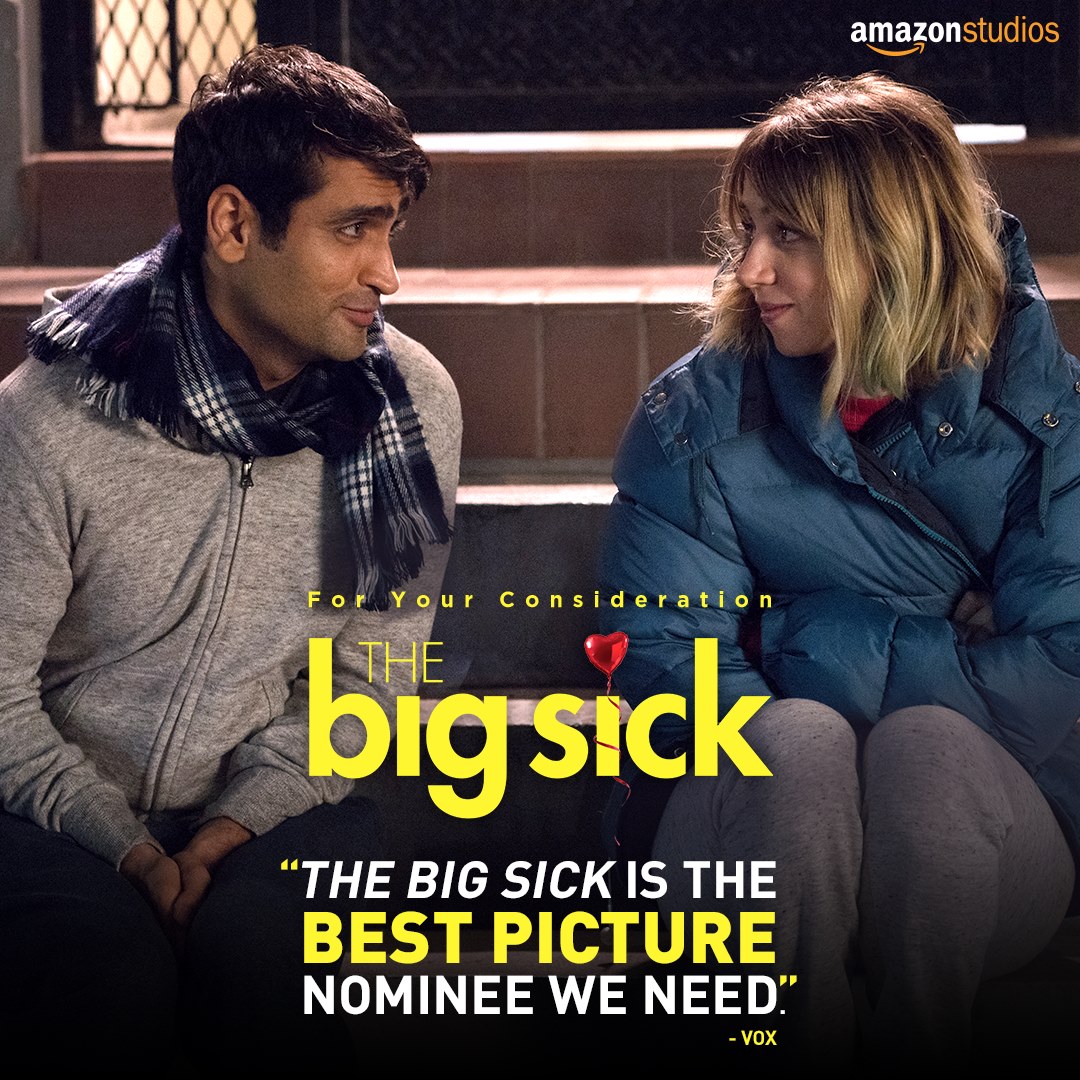
The Big Sick (2017)
Technically, “The Big Sick” is a rom-com, complete with an AMWF couple at the center of the story (Kumail Nanjiani, played by himself, and Emily Gardner, played by Zoe Kazan), which is set in Chicago. But the true heart and soul of this film surfaces when the Pakistani American man finds himself in close quarters with her white American parents, with some unexpected and even heartwarming results. Given that “The Big Sick” received an Oscar nod for original screenplay and many singled out Holly Hunter’s performance as worthy of a nomination from the Academy, any savvy filmgoer should have this movie on their watch list.
Columbus (2017)
The romantic indie drama “Columbus,” with the unusual pairing of an Asian man (John Cho) and a white woman (Haley Lu Richardson) in this architectural mecca of Indiana, has delighted audiences and critics alike, leading many to decry its absence at the Academy awards. As I wrote earlier this year about “Columbus”:
Here’s the best part about “Columbus” – it’s a beautiful movie to behold.
Granted, it might not be an obvious choice for those moviegoers who tend to pass on anything that feels a little too “art house.”
But for those people who delight in great cinematography (the shots really are gorgeous), nuanced stories filled with great depth and feeling, and real-to-life characters, this is a joy to watch.
How could you not love a 1959 film with such a daring movie poster for its time, not to mention being way ahead of the curve on race? Starring the legendary James Shigeta, one of the first Asian American actors to show his sex appeal in the movies as a romantic lead, “The Crimson Kimono” offers plenty of gripping action and a love triangle with an AMWF twist, at a time when interracial love was still taboo and illegal in many places around the world (including America). Since this film is preserved by the Academy Film Archive — yes, the same Academy behind the Oscars — it should be on the list of every serious film buff, whether you’re into AMWF movies or not.
The Edge of Seventeen (2016)
This American coming-of-age teen flick drew loads of critical acclaim for Hailee Steinfeld’s turn as the protagonist Nadine, turning it into a must-see among AMWF movies. But you should also watch “The Edge of Seventeen” for Hayden Szeto, in his breakout role of Erwin Kim. As I wrote last year for WWAM BAM!
Thank goodness for the new teen movie The Edge of Seventeen, just released in late 2016.
The film features one of the most refreshingly unstereotypical portrayals of an Asian man in a teen movie – the breakout role of Erwin Kim, played by Hayden Szeto.
And surprisingly, The Edge of Seventeen even shares some common ground with, of all movies, Sixteen Candles (Vanity Fair noted “Steinfeld’s character is derivative of Molly Ringwald circa Sixteen Candles”). Who’d have thought?
If you’re hungry for a good teen movie, one with a positive portrayal of an Asian guy, you must see The Edge of Seventeen, featuring Hayden Szeto.
Ae Fond Kiss (2004)
In “Ae Fond Kiss,” cultures collide in the world of AMWF movies when a Pakistani Muslim man and white Irish Catholic woman come together in Glasgow, not long before his arranged marriage to a cousin. The pushback and prejudice from his family and her colleagues will feel like familiar territory to many interracial and intercultural couples. But what makes this story different is that the film shows sympathy to both sides. Plus, there’s strong chemistry between the leads (Atta Yaqub and Eva Birthistle) — and plenty of passion behind closed doors. The film took in numerous awards across Europe, including two at the Berlin International Film Festival and one at the Cesar Awards, and will surely delight anyone looking for a more thoughtful portrayal of the challenges of interracial and intercultural romance.
A Great Wall (1986)
This movie — which tells the story of a Chinese American family visiting relatives in Beijing — enjoyed critical acclaim and was the first American film to be shot in the People’s Republic of China. It also happens to have a rather memorable moment in the history of AMWF movies. As I wrote a few years back:
When Kelvin laid with a white girl on the couch and kissed her in this 1986 movie, some dubbed it the “makeout scene heard ‘round the world” because it was one of the first movies to ever feature an Asian guy and non-Asian girl doing just that. Kelvin brings some serious sex appeal to the scene — his sultry eyes, and even the sensual way in which he pulls at her blouse — despite the fact that they never actually “do it” in the movie. Plus, I love that Kelvin is so alpha, which shatters that despicable “all Asian guys are so emasculated” stereotype.
Whether you’re watching for the groundbreaking cinematography, the exploration of cultural divides or just Kelvin Han Yee, “A Great Wall” is worth it.
Japanese Story (2003)
This quiet romantic drama that sets an AMWF pair — actors Toni Colette and Gotaro Tsunashima — against the backdrop of Australia’s mining country does tug at the emotions (and ilicited a few tears from yours truly). But despite the fact that their love affair is unexpected, it’s also a powerful one that will stay with you long after the credits are over. Given all the Australian awards this film garnered in 2003 — including winning for best film, director, actress and cinematography — any art house movie fan will want to watch “Japanese Story.”
The Lover (1992)
In “The Lover,” a French teenager in Indochina falls into an illicit love affair with an older Chinese man, making it one of the steamiest pairings on this list of AMWF movies. As I wrote a few years back:
My pulse quickens just thinking about Tony Leung in this movie, based on the book by Marguerite Duras. He may not be the hottest looking guy on this list, but he pulls off some of the most orgasmic sex scenes I’ve ever seen in a movie, let alone a movie featuring an Asian man and white woman together. Let’s put it this way — you’ll probably have to pause the movie every time they visit his “bachelor pad” to reach for one of the following: your partner, a cold shower, or a vibrator.
But besides all the sex appeal, the film also received an Oscar nomination for best cinematography and was the seventh-highest grossing film for 1992 in France, where it also earned several Cesar Award nods and won for best music written for a film.
Mao’s Last Dancer (2009)
This inspiring movie based on the memoir of the same name charts the rise of Li Cunxin from a rural impoverished boyhood in China to world-famous ballet dancer in the US. It’s worth seeing just for Chi Cao, who plays Li:
Chi Cao … had me before I even saw the film. Blame it on that photo … where he’s cradling the leg and torso of Amanda Schull (who plays Liz), while studying her with eyes that seem to yearn for more than just perfect point technique. Who wouldn’t want a “private lesson” with him? Chi Cao shows incredible sex appeal, even playing a newcomer to the US who stumbles through his first steps into the world of dating and sex, and shines in some stunning dance sequences that will also have your heart racing.
Plus, “Mao’s Last Dancer” attracted a slew of Australian movie award nominations, including for best film, and won for its original music score. And any serious art house filmgoers will delight in the ballet sequences — they’re just as moving as the story itself, which happens to feature two AMWF romances.
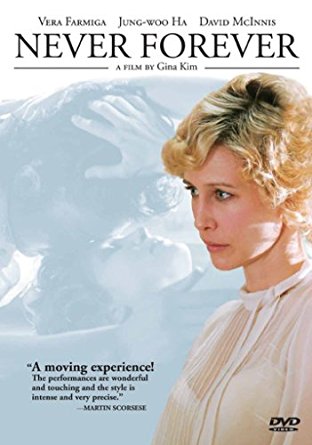
Never Forever (2007)
What happens when a prim white American housewife in New York makes a daring proposal to a Korean immigrant working at the dry cleaners, and unexpectedly falls in love with him? “Never Forever” is quite a sexy affair, with bedroom scenes (and a surprising fantasy) that just might leave you sweating too. But it’s the strong performances by Vera Farmiga, Ha Jung-woo and David McInnis that elevate this emotional romantic drama into something worthy of art house accolades among AMWF movies. It debuted at Sundance and won at the Deauville American Film Festival.
Pushing Hands (1991)
This first feature film from Oscar-winning director Ang Lee probes the cultural spaces that unite and divide an elder Tai Chi teacher and grandfather from Beijing and his son’s family in America, including the white daughter-in-law who doesn’t see eye to eye with him. Any East-West intercultural couple or family will find the cultural clashes in “Pushing Hands” relatable. And under the expert direction of Lee, the film becomes a timeless classic, including among all AMWF movies.
What other critically acclaimed AMWF movies would you recommend for savvy filmgoers?
This website uses cookies to improve your experience. We'll assume you're ok with this, but you can opt-out if you wish.AcceptRejectRead More
Privacy & Cookies Policy
Privacy Overview
This website uses cookies to improve your experience while you navigate through the website. Out of these cookies, the cookies that are categorized as necessary are stored on your browser as they are essential for the working of basic functionalities of the website. We also use third-party cookies that help us analyze and understand how you use this website. These cookies will be stored in your browser only with your consent. You also have the option to opt-out of these cookies. But opting out of some of these cookies may have an effect on your browsing experience.
Necessary cookies are absolutely essential for the website to function properly. This category only includes cookies that ensures basic functionalities and security features of the website. These cookies do not store any personal information.
Any cookies that may not be particularly necessary for the website to function and is used specifically to collect user personal data via analytics, ads, other embedded contents are termed as non-necessary cookies. It is mandatory to procure user consent prior to running these cookies on your website.


 What’s the use of studying well?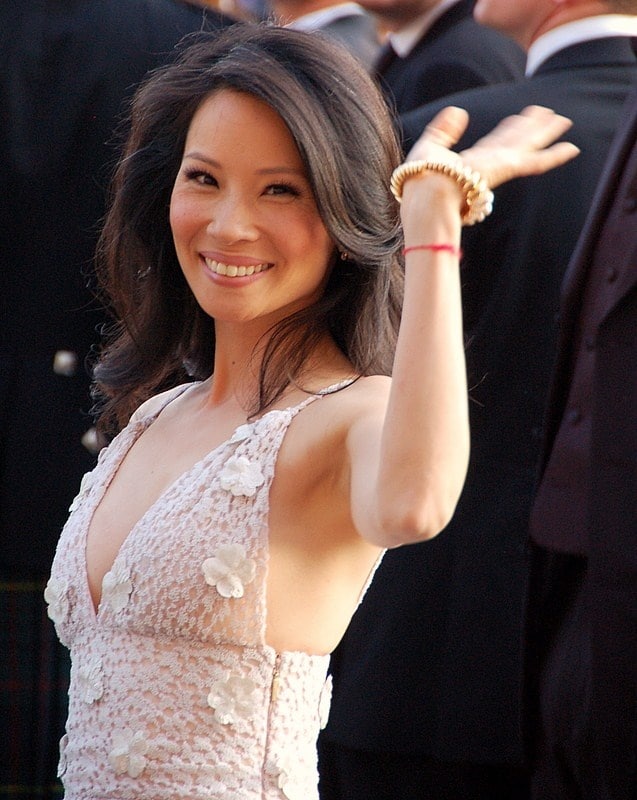






 The Big Sick (2017)
 Columbus (2017)
 The Crimson Kimono (1959)
 The Edge of Seventeen (2016)
 Ae Fond Kiss (2004)
 A Great Wall (1986)
 Japanese Story (2003)
 The Lover (1992)
 Mao’s Last Dancer (2009)
 Never Forever (2007)
 Pushing Hands (1991)
