In 2009, when I first began blogging about my interracial relationship – and how it wasn’t so common in China – I wasn’t aware of any acronyms to describe it.
Then I discovered AMWF, AMXF and WWAM. Nowadays, these acronyms have become powerful connectors and tags that have given rise to new communities.
That of course, leads to new questions. Such as, what’s the right one to use? And should we even bother with all the labels?
AMWF (Asian Male, White Female) relationships
I’m not exactly sure when I learned about AMWF, which most people refer to as Asian Male, White Female. But what I do know is this — AMWF is probably one of the most popular acronyms out there to describe the very relationship I have with Jun. He’s an Asian man, I’m a White woman.
So it’s not surprising, then, that many people have blogged about AMWF relationships.
Now, on this blog, I’ve diverged a bit when interpreting AMWF relationships as being “Asian Male, Western Female.” That’s because the perspective can be a little different over here in Asia. I’ve developed a camaraderie with many women from Western countries around the world dating and/or married to Asian men. That includes women who are not White and also women who are Asian themselves but born and raised in a Western country (like my friend Michelle Guo, who is Chinese American and married to a man from China). For us, it’s issues of culture that often come to the forefront of our relationships.
But if AMWF relationships doesn’t work for you, here’s another option:
A screenshot of an Instagram search using the term “AMXF”
So, just when you thought we couldn’t possibly stir up the alphabet soup of acronyms to describe our relationships, here’s another: WWAM (Western Women, Asian Men) relationships.
The term WWAM first emerged a few years ago when it became attached to the name of a virtual community in China, uniting women from Western countries who happened to have Chinese boyfriends or husbands. The community grew and so did people’s identification with the label (some even calling themselves WWAMs).
Later, the term WWAM inspired the name of our group blog WWAM BAM (Western Women, Asian Men – Breaking All Molds).
As I mentioned above, we gravitate toward the term “Western women” because cultural differences often loom large in our relationships.
Is it AMWF relationships? Or AMXF relationships? Or WWAM relationships? And does it matter?
But now that we have three acronyms in play, is it better to say AMWF relationships or AMXF relationships or WWAM relationships? What should you use?
I personally feel it depends on your perspective and what feels most comfortable (and descriptive) to you. There’s not necessarily one right answer.
But then again, does it even matter? Should we care about labels – or identify with them?
Not everyone wants to categorize their relationship with an acronym like AMWF. After all, just because your relationship looks similar to others, it doesn’t necessarily mean you’re going to have a lot in common.
If you’d rather ditch the labels and find your community elsewhere, then I say more power to you. Nobody has to wave an AMWF or AMXF or WWAM flag in their lives, even if they happen to be in a relationship like that.
Knowing them doesn’t mean I don’t have other “tribes” as well, circles of people who share other interests of mine (like reading books or hiking in the woods).
But when I think back to my first steps into China — a time before the rise of social media, blogs and even video calling — I remember feeling so isolated as the foreign girlfriend of a Chinese man. I couldn’t even share it with my foreign coworkers (who actually said some openly racist things about Chinese men around the dinner table).
After years of that, finding the community was a revelation, the most universal and comforting of all. Finally, I wasn’t alone.
What do you think? Do you prefer AMWF relationships or WWAM relationships? And does it even matter?
While I’ve been following the news on Facebook and Cambridge Analytica, I was particularly inspired to write this post after hearing the most recent episode of the NPR show On the Media. They invited a number of experts on the show, who highlighted how Facebook, not Cambridge Analytica, ought to concern us more.
Then I started pondering how I’ve used Facebook to connect to the community — and whether or not I could leave, turning into this post. Here’s an excerpt:
Unless you’ve been taking a social media detox or avoiding the news, you’ve probably heard about the recent scandal involving the Facebook data leak. But while much of the spotlight has been on Cambridge Analytica, many experts are saying we should be far more concerned about Facebook.
So what does this have to do with the relationships we write about — such as AMWF (Asian Male, White Female), AMXF (Asian Male, Non-Asian Female) and WWAM (Western Women, Asian Men)? The many, many connections I’ve made on Facebook through the community.
I don’t know about you but I’ve long turned to Facebook to connect with many people in the AMXF/AMWF/WWAM communities.
It’s March and we’re celebrating International Women’s Day. That means it’s time to update to my list of blogs by Western women who love Chinese men!
This year, my list includes 45 46 different blogs! I’ve still grouped the blogs loosely according to their focus, and tagged first timers on this list with *NEW* for your convenience.
Like last year, the same housekeeping rule applies — blogs must have been updated within the past year to make this list.
So, without further ado…(insert drumroll of choice)…here are the blogs!
The Downtown Diner. American Melanie Gao has no pretensions about herself. Her blog is a homey, welcoming little slice of the yangxifu blogosphere, self-described as “Made famous in Beijing, now operating out of Nashville, Tennessee.” She has spoken out about her divorce from her Chinese ex-husband and will always remain my unofficial twin (we really do look alike). She often writes about her two lovely biracial and bicultural children and filed a fascinating post about what Beijing traffic taught her about mass shootings. Thanks for keeping it real, Melanie.
Elfy Jo (Formerly Joke Tummers). She’s a Dutch woman living in Guangzhou with her husband and family, and her China adventure is filled with music. A former member of the Guangzhou Symphony Orchestra, she now teaches musical instruments to young children at her own school and others in the region. She posts about her teaching and family on her blog; you can also learn more about her through this interview posted on my blog last year.
Olivia’s Choice. If the community had a magazine, chances are Olivia Lau could easily be the covergirl. This beautiful and stylish woman from Spain was living in Hong Kong, where she met and married a local man and also ran her own online fashion store. They’ve moved back to Barcelona to work in Olivia’s family store, but still make regular trips back to Asia (such as these dispatches from Tokyo and Hong Kong). Her maternity pictures (she gave birth to their second child in February last year) are stunning.
*NEW*Squirrels of a Feather. American Marissa Zheng, who lives on the East Coast with her husband and “two rambunctious boys,” loves to blog about everything that matters to families (from saving money to DIY to food). Readers will enjoy her posts on Chinese language learning and family.
Wo Ai Ni. Rhiannon, an American woman who met and married her Chinese husband in the US, creates a whimsical collage of an intercultural family on her site. It’s a snapshot of daily family life — including two blonde-haired children from a previous marriage, and six half-Chinese kids.
*NEW*白小颱 Biały Mały Tajfun (Polish). This Kunming-based blogger from Poland has a Chinese husband and a passion for writing about a variety of topics on China, such as the food, Yunnan and Kunming, as well as writing about her own adventures.
Chocolate Chick in China. This African-American blogger is an English teacher based in China, and you’ve got to love a woman who writes this in her About page: “I have always been fascinated by the 5000 year old culture and also all the handsome single Chinese men that may never find love due to the fact that they overpopulate the women. so off I go to China to find a different way of life and maybe a husband too.” Wishing her the best in Fuzhou!
Judith in China (in Dutch). This Dutch woman used to live in Beijing with her local boyfriend but has since moved with him to Wuhan. She blogs about life in China, including the things she encounters every day in the country, such as odd things her neighbors do. Her guest post titled “He Feels Horrible About Me Being The Breadwinner” got a lot of you talking.
*NEW*Let’s Get Additives. This Finnish woman with a Chinese husband shares her life through delightful little comics that capture her thoughts and experiences, such as City of Love (which recalls the day she and the hubby got married) and this year in review for 2017.
Mingbai. A Dutch woman with a Chinese husband runs a China consulting and travel business, and maintains a blog written in Dutch mainly about travel destinations in this great country.
Selly’s Little World. Sarah Heintze is a German gal who was residing in Wuhan, China, describing herself as a “Music lover with a weakness for 王力宏 Wang Leehom. Quirky. Cheeky. A butterfly flitting between ideas. In love with exercising, 小笼包 (xiaolongbao) & 热干面 (hot dry noodles)。” She posts on what’s on her mind and what she’s doing. Wishing her the best as she says goodbye to her current situation and moves on to new adventures.
Sincerely, Shalom (Formerly Jew Knew).Eileen’s blog is so lovely and touching, like her pictures of smiling, long-haired women in dazzling rainbow colors. She is married to a man from Taiwan and after living with him in Shanghai and Taiwan, they’re back in the US. Her posts are often quirky and fun, such as this A to Z list of things she loves (A is for “amazing tofu”!).
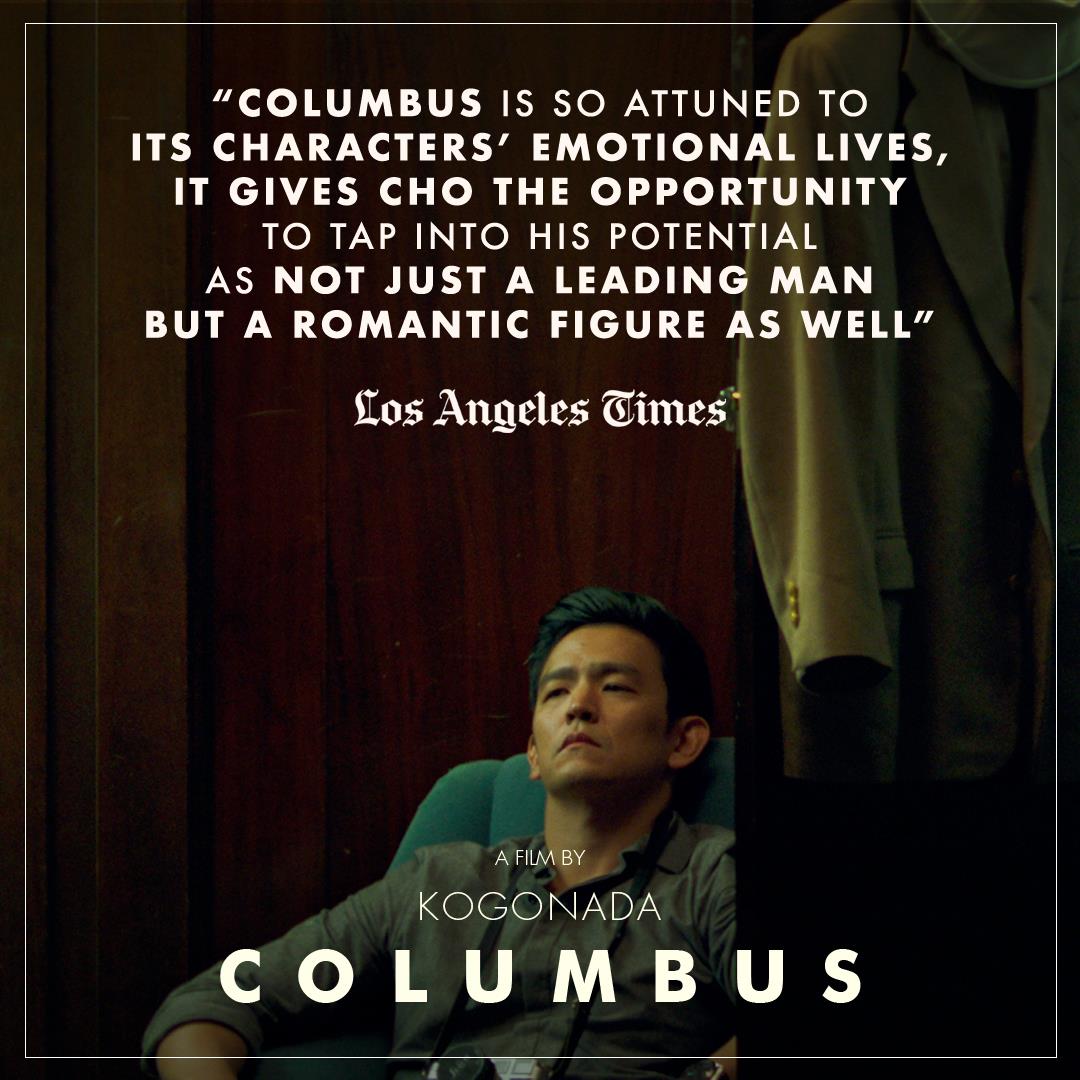
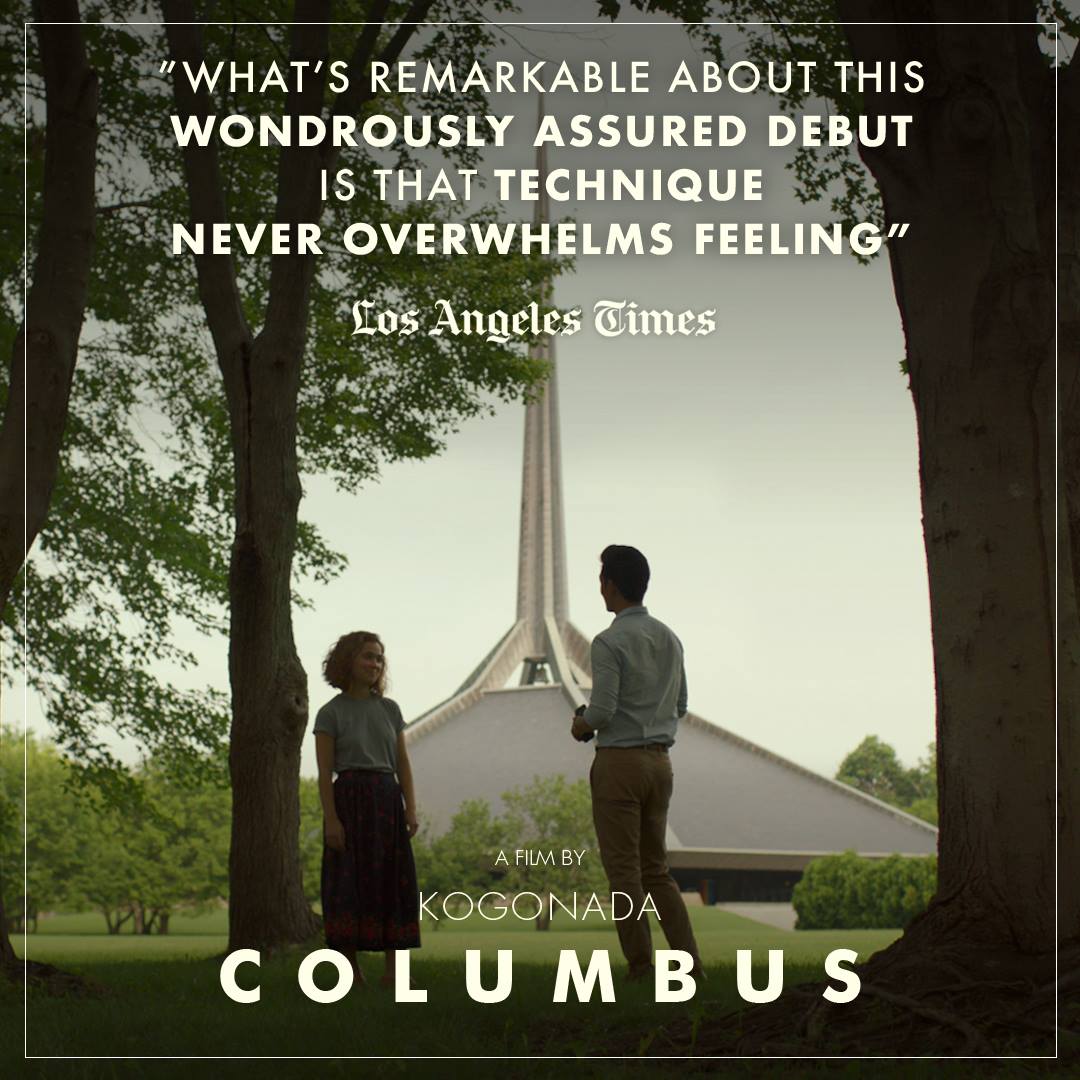
One movie that has inspired some to decry its absence at the Academy Awards this year is “Columbus,” led by the talented veteran actor John Cho (in a role that once again proves his star power – and why he was the focus of the #StarringJohnCho movement) and remarkable newcomer Haley Lu Richardson.
I was thrilled to learn about this movie, and truly enjoyed watching it. But beyond just the fact that this is a romantic indie drama with the unusual pairing of an Asian man and a white woman, here are 4 more things that made me cheer for “Columbus”:
#1: John Cho, an Asian actor, is the romantic lead
Just consider that for a moment – an Asian man as the leading romantic role in an American TV series. When have you ever seen that before? It’s historic! If there’s only one reason you choose to tune in to see Selfie, make it this one.
Well, the excitement sadly didn’t last, as “Selfie” was cancelled after only 13 episodes. Yet Cho’s performance was widely applauded — and it left many of us asking, when will he have the chance to be a romantic lead in the movies?
In a world where far too many people still don’t think Asian men are sexy, it’s always a breath of fresh air to see movies that challenge that stereotype in a positive way, such as John Cho’s character in “Columbus.”
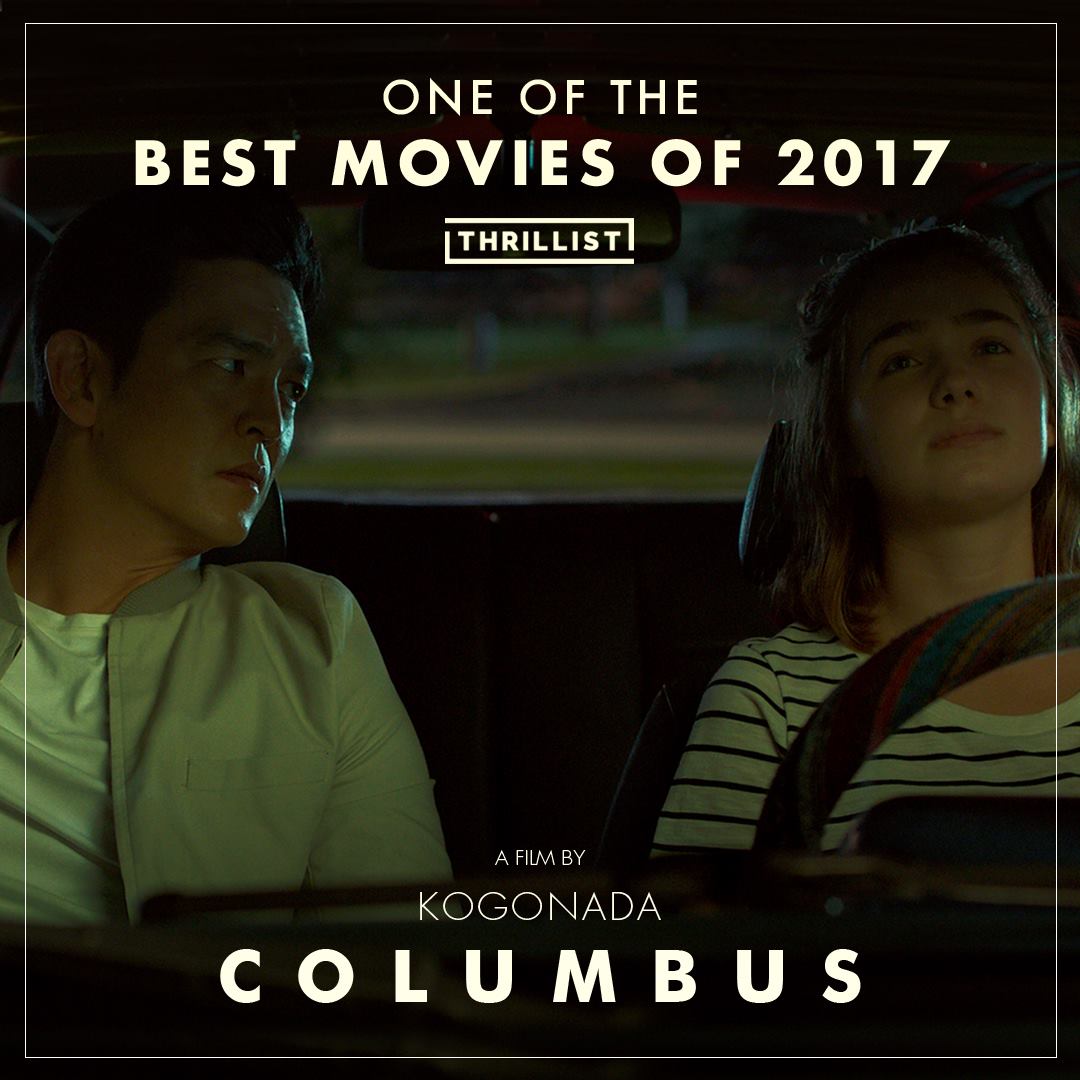
#2: “Columbus” subtly handles racial identity
The Korean American identity of Jin, played by John Cho, is something we’re reminded of throughout the film – whether Jin is speaking Korean on the phone, or talking about his translation work in Seoul, or even discussing how funerals are handled in Korean culture. But while this is a part of his identity, it’s not something that provides momentum to the story, nor is it or subverted into stereotypes either. Instead, we’re presented with this man named Jin who happens to be Korean American (and is presented very authentically throughout the story), yet Jin is also given room to be a complex individual, sharing thoughts and emotions that make for great drama.
…race exists very naturally. It’s simply a component of this person’s identity, and it doesn’t drive the narrative. But neither is it ignored. And it’s – I think it’s a very difficult balance to achieve, and it requires a deft touch.
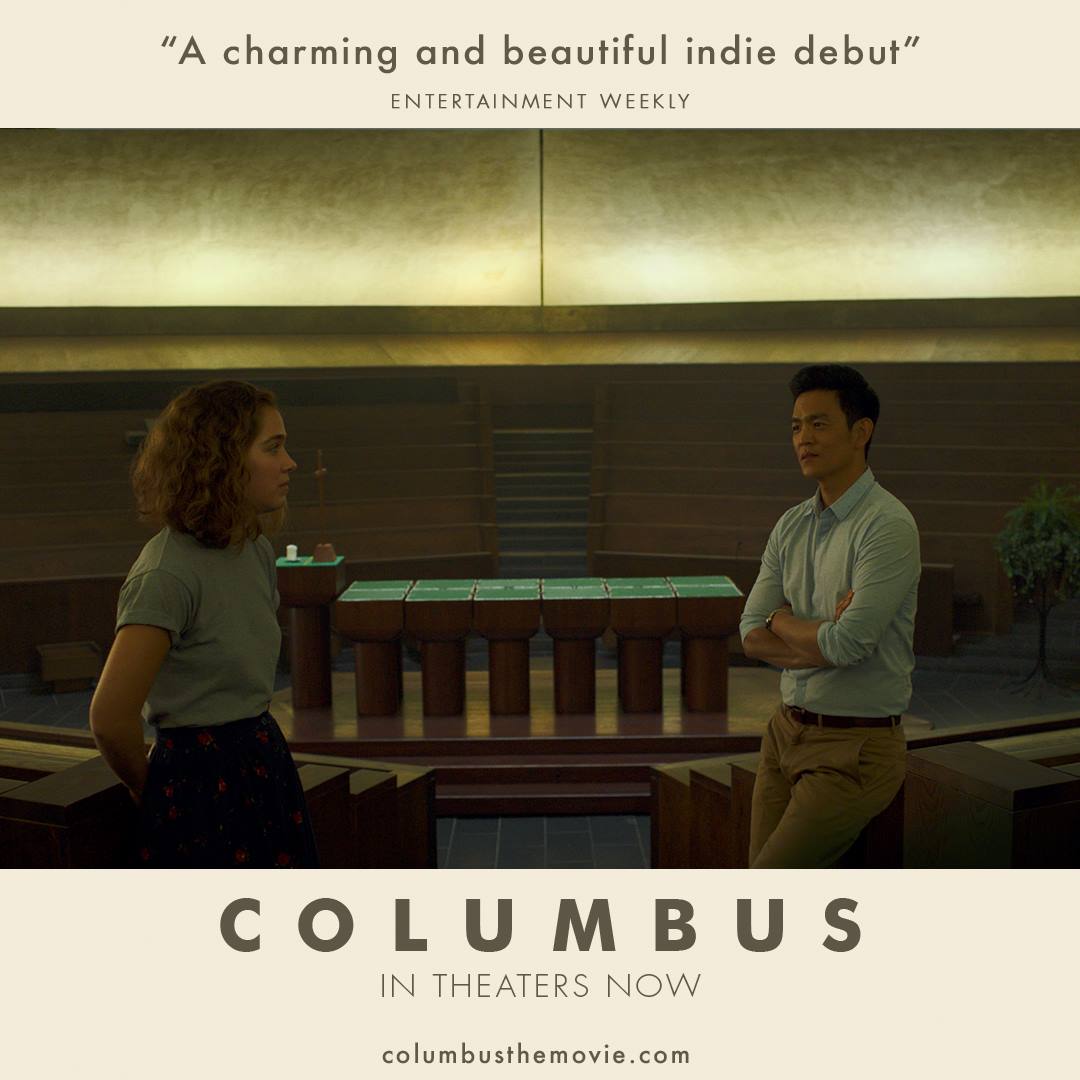
#3: John Cho and Haley Lu Richardson have great onscreen chemistry
When I was watching “Columbus” a second time around and taking notes (yep, I’m a movie nerd), I couldn’t help noticing that many of the moments that touched me most happened when John Cho and Haley Lu Richardson were onscreen. Like when Jin asks her, regarding the piece of modern architecture, “Tell me about what moves you,” a line that feels a bit flirtatious. Or when the two are laughing over that awkward question from Jin about whether her mom does meth, and that laughter is layered over a certain tension that can happen when you’re inching toward closeness and not entirely certain about it. It’s a delight to watch the two of them, whether they’re just hanging out in the front seat of a car or standing among the pews in the breathtaking interior of a modernist church building.
#4: “Columbus” is an incredible movie, period, and deserves every accolade
Here’s the best part about “Columbus” – it’s a beautiful movie to behold.
Granted, it might not be an obvious choice for those moviegoers who tend to pass on anything that feels a little too “art house.”
But for those people who delight in great cinematography (the shots really are gorgeous), nuanced stories filled with great depth and feeling, and real-to-life characters, this is a joy to watch.
So while you’re in a hurry to catch up on all the Oscar-nominated (or Oscar-winning) films for 2017, be sure to take a moment and see “Columbus” (which you can now watch on Amazon).
Have you seen “Columbus” yet? What do you think of the movie?
I later interviewed her on my blog (see Interview with Jess Meider, One of China’s Best Jazz Vocalists), where I asked her all about how she ended up in China some 20 years ago, how she met her Chinese husband Gao Fang, her start in the music scene in Beijing, and her musical projects over the years. You can purchase her music on iTunes and Amazon.com, follow her on Youtube and Facebook, and learn more about her at Jessmeider.com.
But Jess is more than just an incredible singer-songwriter with some outstanding credentials (such as performing in the VIP venues at the Beijing Olympics and having her music featured in the major Chinese movie “What Women Want”).
She has become known for the natural skincare serums and oils she and her partners sell through The Green Room Skincare company. And did I mention she is a prized instructor at the Yoga Yard here in Beijing?
Since interviewing Jess Meider in late 2015, I wanted to catch up with her in this WWAM of the Month spotlight, exploring everything from her new business and musical projects to what it takes to make a cross-cultural relationship work and how Beijing has changed since she first arrived.
By Christophe95 – Own work, CC BY-SA 3.0, https://commons.wikimedia.org/w/index.php?curid=26833408
Team or love. That was the choice that Chinese Olympic gymnast Li Donghua faced in 1988 when he fell for Esperanza Friedli, a young Swiss woman he met in Beijing when she was visiting China that year, as reported by China Daily. Li could either stay with China’s national gymnastics team or wed Friedli, but not both.
By then, Li was accustomed to hardship, surviving a number of devastating injuries in the course of his gymnastics career with China, including one that nearly claimed his life. Even if he stayed with the team, he would only serve as a coach, which meant he couldn’t continue pursuing his dreams of Olympic gold.
So Li Donghua left the team to marry Esperanza Friedli.
Swiss law stipulated that immigrants married to Swiss nationals must wait five years to acquire Swiss nationality, which meant that Li would have to wait that long before he could compete internationally. Li ended up watching the bulk of his prime athletic years, including 1992 and the Barcelona Olympics, agonizingly tick away.
He had to train without any funds and his only coach was a set of video tapes.
“I had to rent the apparatus and install them by myself, but I was jobless.
“At first, there was naturally much jealousy from local gymnasts, and many Swiss did not understand why they should have a Chinese person on their team.
By the time the 1996 Summer Olympics began, Li Donghua was already a decorated gymnast, winning bronze in 1994 and gold in 1995 at the World Artistic Gymnastics Championship. In Atlanta, Li finally realized his Olympic hopes, walking away with a gold medal on the pommel horse.
While Jun and I were watching China compete in the men’s 1,500m speedskating event at the Pyeongchang Winter Olympics, we happened across a fascinating young man among the competition: Hungary’s Olympic speedskater Shaolin Sandor Liu.
After seeing his name, I knew one of his parents must be Chinese. Turns out, besides his Hungarian mother, he has a Chinese father.
He and younger brother Liu Shaoang were given the opportunity to train in People’s Republic of China earlier in their career. “We were really lucky. When we started there was a world championships in Hungary and the Chinese team came. My father, being Chinese, started speaking with them, helped with different things in Hungary and getting to know the country. They said since his two sons were Chinese they should come and train in China. It sounded good to him so he decided to take the chance to bring us to China and we were training there for one-and-a-half years. Before our results weren’t really good. After that time we came back from China and we won every competition.”
As anyone who follows short track speedskating knows, China has a powerhouse of a team in this sport, with a total medal count only second to the leading country, South Korea. So I’m not surprised that Shaolin Sandor Liu improved so much after training with the Chinese team.
Shaolin Sandor Liu claimed gold in the 500m short track speedskating event at the 2016 World Championships in Seoul. During the current World Cup short track speedskating season, he’s had a number of strong performances, including ranking first in the 500m event at Budapest and the 1,000m event at Seoul.
That’s why, while he only finished in fifth place in the 1,500m short track speedskating finals the other day, Shaolin Sandor Liu is still a solid contender in the Pyeongchang Winter Olympics. He’s set to compete in the 1,000m event Tuesday, February 13 at 19:26 Korea time. If you happen to tune in, watch for him — and why not root him on as well?
Additionally, here are few more interesting things about Shaolin Sandor Liu:
His parents — a Chinese father and Hungarian mother — aren’t the only reason I’ve tagged this post AMWF (Asian male/White female, in this case). Liu’s current girlfriend is Elise Christie, the short track speedskating star from Britain.
For curious readers who happen to know Chinese, his name Shaolin is written as 少林 (shàolín), the same as the famous Shaolin Temple in Henan province. (And according to an anonymous post online in Chinese, his Mandarin is pretty good.)
The school was started by Kristel Ouwehand in the Tibetan province of Amdo. The goal of the school is to promote Tibetan art and culture.
At this time, the most urgent need of the school is to complete the purchase of the home in which serves as the school and dormitories. Without the home the school will not be able to function and students will be sent back to their families unable to complete their education.
$19,000 (Canadian Dollars) needs to be raised to save the school.
As the students that are selected are mostly from low income nomadic families, Kristel does not charge any tuition for the 4 years of training. Only a token amount of 500 RMB is paid by the families for the entire 4 year period. Remarkably, the school has therefore been funded solely by the sales of Kristel and the students’ artworks as well as commissioned paintings and murals.
Over 20 years ago, the TV series “Foreign Babes in Beijing” (洋妞在北京) became a sensation across China. Say what you want about the show – which Rachel DeWoskin, one of the show’s stars, described as “an apt, if tacky, example of China’s very conflicted feelings about the West“ – I couldn’t help thinking about it recently after moving to China’s great capital city. That’s because there’s one thing I’ve noticed about this city: there are a LOT of AMWF (Asian male, Western female) couples who call Beijing home.
Among the online groups of Western women with Chinese husbands I belong to, the Beijing group stands out for a very simple reason – sheer numbers. It has over 100 ladies! This blows my mind. Back in Hangzhou, I felt lucky to find one or two in the city (even though Hangzhou is pretty large, expats tend to come and go pretty quickly, making it difficult to connect to new folks). But here, there are so many women it could take me months, if not nearly a year, to meet all of them.
In my opinion, this is a good problem to have. A very good problem.
So I’ve been thinking about Beijing and its status as the unofficial epicenter of the AMWF community in China. What makes Beijing the number one city for couples of Western women and Chinese men? It’s even more intriguing to me because Shanghai appears to have a slight advantage over Beijing among foreigners as a whole (see this BBC report and this story from the China Daily).
So why Beijing over, say, Shanghai?
Is it a matter of job opportunities? (One foreign woman with a Chinese husband, who happens to live in Shanghai, once privately shared her frustrations over the city’s job market, which she considered stagnant compared to Beijing). Do more of us come as university students, landing in the one city that attracts the most foreigners to study abroad? Is it the wealth of resources in town, from great schools and hospitals to an airport connected to every major city across the globe? Or are we simply more enamored with Beijing’s rich cultural and historical traditions reflected in the many superlative sightseeing attractions here, from the Forbidden City and the Temple of Heaven to the Great Wall?
Whatever the reason, I’m loving this city just for the opportunity to have some good company with fellow yangxifu (the foreign wives of Chinese men) on a regular basis.
And if China’s entertainment industry ever finds out about Beijing’s pre-eminence among AMWF couples, maybe they’ll decide it’s high time for a proper “Foreign Babes in Beijing” sequel. But this time, it’ll be “Foreign Wives in Beijing.” 😉
Do you think Beijing is China’s best city to live in? Why or why not?
It’s April 30, 1945, a little over a week before unconditional surrender by Germany and the declaration of Victory Europe Day, ending World War II in Europe. Qiu Fazu, a German-educated Chinese surgeon, is the attending physician at a hospital in the Bavarian region of southern Germany. Suddenly, a nurse calls him to come out to the street in front of the hospital, where Qiu Fazu discovers a group of Jewish prisoners from a concentration camp, guarded by the SS. A death march. Here’s an account from The BMJ:
…Qiu remembered clearly that he was getting ready to operate when a nurse shouted that there were many prisoners from a concentration camp lying outside. He ran out of his room with his operation cap on, as he had already learnt what happened in the camp. More than 40 ragged prisoners were squatting down on the ground in the corner of a street. Sick and weak, they could not move any further. The SS troops standing there shouted at them and ordered them to stand up.
“I was shocked that they were not able to move any further,” Qiu recalled. He summoned up his courage and told the troops, “These prisoners have typhoid fever. Let me take them away.” The prisoners were released, and the doctors led them to the basement, saving their lives with careful nursing.
One of the supporting nurses, a German student named Loni, would become more to Qiu Fazu than just a colleague at the hospital. The two married soon after the war ended and moved to China in 1946, as he missed his homeland. They would have three children together, surviving the hardships of that tumultuous era known as the Cultural Revolution. The BMJ notes, “Qiu had to clean toilets—‘and this was the only time they were really clean,’ he used to joke. The family had to grow its own food, and he was sent into faraway rural areas to provide medical care for peasants.”
Nevertheless, Qiu Fazu rose to prominence in China, pioneering modern organ transplants in China and authoring a classic textbook on surgery still used in the country. Some have dubbed Qiu, who was a member of the Chinese Academy of Sciences from 1975 to 1983, “the father of modern surgery”.
Let’s remember Chinese surgeon Qiu Fazu and his German wife Loni, a couple who once helped save precious lives during World War II.
This website uses cookies to improve your experience. We'll assume you're ok with this, but you can opt-out if you wish.AcceptRejectRead More
Privacy & Cookies Policy
Privacy Overview
This website uses cookies to improve your experience while you navigate through the website. Out of these cookies, the cookies that are categorized as necessary are stored on your browser as they are essential for the working of basic functionalities of the website. We also use third-party cookies that help us analyze and understand how you use this website. These cookies will be stored in your browser only with your consent. You also have the option to opt-out of these cookies. But opting out of some of these cookies may have an effect on your browsing experience.
Necessary cookies are absolutely essential for the website to function properly. This category only includes cookies that ensures basic functionalities and security features of the website. These cookies do not store any personal information.
Any cookies that may not be particularly necessary for the website to function and is used specifically to collect user personal data via analytics, ads, other embedded contents are termed as non-necessary cookies. It is mandatory to procure user consent prior to running these cookies on your website.


 WWAM (Western Women, Asian Men) relationships
 WWAM (Western Women, Asian Men) relationships
 Is it AMWF relationships? Or AMXF relationships? Or WWAM relationships? And does it matter?


 #1: John Cho, an Asian actor, is the romantic lead
 #2: “Columbus” subtly handles racial identity
 #3: John Cho and Haley Lu Richardson have great onscreen chemistry
 #4: “Columbus” is an incredible movie, period, and deserves every accolade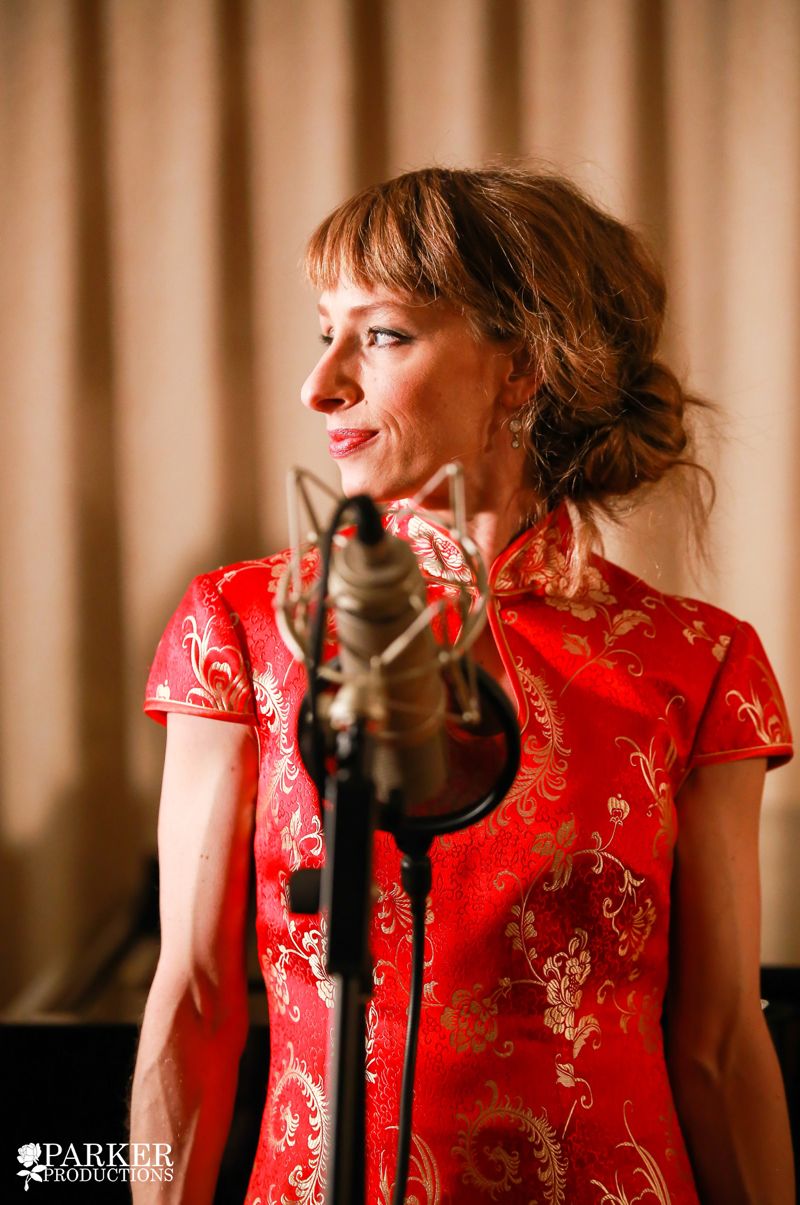
 But Jess is more than just an incredible singer-songwriter with some outstanding credentials (such as performing in the VIP venues at the Beijing Olympics and having her music featured in the major Chinese movie “What Women Want”).


 Over 20 years ago, the TV series “Foreign Babes in Beijing” (洋妞在北京) became a sensation across China. Say what you want about the show – which
 It’s April 30, 1945, a little over a week before unconditional surrender by Germany and the declaration of Victory Europe Day, ending World War II in Europe. Qiu Fazu, a German-educated Chinese surgeon, is the attending physician at a hospital in the Bavarian region of southern Germany. Suddenly, a nurse calls him to come out to the street in front of the hospital, where Qiu Fazu discovers a group of Jewish prisoners from a concentration camp, guarded by the SS. A death march.