Double Happiness: How one “foreign student turned party boy” found love in New Zealand

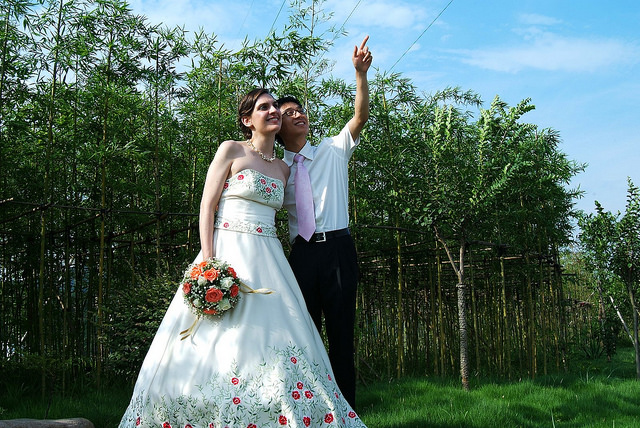
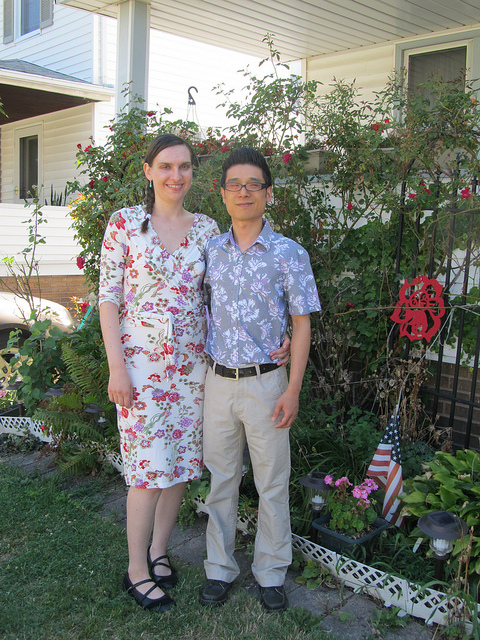
Jo and Kane (photo courtesy of Kane Gu)

When it comes to the love stories I’ve shared here, a lot of readers ask me, “Where are the Asian men?” Well, I’ve got a treat for you this Friday — the story of how Kane Gu, a self-described “foreign student turned party boy” snagged himself one special lady in New Zealand. 

Thanks so much to Kane for this submission!

Want to be like Kane and have your guest post or story published on Speaking of China? Check out my submit a post page for details.

—–

It is true that love can be found in the most unusual places, or in my case, two islands in the middle of the South Pacific Ocean.

I first arrived on the Kiwi shores 11 years ago at the age of 17. You could say that I fit the archetypal image of a young Asian international student: young, anxious and being the only child of the family. At the peak of New Zealand’s campaign in promoting its education system abroad, I was but one of the tens of thousands of students who left mainland China to study here. However, having lived and gone to school in Texas prior to my arrival also conditioned me better than most for my new life here.

Seven years later, after finishing school and tertiary education, I landed a job I was happy with. And with a few failed relationships thrown into the mix, I — the once clueless foreign student turned party boy — was anything but a stereotypical Chinese male. I had dated Aussie, British and of course Kiwi girls. Years of exposure granted me a social circle of almost exclusively Kiwis, and that meant, sadly, regularly consuming rather large quantities of the happy juice. My first attempt at a serious relationship was with a young Kiwi lass. We dated for one year before moving in together and things quickly turned sour because of things beyond my control. We called it quits just before we reached the two-year mark.

Having sunken into such low spirits, I in turn partied even harder than before. No amount of alcohol could alleviate the feeling of a terrible loss. I was such a mess and thoughts of returning home were already lingering in the back of my mind.

Time went slowly as the wound healed. Christmas came once again and I was invited to a friend of a friend’s party as usual, except this time, it proved to be the turning point of my life. There she was in an elegant pink dress, my future wife to be: tall, curvy and with long blonde hair. We had our eyes on each other instantly and my feeling was apparently shared by a few other guys at the party too. A little competition for her affections had started but it didn’t bother me for long because I won. As the drinks got flowing, we got talking. After expressing a mutual interest in each other, things quickly fell into place. We chatted all night and had so much in common that every sign was pointing in the right direction.

Things went great for two months, then came the hard times. Because of earthquakes combined with issues in regards to my visa, we both lost our jobs. Arguments started to flare, tensions were high but the mutual support never ceased. We had found a soulmate in each other and these tough times forged us into a stronger couple. We always believed there was light at the end of that tunnel, however long that tunnel might be, and we would make it through holding each others’ hands. When everything eventually took a turn for the better, we made the decision to move away from Christchurch to get Jo’s career on track again. Life in Auckland turned out to be very fulfilling for us, and we soon become engaged. Jo had the opportunity to return to Xi’an with me for a month in 2012. She was adored by my parents who started referring to her as their “xifu” even though we weren’t married yet.

With our four-year anniversary coming up at Christmas this year, our now one year old daughter will be joining our celebration. We have also planned a second visit to my parents in China this October, where our wedding will also take place.

Looking back now, it almost feels like things have always been this way. We found our missing puzzle piece in each other, even though we were once kept thousands of miles apart. Sometimes love just comes so naturally as though it had all been decided for you. The distance, the cultural differences and the color of our skin didn’t matter. Maybe that’s exactly what we Chinese call “yuanfen”.

Kane Gu found his true love in Aotearoa, the land of the long white cloud.

—–

Speaking of China is always on the lookout for outstanding guest posts and love stories! If you have something you’d like us to feature, visit the submit a post page for details — and then submit yours today.

Guest Post: The privilege of stereotypes about cross-cultural couples in China

(photo by Angela Sevin via Flickr.com)

We’ve all heard about yellow fever and the associated stereotypes. So what happens when you’re a Western man dating or married to an Asian woman and you’re supposedly living the stereotype?

That’s the heart of this thoughtful guest post by Gerald Zhang-Schmidt, who is married to a Chinese woman. 

You may remember Gerald from years back when he collaborated with me to write about stereotypes of Chinese-Western couples. He also submitted a question about changing your name in China that’s become one of my top 10 most popular posts (and incidentally, he was the one who ended up changing his name!). 

Want to follow in Gerald’s footsteps and have your voice heard on Speaking of China? Check out my submit a post page for details.

—–

Maybe I just shouldn’t care.

It’s my own fault, after all. I’ve known Jocelyn, at least via Speaking of China, for years and read of her thoughts and travails with great interest. The way that Chinese society puts everyone into place, in their gender roles and in gendered expectations about behavior and the course of a life has fascinated me.

How could you not be fascinated? While public displays of affection are still viewed askance in many places, the requirements for an ideal partner are proudly and straightforwardly proclaimed in ‘marriage markets’? (“Westerners” may also see these advertisements as superficial and appalling, but one could just as well call them honest.)

How about a place where the women are portrayed as if they would prefer (and be preferred by) foreigners over their own men, whereas the men hardly even seem to stand a chance with anyone anymore? That’s where I’m caught squat in the middle. Speaking of China is all about the rarity of foreign woman – Asian man couples, draws readers because of that same rarity, and has lots of issues to talk about. Meanwhile I’m living all of those other, wicked, dominant, problematic positions.

I mean, according to all the talk about white male privilege – and its experience – I must clearly be privileged. I’m not supposed to talk, for it just reflects my attempts at staying on top and maintaining my privileged position. As the WM part of a WM-AF (white male – Asian female) relationship, I’m living the stereotype. “Oh my, clearly one of those guys with an Asian fetish and one of those stupid and/or calculating women dumb enough to fall for him.”

The privilege of being in a majority is that you’re questioned less. As a friend recently put it, “you are given more second chances.” For the same reason, though, you are also less visible — for better and worse. You don’t have to explain yourself nearly as much as the unusual Western (or other) woman who marries an Asian man or the lucky Asian man who was able to attract a Western woman. Because they are considered unusual, they attract attention. They get questioned. They have to explain themselves and live with the puzzled looks. But, they also get much-visited blogs and book deals for their memoirs. And so, they have a need, but also get a chance, of explaining themselves. In breaking the mold, they are viewed askance, but also as avant-garde.

Try getting a book deal for the story of a ‘stereotypically normal’ WM-AF relationship, when “everyone knows” (a favorite phrase of the Chinese students I was teaching) that it’s all just about the Asian woman looking to better her situation and the Western male with yellow fever.

Such observations of upsides and downsides all too quickly devolve into nothing but discussions of who’s got it worse or better, “the culture of shut-up,” as it was recently called. So who does have it better? The one in an extraordinary situation beyond usual stereotypes, yet facing more scrutiny because of it? Or the one barely noticed because the situation is so stereotypical, no one even bothers wondering?

It’s similar to how feminism and stereotypes are discussed in general terms rather easily, but then suddenly turn personal and get vicious, until the discussion turns into something that has nothing to do with them. The likes of a “sure, there is a privilege to being a white male, but *I* am hardly privileged (or do you see me becoming rich just so?)” even as the systemic difficulties of the not-privileged (and advantages of the privileged) certainly are there, or the “yeah, I’m all for feminism, I like strong women” from men, as if feminism were all about strength, let alone one person’s likes.

But that’s not what I want to discuss. I don’t want to discuss anything, really. I just want to provide my observations and make a humble suggestion. Relationships, be they romantic or otherwise, will always be influenced by ethnic, cultural, and other backgrounds and the views they give rise to. But relationships are, at heart, not between ethnic groups, not between social groupings, nor even between men and women. They are between individual people.

The trouble starts when we don’t want to see individual people and individual situations, and don’t suspend judgment. When we see someone who fits into a stereotypical opinion and immediately think we have a handle on who they are.

We should remember that we tend to not even understand ourselves half as well as we may think we do.

Gerald Zhang-Schmidt is an ecologist and cultural anthropologist who spent three years living in China, and now resides with his wife in his native Austria where he writes about the ecology of happinesschili peppers and being at home in the world.

—–

Speaking of China is always on the lookout for outstanding guest posts and love stories! If you have something you’d like us to feature, visit the submit a post page for details — and then submit yours today.

Guest Post: Setting up his Chinese nephew (again) with American women

Fred and his family in Hong Kong (photo courtesy of Fred)

Last year, Fred shared the extraordinary story of how he tried setting up his Hong Kong nephew with American women. He wrote in the post, “I thought with 100 percent certainty that any man would leap to his death to be able to date not just one or two but three ladies!” But the nephew wouldn’t budge and Fred gave up on his matchmaking ways…

Until 2014, that is. He had plans to travel to Hong Kong in April and decided to trying fixing up his nephew once again. So, will Fred’s nephew finally find love in the US this time? Read on for part two of this fascinating story.

Fred first made his debut on Speaking of China back in December 2011, when he shared the inspiring story of how found love in Brazil. More recently, last month he provided a field report on the ratio of AMWF couples to WMAF couples in Hong Kong, which has become a fan favorite and even inspired other readers to do their own surveys.

Want to follow in Fred’s footsteps and become a guest posting legend on this site? Visit my submit a post page for details.

—–

About two years ago, my wife and I went to Hong Kong to visit my half-brother and half-sister and their side of the family, all of whom are Chinese. My cousin Yew was my half-sister’s oldest child of three. When my wife and I visited him in 2012, Yew was single and approaching his late thirties, unattached and unmarried.

My half-sister was concerned that he still had no marriage prospects in sight. So I offered to help him by arranging for him to date four white American girls if he came to visit me in the US. Before traveling to Hong Kong in 2012, these four ladies had agreed to meet and date Yew if he came to the US. However, before he could even consider this proposition, Yew subsequently developed a strong case of kidney stones and was hospitalized, preventing him from coming to the US.

I then when to Hong Kong myself to visit him and also do some sightseeing, and it was then that I once again proposed the idea of dating these four American girls. He quickly rejected this notion because he felt he was not their equal.

Just recently, my wife, children and I visited Hong Kong from April 2, 2014 to April 12, 2014. We once again proposed that Yew should come to the US and try dating some American girls.

This time, I had hoped that things would be different.

Two of the four American girls from 2012 had since moved on and found boyfriends of their own, making them no longer available or interested. The other two (the nursing student who is my secretary’s daughter and another female lawyer) were still single, available, and interested. These two ladies once again were happy to meet Yew and give him a chance. But again, I did not tell these two ladies about each other, lest they think my nephew is a philandering playboy and refuse to date him. I promised that I would approach him and invite him to visit me this summer so that they could meet each other and seal the deal.

While last time I was the only one recruiting prospective dates for Yew, this time I had the help of my wife. She looked within her circle of single friends and knew of a handful of single girls, a group comprised of white American girls, white Brazilian girls, and Latina girls. She could not promise they would be available when Yew came or that they would give a foreign Chinese man a chance. She would not approach any of them with the idea of dating a foreign Chinese man who is not even in the US until Yew showed he was serious about dating them. She did not want a repeat of the 2012 debacle, where those four American girls agreed to give Yew a chance only to be let down by his refusal to come to the US and date them. My wife was very leery of raising false hopes within her circle of friends for fear of losing credibility. Besides, the girls in her circle could refuse to date him even if he agreed to date them.

So this time we had two white American girls who would certainly give Yew a chance and potentially a handful of other Western girls.

On the third day of our trip to Hong Kong, we met my half-sister, my half-brother and their children for dinner — but Yew was noticeably missing from the table. I couldn’t understand why he was absent. I had informed them over five months ago that I was coming and we had planned well in advance to meet on at least two occasions for dinner.

I asked my half-sister, “Where’s Yew?”
She said, “He’s much too busy with his work and studies to join us.”
I asked her, “When will he be available to meet me and my wife? I have great news for him about how to solve his singleton problem.”
My half-sister said, “Perhaps next week you will be able to see Yew.” We were scheduled to dine with the whole family then before returning to the US.

Next week came. We once again met the family and once again Yew wasn’t there.

So, I asked my half-sister, “Where’s Yew?”
Once again, she said, “He’s too busy with his work and studies.” She added that, “His company’s business had improved much since 2012,” when I last saw him. “His firm wants to promote him, but he needs to pass a course and test in IT. He’s embarrassed since he failed the test and must study again to repeat it.”

I then asked my half-sister, “What about his singleton problem? Does he have any prospects or solutions in mind?”
She said, “Yew is quite secretive about his dating life. Whenever I bring it up with him, he shuns me.” I could not believe it!

I said to her right then and there, “Call him on his cell phone.” I wanted to talk to him immediately about why he was not with us at these two family dinners and also discuss how to solve his singleton problem.

My half-sister called him and then I spoke to him. After we exchanged greetings and salutations, I cut to the chase.

I asked Yew, “Why weren’t you at these two family dinners? We planned them over five months ago.” He had initially promised to attend both of them.
He apologized and said, “Things at my company are so busy that I must work late and study to pass this course.” He never mentioned he failed the test and was repeating it, nor did I want to embarrass him by saying I knew about it.

Then I tried inquiring about his dating life. But wouldn’t you know it, Yew cut me off before I could even tell him about all the girls awaiting him in the US.

I told Yew, “I’m proud that you’re so diligent, hardworking and loyal to your company. I’m glad you’re trying very hard to advance in your career. But what about your future girlfriend or wife?”

As soon as I brought this up, he cut me off. He said, “I’m very busy right now and have to go.”
I tried asking him to give me just a few more minutes, but he insisted he had to leave and then hung up.

I could not believe it. How someone could be so disrespectful to his uncle? How dare he cut me off in the middle of a conversation?

I asked my sister, “What’s his problem?”
She said, “Honestly, he’s embarrassed about his failures in life. Not getting a promotion yet, failing that course and the test, still being single, and not being able to buy his own flat. He even shuns me when I try to discuss something serious with him.”

My sister had suggested he should go to Mainland China and find a woman in a remote village, someone willing to leave her hometown for Hong Kong. But Yew insisted he cannot find a wife until he has attained a certain level of financial comfort, including owning his own flat and having a large bank account. He believes he cannot call a woman his girlfriend or wife without having these things first.

I reminded my sister, “Western women don’t have that kind of mentality, where she’ll only date a man if he’s financially successful. Instead, she will work together with the man and reach success together as a couple. So he really should give Western women a try.”

Plus, one of the two girls I wanted to introduce to him is a lawyer in her mid-thirties with a well-paying job in the legal department of one of California’s largest insurance companies. She also owns a Mercedes and a two-story home. And best of all, she is willing to give Yew — a non-resident foreign Chinese man — a chance. That’s pure bravery and courage! This girl is willing to take a chance with him if has the courage to come to the US and meet her.

But my sister said, “Yew cannot even look a woman in the eyes unless he has some level of financial success.” She then abruptly cut me off and said not to talk about this any longer. It upsets her too much.

In the end, I left Hong Kong without even being able to see Yew or have a meaningful conversation with him. I also had to break the bad news to the two American ladies. From now on, when it comes to dating women, I guess I’ll let him fend for himself.

Fred practices employment law in Torrance, California.

—–

Speaking of China is always on the lookout for outstanding guest posts and love stories! If you have something you’d like us to feature, visit the submit a post page for details — and then submit yours today.

What’s the big deal about Asian men and bags?

(photo by James Creegan via Flickr.com)

There’s one topic in the foreign blogosphere in China and Asia that I just don’t understand. Why do people make such a big deal about Asian men carrying certain bags?

For those of you who missed the hoopla, the complaints fall into two different camps:

#1. Why do Asian men carry their girlfriends’ or wives’ purses? It makes them look effeminate, unmanly and/or “whipped”.
#2. Why do Asian men carry “manbags” or “man-purses”? It makes them look effeminate, unmanly and/or “whipped”.

Note that while the two complaints are slightly different, the conclusion is essentially the same. In other words, if a guy does one or the other (or, god forbid, both!), he is forever exiled out of the kingdom of masculinity.

I’ve lived a total of almost six years in China and have seen my share of Chinese men carrying their girlfriends’ or wives’ purses — or sporting what some might label as a “manbag” of their own. But I’ve also experienced them on a personal level through my marriage to a Chinese man.

Whenever my husband and I go out shopping, he always offers to carry my shopping bags…and, at times, he might even hold my own bag or purse for me. I never thought of him as “less than a man” just because he did that. To me, it just seemed like gentlemanly behavior — like opening a door or pulling out your seat for you, a simple way to show he cares for you. And besides, whenever we shop, I’m the one who’s usually rifling through the clearance racks and dashing in and out of the fitting rooms more than him, and I’m the one with the list of stores to hit and things to buy. Honestly, it’s nice to have someone to take care of the bags so my hands are free to sift through the shelves and racks without worrying about forgetting or losing the bags. (I am, after all, incredibly absent minded!)

As for so-called “manbags”, my husband’s oldest brother just bought him a brown leather bag as a gift. It was square and had a sturdy shoulder strap. My husband ultimately wasn’t interested in it (he’s prefers backpacks or computer bags) but neither of us judged his brother for the gift.

What I’ve learned from my experiences is this — there is no such thing as a universal definition of what it means to be a man. Different countries and cultures have different ideas of what men should and should not do. So we shouldn’t automatically assume that our country’s definition of “how to be a man” applies everywhere around the world.

We shouldn’t assume that when an Asian man carries a woman’s bag or purse for her, or carries what some label as a “manbag”, he’s somehow not a man. Maybe it’s not something you or the men in your life would do, but that doesn’t mean it’s wrong. So why should anyone make a big deal about it?

Personally, I love the fact that, here in China, men can carry all kinds of bags without thinking, “Will this compromise my masculinity?” Sadly, that’s not true in the US, my home country. For all of the talk about freedom and being yourself in the US, our definition of masculinity is frighteningly restrictive.

Ultimately, the measure of a man is not in what bag he has under his arm or on his shoulder. It’s about who he is as a person. And you’ll never know that from a casual glance on the street.

For everyone who still insists that carrying a woman’s bag/bags for her or toting a so-called “manbag” undermines your manhood, let me ask you this. Who told you so? Where is it written that “Thou shalt not carry thy woman’s bag/bags or carry a so-called ‘manbag’”? And why is it okay for men to carry certain bags, like laptop bags or backpacks, but not others?

No good answers to those questions? Exactly. 😉

P.S.: For further reading on a similar topic, read this post by Grace of Texan in Tokyo titled Things I Love About Japan: Men can wear Pink Running Shoes without being Labeled “Gay”.

Tibetan husbands, dating Chinese pop stars, and other unusual stories of Chinese men & Western women in love

Kumbum Ta'er monastry at Xining, Qinghai China (photo by Remko Tanis via Flickr.com)
Kumbum Ta’er monastry at Xining, Qinghai China (photo by Remko Tanis via Flickr.com)

This week, I’ve stumbled upon a number of incredibly unique stories in the blogosphere about Chinese men and Western women in love. While I’m on deadline these days (and need a break from my usual posts) I thought I would share some of these fantastic blogs/posts with you. Enjoy!

A Tibetan-American love story in Qinghai

Earlier this week, a reader tipped me off to a few new AMWF bloggers — and one of them fascinated me the moment I read the short intro in her blog’s sidebar:

I’m Kimberly, an American lady living in western China with my Tibetan husband and our beautiful baby girl

Wow.

Kimberly’s About page offers a glimpse into how it all happened:

Following my stint in the home of Peking Duck, I went back to the states to get my Master’s Degree in Library and Information Science. (That’s right, I am a certified librarian.) By then I was itching to get back to China and decided to make my home out west, where the air is cleaner, the food is heartier, and the people are diverse.

I used to joke with my parents before I left that I was going to find a nice man there and settle down. To my surprise and delight (and my mother’s disappointment) it really happened. K and I were married on July 28th 2012…

…and on August 2nd 2012. We had two weddings, one western style in the city and one Tibetan style in the village.

Boy, what I wouldn’t give to sit down with Kimberly and hear the details of how she met and married her husband! Still, since starting her blog in March 2014, she’s already offered a lot of insight into her fascinating and unique life, including why she loves China, what she and her husband eat at home, pregnancy and birth in Qinghai, and local expectations for new mothers. This is definitely one blog to watch.

Dating a Chinese Pop Star

I’ve had my share of relationships with Chinese men (including my marriage to John), but I’ll never know — as Hannah Lincoln has reported on Beijing Cream — what it’s like to date a Chinese pop star:

Xiao Li was part of a gang of pop-folk musicians that included not just his band mates, all singers, but also their brothers and cousins and mentors and girlfriends and gal pals.

I had gone that night to get my culture on and enjoy some folk music. Awkward but uninhibited, I picked off one of the shy ones to practice my Chinese. We were having a pleasant conversation until his strikingly handsome friend cut in. He said I was really pretty and clinked beers with me. When I replied in Chinese, he slapped his hand on his face – “Wah! I didn’t know you’d understand me!” He then asked for my number, said he wanted to treat me to a meal.

…After a few weeks, I looked up Xiao Li’s band on Baidu. Apparently they had won China’s version of American Idol and were a go-to choice for the Party at official events.

Hannah recounts her time as the girlfriend of a pop star in China with honesty about it all, including her own missteps in the relationship. It’s a long post, but also worth reading and discussing.

What one Chinese man thinks of his foreign girlfriend

It’s no secret the the vast majority of stories about Chinese men and Western women in love are written by the women. And if we do hear from the men, rarely is it about a relationship that blossomed in China — one that, for that matter, is still going strong.

That’s why I’ve loved this recent post from C, the boyfriend of Spanish blogger Marta of Marta Lives in China. Here’s a snippet of his post, which reads like a valentine to Marta:

But Marta changed my point of view. She knows what is the real happy life, she prefers traveling to different countries rather than buying a CHANEL, she thinks we do not need to buy a house of our own(sorry but that is still one of my shot-term aims), she prefers walking more than driving a car, she is so kind and so nice to every member of my family, she is always so kind and polite, and she loves music.

Marta, he’s a keeper!

Check out the full post here, including a unique photo of the couple with tropical flowers in their hair.

Have you come across any unusual stories of Chinese men and Western women in love? Share them — or link to them — in the comments!

—–

We’re looking for a few good stories from Chinese men and Western women in love — or out of love — to share on Fridays. Submit your original story or a published blog post today.

Is “yangxifu” (foreign daughter-in-law) a magic word in China?

13925672946_4c22373bed_z

While a cold, misty rain hung over Hangzhou that February morning, in my mind there was nothing but sunshine. A feeling of happiness surrounded me as John and I left that building, a jubilant couple bounding down the street hand-in-hand.

“How could it have been so easy?” I wondered.

We recalled the smiles from the woman at the front desk, who helped us rearrange our materials. We remembered the uniformed officer who told my husband how to write up an invitation letter, word by word. And when we left, both of them offered us a warm farewell, with the officer even complimenting my husband on how outstanding he was.

To think that we had just left Hangzhou’s Public Security Bureau (PSB), and felt as if we were VIPs once John introduced me as his foreign wife needing to get a residency permit.

And what about those calls John made in advance to the PSB? The moment John mentioned he was inquiring about residency permits for his foreign wife, that person on the other line transformed instantaneously. They became a friendly and helpful voice on the phone, as if John had just dialed customer service.

All it took was one magic word: yangxifu.

In Chinese, yangxifu (洋媳妇) means foreign daughter-in-law. But people here — including my husband — commonly use the term to refer to any foreign woman (like me) married to a Chinese man. And sometimes it seems like the very mention of a yangxifu can light up some of the toughest people you’ll encounter in China. Meanwhile, my husband’s friends have called him a “legend” from the time he married me, and his cousin even wanted us to find him a yangxifu.

And if you turn to the Internet, there’s even more evidence of the popularity of yangxifu. For example, Baidu has two entire forums devoted to discussing yangxifu: Yangxifu Ba (洋媳妇吧), with over 5,000 followers and over 180,000 threads, and Waiguoxifu Ba (外国媳妇吧), with over 1,500 followers and over 40,000 threads. A Baidu forum devoted to yangnǚxu (洋女婿, foreign sons-in-law), however, has only 3 followers and 42 threads.

What is it about yangxifu that makes us popular in China? As I’ve written before:

To many Chinese, having a foreign girlfriend or wife is the best bling money can’t buy. Like cruising in a BMW or popping open a bottle of Moet (part of the worship of all things foreign in China, chóngyángmèiwài or 崇洋媚外) , we suggest he’s truly “made it.”

With a foreign woman by his side, that Chinese man casts a powerful aura around the world in China. People crown him as lihai (厉害, awesome), gaping in awe at his good fortune — and his social status soars.

My husband also believes that China’s love of yangxifu has something to do with how his country views marriage. The traditional view is that when a woman marries, she leaves her family to join his for good. So from this perspective, while a yangnǚxu will theoretically take his Chinese wife away from China to his foreign family, a yangxifu marries into a family in China (and thus, it’s a “gain” for China). Yangxifu are also much less common than yangnǚxu (as I’ve written before and a reader recently confirmed during a trip to Hong Kong), making us more of a novelty in China.

Still, it’s not like being a yangxifu will guarantee you a “magical life” in China all the time. I’m reminded of what fellow yangxifu Charlotte once wrote in a comment on this site:

No, being married to a Chinese gives me nearly no benefits when it comes to living here….

And after all, nothing — not even a marriage — can shield you from every sorrow in life. I should know, because my husband and I have experienced a lifetime of them together!

But really, when I think about it, the real wonder of being a yangxifu is not in enjoying a little VIP treatment from the PSB or making my husband a “legend” among his friends. To think that I could travel thousands of miles to from the US to China — a country I barely knew most of my life — and find a wonderful husband here, living happily ever after in his rural village. Now that’s magical!

Are interracial couples of Asian men & Western women really that rare? A field report from Hong Kong

13884802641_19d8617078_z
A few years back, Fred shared his inspiring story of how he found the love of his life in Brazil. But last year, he really stirred up the conversation about interracial dating in China when he reported his experience in trying to set up his Chinese nephew with American women (to date, the post has generated 196 comments!).

Well, Fred returned to Hong Kong earlier this month and decided to do an informal “study” so to speak. Specifically, he wanted to know whether interracial couples of Asian men and Western women were really as rare as I had written before. Keep in mind that this is not a scientific sampling by any means — it was simply one person’s observations during a vacation in the city.

So what’s the verdict on interracial dating between Asian men and Western women in Hong Kong? Read on to find out! And thanks so much to Fred for filing this report! 😉

—–

When I first sought to date Western women over 14 years ago, I found that it was often a lonely experience because I rarely encountered couples of Asian men and Western women (hereinafter “AM/WW”). I could not consult with anyone except my full brother who himself was married to a White woman and so I had tremendous difficulties bouncing ideas between couples of my equal.

On the other hand, I saw plenty of couples of Western men and Asian women (hereinafter “WM/AW”) like my younger sister and her husband. Often times, I did not find the advice useful or applicable when I consulted with WM/AW couples.

After I chose to marry a White Brazilian woman, two primary questions still remained in my mind:

1) Why are there so many more WM/AW pairings as compared to AM/WW?
2) What are the statistics? (i.e. how many WM/AW pairings versus how many AM/WW pairings can be seen in a typical geographical area given a typical day or week?)

I found Jocelyn’s website and read On the Rarity of Foreign Women and Chinese Boyfriends/Chinese Husbands in China. I felt she did an excellent job explaining why AM/WW pairings are so rare. Among the reasons that she gave were stereotypes held by Chinese men against Western women and by Western women against Chinese men, the media (i.e. portraying Asian male as asexual and lacking masculinity), Western perceptions of the relative physical size of a certain intimate part of Chinese men that makes it unattractive to Western women, etc.

However, there are no statistics on the number of WM/AW versus AM/WW pairings. There were some statistics I read once from the Shanghai Marriage Bureau showing the number of marriages between Chinese men and foreign wives compared to Chinese women and foreign men. However, they did not account for the couples that are not married and dating but nevertheless still a couple.

Jocelyn wrote in her article that it was not uncommon to see an expat walking hand-in-hand with a Chinese (or other ethnically Asian) girl. But neither Jocelyn nor any source told me the numbers. So, I decided to investigate the matter further. In order to answer question number 2 above, I decided to take the matter into my very own hands. I was also curious to see if Jocelyn was really right when she averred that AM/WW pairings are rare. I wanted to prove or disprove her article.

If AM/WW pairings are so rare as she wrote, then how rare are they? What is the proportion of WM/AW over AM/WW pairings?

So, I decided to take the matter into my own hands and do my very own personal investigation. My White Western wife and I, along with my two children, were heading to Hong Kong between April 2, 2014 and April 12, 2014 for a brief vacation to visit my half brother and half sister and their families and to do some sightseeing. So I made it a top priority during that trip to use my very own eyes to count how many WM/AW couples we saw compared to AM/WW couples. Every day I brought a sheet of paper and a pen with me, and I drew a vertical line in the middle. On the left side of the paper I wrote the heading “WM/AW Team” and on the right side I wrote the heading  “AM/WW Team”. Then every time I saw either a WM/AW couple and/or AM/WW couple, I would mark a vertical stroke on the corresponding side of the paper. On the fifth stroke, I would mark it as a horizontal stroke. I would continue counting this way until my return to the US. This would be like a game for me; it started when I first entered the plane in the Los Angeles International Airport and would end when I returned to LAX International.

(Please note that my personal study is by no means scientific as it is not done by random sampling or any type of representative sampling method. It was purely my personal daily observation not predicated on any scientific basis whatsoever.)

My team was “AM/WW” and when I entered the airplane on April 2, 2014 en route to Hong Kong I wrote a stroke on the right side of the paper (i.e., one point for AM/WW team) as my wife and I constituted a AM/WW couple. So, our team was immediately leading the game by one point versus zero for the WM/AW team. “Hurray for us!” I said to myself filled with confidence that our numbers may not be so rare after all, contrary to what Jocelyn wrote.

Well, guess what? My team’s lead was very short lived.

No sooner after landing at the Hong Kong International Airport, the other team WM/AW immediately scored 3 points and now the score was 3 to 1. As time passed between April 2, 2014 and April 12, 2014 the score was skewed more and more in favor of the WM/AW team. In fact, when I visited my half-brother and his side of the family, I had discovered that on his side of the family his youngest of the two daughters is engaged to a White European man (Arnold) from France, and they are both living and working in Hong Kong. Furthermore, Arnold’s father, another White man from France, divorced his French wife many years ago, moved to Hong Kong, and now is dating and living with an Asian woman in Hong Kong. It seemed that the WM/AW pairings are incredibly ubiquitous, just as Jocelyn wrote. Well, all of my hopes of winning the game were dashed.

So, here is the final score from Hong Kong between April 2, 2014 to April 12, 2014:

1) AM/WW Team: 6 couples (including me and my wife)

2) WM/AW Team: 114 couples

We lost the game quite badly.

I guess Jocelyn was ultimately right when she wrote On the Rarity of Foreign Women and Chinese Boyfriends/Chinese Husbands. Couples of Asian men and Western women really are rare.

P.S.: Please note that Hong Kong is considered quite Westernized. If the AM/WW couples are so rare in Hong Kong, I can only imagine how rare they must be if we conducted this study in mainland Chinese cities such as Guangzhou, Shanghai and Beijing.

Fred practices employment law in Torrance, California.

—–

Do you have a “field report”, guest post, or even love story about Asian men and Western women that’s worth sharing? Submit yours today!

Fenshou: After Eliza, he feared “she’ll disappear again”

(photo by Doug Wheller via Flickr.com)

Spencer Huang writes, “I dated other girls later on — Spanish, Polish, Welsh. But I could hardly overcome the recurring fear in my heart: ‘She’ll disappear again.’ At last, I returned to China with a lonely and tired heart. Eliza changed me completely.”

This is a story of how one Chinese man met an enchanting Polish woman in London, only to have her vanish from his life without an explanation.

—–

I’m a Chinese man who just finished a master’s degree in the UK, where I once had a relationship with a Polish woman. I’ve wanted to share this story ever since the Christmas of 2012, when I met her.

I was there in London, spending my Christmas holidays with my friend John, who visited me from China. We lived in a hostel to meet more people and to share their interesting life stories. That was where I met Eliza.

My friend and I tried to talk to anyone we met in the hostel during our journey. We were chatting with a Japanese girl earlier that day, but she had grown up in the US and knew very little about Japan. It wasn’t a very interesting conversation to me.

When I was dismayed that I couldn’t find anyone interesting to talk with, suddenly Eliza walked into that room. She reminded me of a lovely elf — petite with long blonde hair, green eyes and a small face.

Before I knew it, we fell into a fantastic conversation. We talked a lot about anime, manga, Japanese culture (especially Japanese pop culture), food and musicals (such as The Phantom of Opera and other Andrew Lloyd Weber works). I really admired her independence. She worked in London as a waitress to pay her way through university. She had also left home two years before; her father passed away many years ago and her mom remarried. We bonded over our lonely childhood experiences as well.

I never imagined that I could meet a girl who had so much in common with me. We were so happy as we talked together through the whole night.

Then I asked her, “Why don`t we go out for a drink?”

“Why not?” she answered.

We left the hostel at 9:30pm to hit the empty London streets that evening, which was still Boxing Day, to have drinks together.

The next day, what a perfect day it was. We visited Piccadilly Circus and many other sites in London, sharing food and laughter. That evening, I prepared a dinner for two of Japanese sushi while she sang “Think of Me” from the Phantom of the Opera.

Suddenly, a feeling of dread hit me: I had nearly forgotten my promise to a friend from Hong Kong. He needed a place to stay during New Year’s time because he had no money and nowhere else to go. Of course, I couldn’t leave my friend to sleep on the streets and had offered him my flat in Glasgow.

I had to leave Eliza suddenly that very evening, December 27. We hugged before I left, never realizing it would be our last hug.

Later, when I returned to London to find her, everything changed. We were meant to meet at this staircase in the hostel, but she never showed up. She just vanished and left me standing there. I spent over 16 hours there, thinking about her. At last, a group of Australians came over to me and gave me a bottle of whiskey. Then I could remember nothing but the fact that she never returned to that hostel again.

I dated other girls later on — Spanish, Polish, Welsh. But I could hardly overcome the recurring fear in my heart: “She’ll disappear again.” At last, I returned to China with a lonely and tired heart.

Eliza changed me completely. A part of me still hoped that someone special might appear in my life, but I was afraid of a stable relationship, something I yearned for deep inside.

It was tough since I returned to China, but I’ve decided to move on. In the end, the memories are beautiful enough for me.

Spencer Huang works as a project manager for a media company in Chengdu, Sichuan, China.

—–

We’re looking for a few good stories from Chinese men and Western women in love — or out of love — to share on Fridays. Submit your original story or a published blog post today.

The “love, location, career” dilemma for Chinese men/Western women in love

John and I knew exactly where we wanted to live and work in the future: China. But these decisions don't always come easy for other couples -- and sometimes lead to breakups.
John and I knew exactly where we wanted to live and work in the future: China. But these decisions don’t always come easy for other couples — and sometimes lead to breakups.

Over the years, I’ve noticed a certain e-mail finds its way into my Ask the Yangxifu inbox. The story usually goes like this: Chinese boy who was born and raised in China meets Western girl, they fall crazy in love and the future seems ripe with possibilities for the two of them…until reality hits in the form of a few simple questions. What about our careers? Where will we live?

So when I receive these questions — which are invariably confidential — it either happens that 1) the couple can’t decide where to live (often China versus her Western country) because each country somehow handicaps one person career-wise, or 2) the relationship ended because one or both of them gave up.

Whenever people talk about Chinese-Western international marriages, you would think that language or culture pose the greatest barriers. But when it comes to Chinese men and Western women in love, this “love, location, career” dilemma more often threatens an otherwise outstanding relationship. Career options aren’t always the same for both people in his home country (China or another Asian country) versus hers. Sometimes, when a couple can’t reach an agreement, they sadly break up — just as my Chinese ex and I did years ago.

At the time, he had moved from China to a European country for university and hoped I would follow him and, in his words, “be his wife.” It sounded glorious at first when he whispered this to in my arms…but not when I discovered the unappealing possibilities for a US national in this European country (not to mention all of the visa headaches for me). It didn’t help that his phone calls, e-mails and other communications dwindled over time, until an entire month passed without a single e-mail from him. So on top of the whole “where to live/work” issue, I also started doubting our very relationship — the foundation of everything we had together. In the end, I had to say, “Enough!” I couldn’t justify all of the headaches of moving to this country when he couldn’t make the time to even write me a simple e-mail or call me.

My face was glazed with tears the day that I called him and said I couldn’t move there. I knew our relationship would collapse and sure enough, we broke things off officially in the weeks that followed. But looking back, I also realize that — in a sense — he determined our fate the moment he put down a deposit for that European university. He was fluent in English and could easily have chosen to study abroad in the US, my home country…but he didn’t, citing a personal distaste for America.

Hence I learned my first lesson in cross-cultural relationships: love isn’t always enough. When you add into the mix each person’s careers and dreams (often linked with a specific country or place in the world, especially if a person only speaks one language) it complicates things in a way that couples from the same country would hardly understand.

I think about my stepsister, for example, who is happily married to her college sweetheart. They both were born and raised in the Cleveland, Ohio region in the US and, naturally, always wanted to settle and build their careers up there as well. There was never any question about what country might offer the two of them the most opportunities and most benefits, no tug-of-war about living here versus there or somewhere else.

Nothing like what I experienced with my ex-boyfriend in China. It was his lifelong dream to reside in this European country, so naturally he wanted to study abroad there. But his dreams clashed completely with mine. Granted, I was still trying to find my way in the world at the time. But the longer I pondered moving there with him, the more I intuitively realized I just didn’t belong in that country — that following him would be a colossal mistake.

With my husband John, though, the choices were a lot easier and, in the end, much more obvious. John had always envisioned getting educated in the US and then bringing his talents back to China to start a business. We had discussed this years before when we started dating, developing a long-term plan together to help him achieve his dreams. But it’s not as if I was putting his needs before mine. In fact, China made sense for me personally and professionally for a variety of reasons…not to mention that I’m fluent in Mandarin Chinese, absolutely love this place, and find endless inspiration here for my writing.

Unfortunately, decisions don’t always come so easy.

For example, I’ve heard from couples where she wants to settle in her home country in the West for career reasons, but he doesn’t for reasons of his own (he can’t speak the language, he has better opportunities in China). I’ve also met couples who decided to live in her country, only to realize even more problems with his career — for example, people don’t value his degree from China. Even gaining an education in her country offers no guarantees of employment, as prospective employers may discriminate against him.

Then there’s the flip side — he says, “Let’s live in China,” and she’s not sure. Maybe she struggles with Mandarin Chinese or can’t even say a word. Or she spent years studying in a certain field — which offers few or no opportunities in China — and doesn’t want to abandon her chosen career.

How should Chinese men and Western women handle a “love, location, career” dilemma? Here are some of my thoughts:

Support, support, support. He’s into pharmacy, she dreams of being a physical therapist. Whatever your partner’s work dreams are, you should say, “More power to you!” In other words, support them.

Think about both of your respective careers first and foremost. Don’t get caught up in finding the ideal for your own career — instead, the question you should be asking is, “What’s good for both of us?”

Don’t fall into the “sacrifice your job for my sake” trap either. I’ve heard of couples, where one person expects the other to quit their careers or jobs for all sorts of reasons — but that should honestly be your last resort, if at all. It breeds resentment (i.e., “How come I have to make the sacrifice and he/she doesn’t?”), and resentment is not a good bedfellow in any relationship.

Compromises sometimes have to be made — but if so, give it an expiration date. For example, my husband washed dishes in a restaurant in the US, but we both agreed he would only do this for half a year. I also know of an American woman considering teaching English in China for a year, which would give her the chance to remain closer to her fiancee while they apply for his US green card from China.

Never choose places over him/her. Preferences and prejudices about where to live and work can sometimes wreck an otherwise awesome international relationship. For example, my Chinese ex could have chosen to go to the US; maybe that wasn’t his dream location, but he would have had no problem finding endless universities with his field of study (a very popular one) and I would have had no problems finding a job. Instead, he prioritized geography over me — and contributed to our eventual breakup.

If you and your partner both agree on where to live (like John and me) you’re fortunate! If not, look for locations that benefit both of you career-wise. It could be your home countries or even a third country or region. For example, one American woman married to a fellow from Northeast China agreed to try living in the US first, with Hong Kong and Singapore as backup options.

Back to school. Sometimes all you or your partner needs is a little education — whether graduate school or business school — and suddenly you end up with a great location for everyone in the relationship. I know several couples of American women and Chinese men who are moving to the US, where both husband and wife will enroll in graduate school. Studying Mandarin Chinese at one of China’s many universities (like Sara Jaaksola) can offer foreign women a wealth of career opportunities in China.

It’s the relationship, stupid. Still butting heads over London versus Shanghai? Sometimes that’s just a symptom and the real issue is your relationship. Look at my Chinese ex — he didn’t e-mail me for an entire month, proving that we had bigger issues going on in our relationship.

If you have a relationship problem and both of you feel motivated to work on it, consider relationship counseling.

What do you think? What advice do you have for couples struggling over where to work and live?

My husband’s excuse not to drink? “I have a foreign wife!”

While the other men in the background imbibe way too much alcohol, my husband is off the hook -- because of me.
While the other men in the background have to drink up their baijiu, my husband (front and left) is off the hook — because of me.

During Chinese New Year, the alcohol flows as freely as the conversation — and sometimes a little too much so. On the second day of the new year, a lunch packed with mostly male relatives and well-lubricated with baijiu — the vodka-like hard liquor of choice — actually landed two of the men in the hospital for alcohol poisoning.

It works like this. The elder male relatives at the table insist their younger male relatives drink in a gesture of respect. Of course, nobody in Chinese history ever said filial piety involved imbibing the alcohol for your elders — but such reasoning is pointless at the table, where peer pressure and the expectation that “real men” can handle their alcohol rules.

Yet my husband John survived the entire holiday without a single drunken incident and ultimately only enjoying a few sips of red wine by choice. And when I asked him why, he cited me, his foreign wife, as the reason.

“I have a yangxifu,” he said. “You’re a good excuse not to drink.” In other words, because I’m a foreigner here, John’s relatives assume he needs to care for me more than if I was just Chinese (despite my fluent Chinese and years of living in this country). So if he was stupid drunk, he couldn’t fulfill his so-called “responsibility” to me.

We both laughed at this comical idea — that my being John’s wife actually shielded him from the pressure to drink in China.

Still, given John’s low alcohol tolerance, drinking among relatives will always be a dangerous pursuit. So as bizarre as it is, if my presence might save him from a drunken stupor — or worse, a trip to the hospital — I’ll take it. 😉