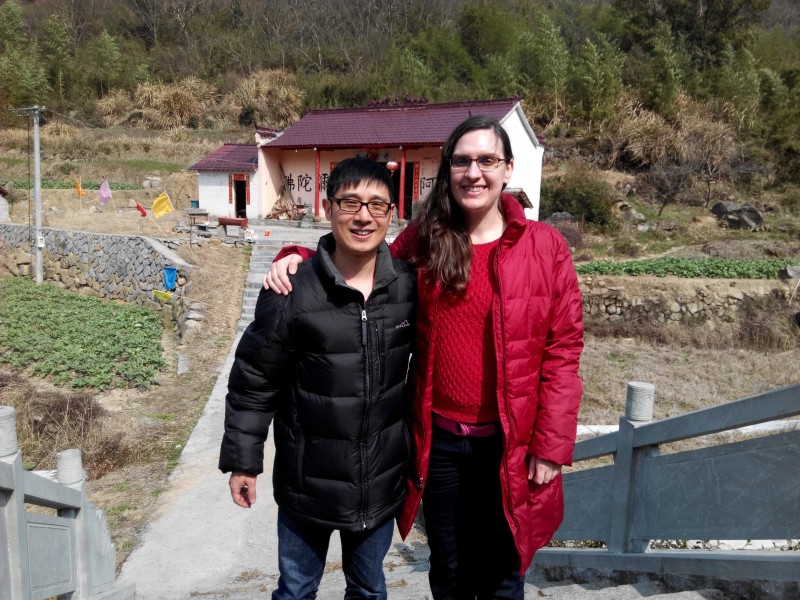
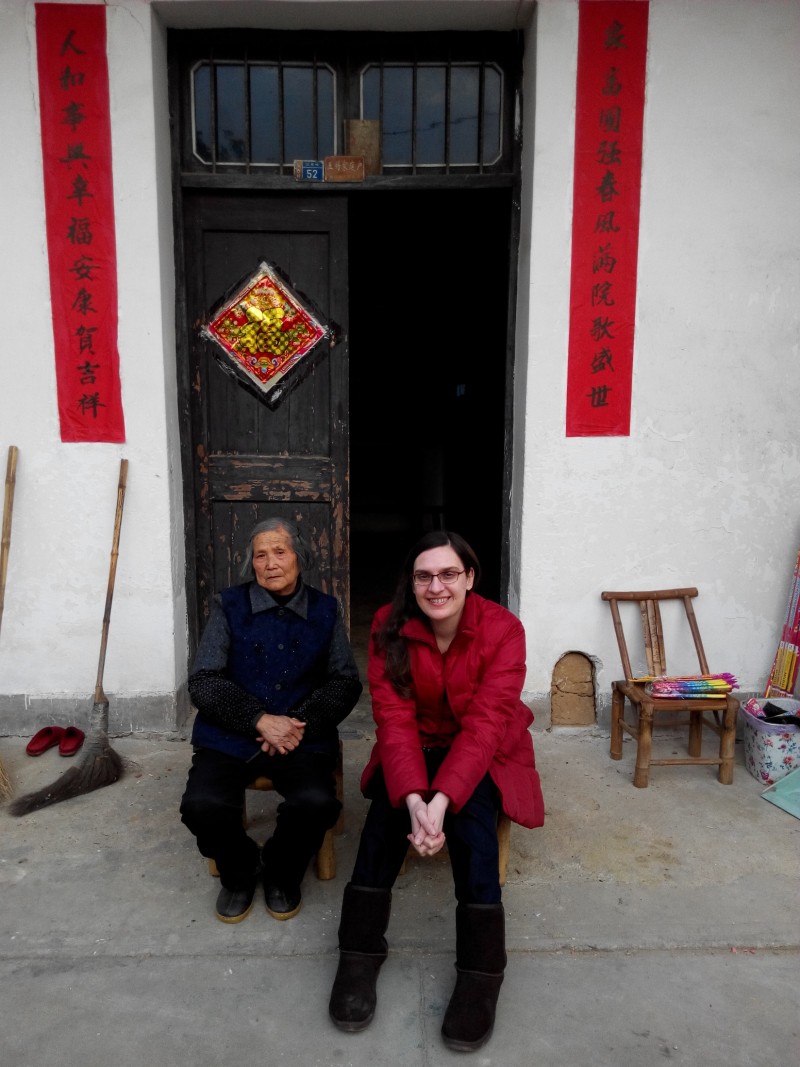
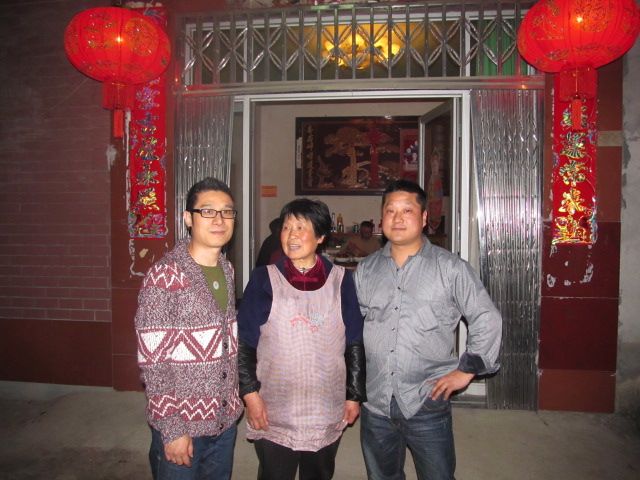
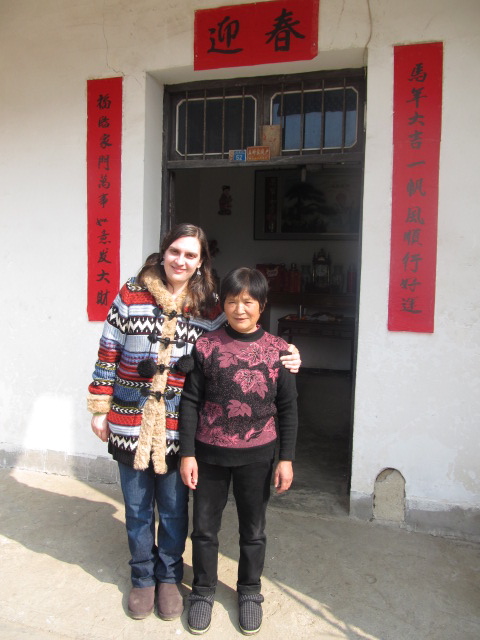
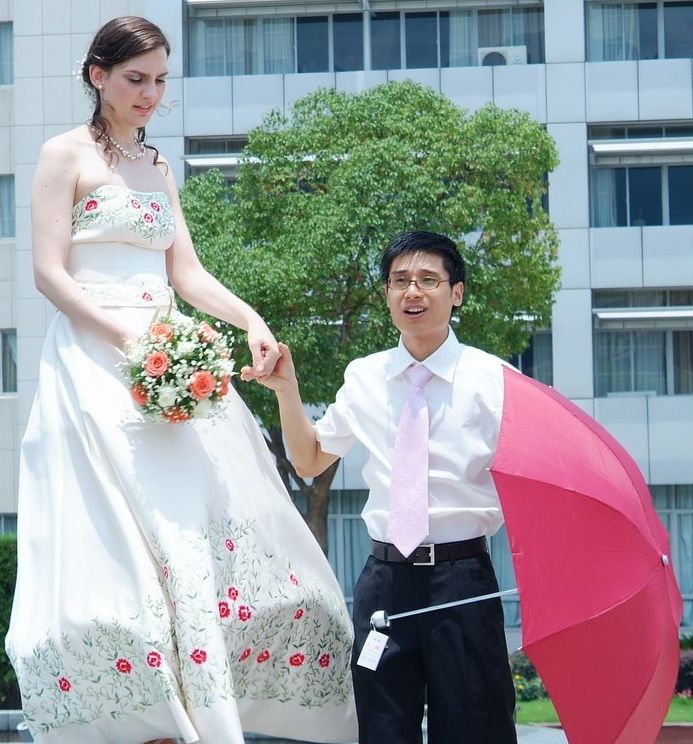
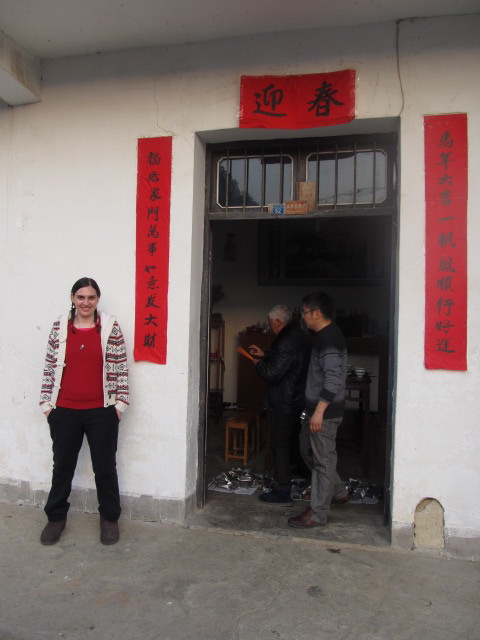
Advice for surviving Chinese New Year, and stories about experiencing Chinese New Year, with your Chinese family. All from one Western woman with a Chinese husband.
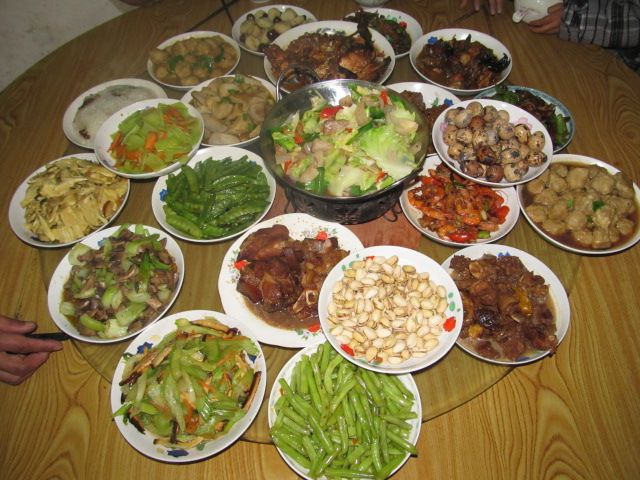
One of the greatest pleasures of Chinese New Year is the food itself. But there’s more than just the delectable dishes that line the family table Chinese New Year’s Eve and throughout the holiday itself.
My Chinese mother-in-law traditionally prepares a number of foods in the days leading up to the Lunar New Year. It’s like a parade of delicacies that lends as much of an excitement to the season as fireworks.
Here are four of my favorite Chinese New Year Foods from my Chinese mother-in-law’s kitchen:
#1: Laba Porridge (腊八粥, làbāzhōu)
The Laba Festival (January 17, 2016 this year) falls on the eighth day of the final month of the lunar year and the official start to the Chinese New Year season.
Every year, my mother-in-law commemorates the day by dishing up the traditional laba porridge for breakfast. This sugary sweet glutinous rice porridge is studded with lots of tasty “treasures” – including goji berries, red beans, mung beans and Chinese jujubes.
It’s lovely to look at, and a delicious way to start the holidays.
#2: Dongmitang (冻米糖, dòngmǐtáng)
At my in-laws’ home, no Chinese New Year is complete without a heaping bag of dongmitang sitting in the corner of our bedroom, ready for snacking at a moment’s notice.
Dongmitang are so reminiscent of the rice krispies treats I grew up with as a child in the US. But I think of them as a tastier, natural version without the marshmallows.
My mother-in-law makes her own puffed rice from scratch, adds rice syrup, pours the mixture into a mold to set, and then cuts it into bite-sized squares. Cool, huh? Sometimes she adds a little black sesame for extra nutrition during the coldest days of the winter. And sometimes, she lets us get in on the fun and help her, like my husband did last year.
But however my mother-in-law makes them, you can be sure she’ll bag them up and insist we take more of them upstairs with us. Even if we tell her we already have three bags of dongmitang in the corner of the room! Sigh…the love of a Chinese mother knows no end when it comes to food. 😉
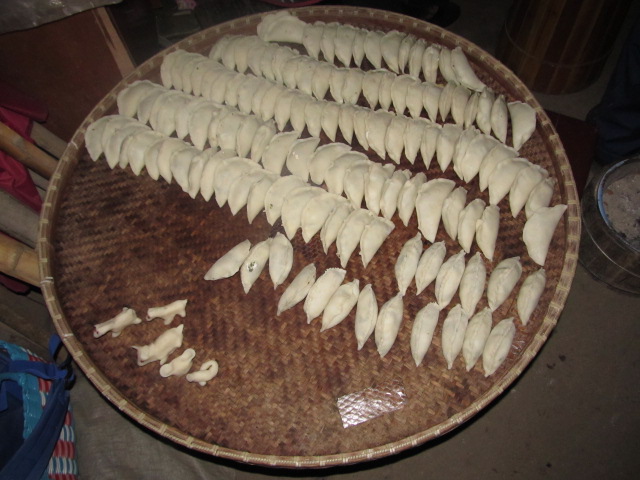
#3: Savory Turnovers (Migu)
Who doesn’t love sitting around with family during the holidays to make something traditional? Well in our home, that’s savory turnovers that we refer to in the local dialect as migu.
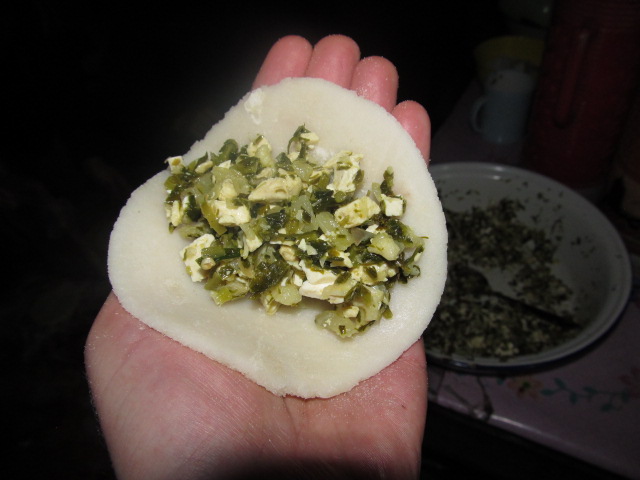
Migu are these scrumptious turnovers handmade from rice-flour dough and stuffed with either veggies (salted bamboo, pickled greens and tofu) or veggies and pork.
We prepare tons of them together, refrigerate (or freeze) for later, and then they become the most incredible snack or dish in a pinch during the holidays. Especially when they’re fried…yum!
#4: Homemade Tofu
I’ve purchased hundreds, even thousands, of packages of creamy white bean curd in the supermarket, floating in water. But I never truly knew tofu until I watched my mother-in-law prepare it from scratch during Chinese New Year, a yearly tradition in the family.
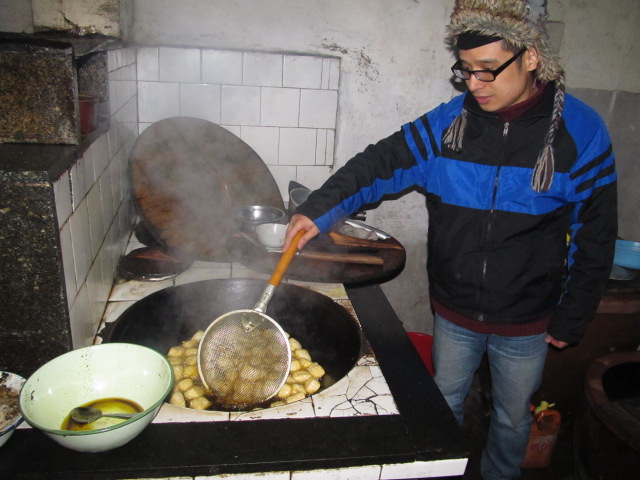
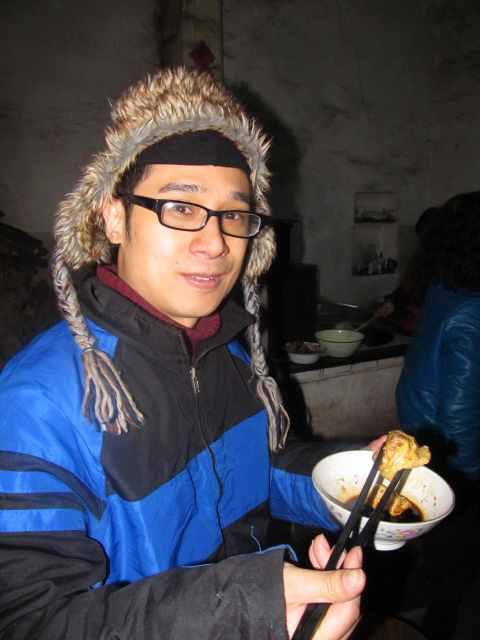
Making homemade fried tofu.
I wish I could describe all of the intricate steps involved in the process, but I’m still learning! Here’s what I do know:
One, it’s complicated enough to require the majority of my mother-in-law’s kitchen.
Two, the whole process produces a tasty by-product I happen to love on its own – soymilk!
And, three, you haven’t lived until you’ve bit into my mother-in-law’s homemade fried tofu fresh from the wok, dipped in soy sauce.
Trust me, if you’re as much of a tofu aficionado as I am, you’ve got to see this in action sometime. Or, if you’re really brave (and talented in the kitchen) try making tofu at home and experience the magic for yourself.
Growing up in Cleveland, Ohio in America, January was always a great melancholy expanse of a month, as depressingly white as the snow that piled around the house.
Sad little evergreens, once the beloved focal point of the season, would end up tossed unceremoniously beside the road for garbage collection soon after the New Year, while I secretly hoped for a few more weeks with the trees on display. Everyone would pull the plug on their merry Christmas lighting, and its absence on those dark and well-below freezing nights would lend even more of a chill to the neighborhood. And just the thought of another two months or more of winter was often enough to make my head ache, just like a bad after-Christmas hangover.
Sure, I loved that Christmas trailed the Winter Solstice by a few days, entertaining us through the longest nights of the year with family, feasts and fabulous presents. But what would get us through the long and often bitter winter weather ahead of us? (I’m not kidding about the “bitter” part — Cleveland, Ohio actually made the Forbes list of America’s worst winter weather cities).
Thank god I married a man from China, where January marks the start – not the end – of the holiday season.
Everywhere I go in Hangzhou, there’s a palpable sense of anticipation of what the Chinese consider the most wonderful time of the year. The other night, I caught a glimpse of a raucous end of the year banquet, where everyone wore a festive red scarf printed with Chinese characters around their necks as toasts were made among laughter and smiles. Supermarkets entice shoppers with glossy red Chinese New Year gift bags that shine like beautiful Christmas wrapping paper, each filled with the season’s must-have snacks, herbal remedies and spirits, the perfect gifts for relatives and friends you’ll visit during the holidays. Christmas trees, holiday lights and even Santa Claus himself continue to grace the malls, stores and public squares, a nod to the many Chinese friends who often think of Christmas as Chinese New Year in the West – borrowing those Christmas symbols to imbue the city with even more holiday cheer. My mother-in-law has spoken of how she plans to do another large batch of homemade tofu, and given the way her fried tofu melted in my mouth the first time I tasted it, I’m salivating just thinking about it.
With all of this joy, excitement and holiday spirit buzzing all around me, the January blues I used to know as a child don’t have a chance in the buildup to Chinese New Year.
I love the timing of the Chinese holiday season. We have a holiday to look forward to just when winter is at its worst. Plus, once it’s over, you needn’t wait long for Spring. People here call Chinese New Year “Spring Festival” and in Hangzhou, it actually lives up to its name – not long after the official end of the holidays, the golden rapeseed flowers start to bloom in the countryside.
I’ll never forget that first Chinese New Year I spent with John at his family home back in February 2003. It was the first time someone in China had ever brought me home for the holidays to meet the parents, filling me with all the and dread and anxiety of someone about to go through the biggest interview in their entire lives. Deep in my soul, I already believed Jun was the one for me. But I also knew that families in China didn’t always welcome the news of their sons dating Western women. After all, when John first told his parents about me, here’s what his father said: “You can be friends with foreign women but not date them.”
Yikes.
It’s no wonder that my greatest worries during the visit revolved around gaining the love and acceptance of John’s family – something that eventually came with time and determination.
The Lunar New Year is the biggest holiday in the Chinese calendar, a time for family reunions, and for saying goodbye to the past and hello to the future. Clint, however, doesn’t want to bid farewell to what happened after last year’s celebration, when he and his Cousin Maggie’s handsome Caucasian friend, Weaver, shared an unexpected but long-desired passionate encounter. East is East and West is West, and Weaver seems to want to keep it that way, but maybe Clint can bridge that great divide this coming New Year, and show Weaver what it means to be loved and accepted.
Red Envelope is as enchanting as any romantic comedy you’ve ever seen on the big screen. Plus, it’s so refreshing to see a love story immersed in Chinese culture – with all of the delightful cultural and Mandarin language references I’ve come to know and love. (For example, the line “You mean Wuliangye? Five grains on a mission to make you puke?” was spot on, and reminded me of that Chinese New Year when Wuliangye did resulted in some serious vomiting and a passed out cousin.) Thanks to Atom Yang’s exceptional writing and terrific sense of humor, Red Envelope is a fun romp through the most wonderful time of the year for Chinese, and it will forever change the way you look at mapo tofu (read the book to see what I mean). Why not kick off this year’s Chinese New Year season with a little romance and laughter in Red Envelope by Atom Yang?
It’s my great pleasure to interview Atom Yang about his debut romance novel Red Envelope.
Atom was born to Chinese immigrant parents who thought it’d be a hoot to raise him as an immigrant, too–so he grew up estranged in a familiar land, which gives him an interesting perspective. He’s named after a Japanese manga (comic book) character his father loved, in case you were wondering.
The main inspiration came from the first time I brought someone back for my family’s celebration of the Lunar New Year. Everybody was so accepting of us, it gave me the idea of a story set in this family, about love and acceptance. I was also inspired by my partner’s struggles with his family, and the redemptive quality of our love for each other.
Why did you choose to set this novel during Chinese New Year?
When an editor asked me to submit to The Spirit of Giving series of winter holiday stories, I wanted to represent my culture and pick a holiday that wasn’t one of the traditional Western celebrations. Chinese New Year was a natural choice, largely overlooked in the West as a winter holiday, so I was happy to provide readers something rare. I also love that the New Year epitomizes the culture (food, family, and finances—let’s not forget those money-filled red envelopes!), and I would’ve set a story during this holiday in another novel if I didn’t write “Red Envelope.”
How did you conceive of the two major characters, Clint and Weaver?
Clint is based on some of my own experiences and philosophy of life. I conceived of him as being intelligent and emotionally insecure, shaped by his loving and overbearing mother, guided by his wise and funny cousin, who goes through a process where he learns that it’s okay to be himself and becomes more emotionally secure. He doesn’t have to rebel against his family to find out who he is—he has to learn that he is lovable, and that his love for someone else is valued.
Weaver’s based on men I’ve dated or wished I’d dated. Sometimes when I think of Weaver, I think of some teen idol I had a crush on back when I was a kid! He’s similarly intelligent, and his emotional insecurity comes from his family, who are not accepting of who he is, and do not value what he gives—or needs. He’s someone who also is in a process of self-discovery, and since we don’t get through this life alone, he draws strength and love from Clint and Clint’s extended family in order to become the person he wants to be.
Like Clint, the narrator in this story, you also fell in love with a non-Asian man. How much did your own relationship influence your writing in this book?
The short answer is romance. My relationship with my partner is an example of how romance can be a constructive and powerful force in people’s lives. Our love, respect, and support for each other has helped us to weather storms in our personal lives, and this experience, which I’ve never had before with any other partner, influenced the story I wanted to tell. If I hadn’t met my partner, and somehow still found my way into writing romance, I wouldn’t have had a successful career—one of the genre requirements is a “happily ever after” ending, and before I knew what a great relationship could be, I would’ve written something all sturm und drang romantic tragedy instead of what I did write.
A major theme in your story is “what it means to be loved and accepted,” and you present two families with two different reactions to their sons’ dating choices — a family that ultimately embraces it, and a family that shuns the son. What do you think it takes to have a family accept who you are in love and life?
I think it takes time, openness, and resolution. People generally don’t like change, whether it’s in their heads or outside of it. People cherish their assumptions and expectations, and anything that challenges those things will be met with a lot of resistance and emotions like sadness and anger.
However, if people have enough time, they can accommodate new ideas and experiences—it’s almost unfair to expect family to accept something immediately that might have taken the individual years to accept about themselves!
And to have the probability of accommodating the new ideas and experiences, there has to be openness. Somewhere in the family, there has to be a crack in the psyche that allows entry into the imagination—so that they can imagine and create a new life around the novel piece of information. If there’s no openness to change, all the time in the world is useless, except for those on the train of progress to watch those stuck on the platform recede quickly into the distance.
Lastly, there has to be resolution. People give up their principles and their loved ones if they aren’t resolute about who they strive to be, and whom they choose to love. Why should a family work to accept change and choice if there’s no motivation to do it? The path of least resistance for those who are resisting change is to keep things the same or get them back to the status quo! So being resolute sets the boundary for both the individual and the family, to push the issue of acceptance.
What do you hope people gain from reading your novel?
I hope people gain a different perspective on Chinese culture, as well as interracial and intercultural relationships; a moment in their lives where they could smile, laugh, cry, and sigh; and most important, hope.
—–
Thanks so much to Atom Yang for this interview! You can follow Atom Yang on Facebook and Twitter, and learn more about his journey to becoming a romance novelist in his guest post for this blog titled How I Came to Write Gay (Asian Male/Western Male) Romance Novels. His debut novel Red Envelope is available on Amazon.com, where your purchase helps support this blog.
The last thing I wanted was to end up in the hospital during the Chinese New Year holiday! (No, this is not the exact hospital, but it looks pretty similar.)
You know your holidays have hit a low point when, halfway through, you end up doubled over in a chair in the emergency room with an IV drip, hoping and praying you won’t vomit into that ugly little fluorescent green plastic wastebasket at your feet.
Yep, that was me on the fifth day of the new lunar year. The only thing that would have made the whole situation worse was if the nurse had forced me to get that shot in the butt right there in public. Apparently, it’s what everyone does in the hospital. (Fortunately, she let me take the shot in a private room.)
I was shrouded in a soft white baby blanket printed with roses – a thing of beauty that was quite the foil to my ugly situation, shivering in my chair because I had vomited three times already that afternoon. That included the two instances in the little red VW polo we borrowed from a friend to drive down the Zhejiang coast, forcing me to turn the little plastic bag that was supposed to be for our fruit and other snacks into a makeshift vomit bag.
Between wishing to god that I wouldn’t once again have to anoint the wastebasket with the few remnants in my stomach, a bigger question loomed before me: How in the heck could this have happened to me?
Granted, I didn’t come into the holiday in the best shape. The night before February 18, Chinese New Year’s Eve this year (the most important day of the year), I had literally just wrapped up a substantial paid project for a client in the US that involved multiple late-night interviews to write up four articles. Just as I had made it to the finish line, hoping for a breather, another one appeared before my weary eyes – the end of the Chinese New Year holiday that stretched before me.
On top of it, I got maybe four hours of sleep that night worrying about all of the horrible things that might happen to me when I sat behind the wheel of that little red VW polo the following morning. It would be my first time driving in China and visions of all the gory tabloid news stories I had watched the year before tugged at my consciousness. You know, the kind of massive, bloody accidents that could make anyone swear off getting behind the wheel in this country.
But ultimately, I could have recovered from all of that – the marathon project before the holiday, the lack of sleep, even the stress of driving itself – with a nice sedate holiday filled with lazy late mornings in bed, curled up with my favorite e-reader devouring a memoir or novel.
Yep, this would have been my perfect kind of holiday — just reading and enjoying the quiet. (Even better if it had happened in Bali, where this photo was taken years ago!)
Unfortunately, “sedate” is not a word you would use to describe my Chinese New Year with the family this year.
Don’t get me wrong – there are things I love about Chinese New Year. My mother-in-law always outdoes herself each year with a feast that could give some of the best restaurants in Hangzhou a run for their money (even the vegetarian ones). The house is overflowing with the best treats of the year –sugary pecans, dulcet green dates, and honeyed black sesame cakes. And I have an excuse to visit some of my favorite relatives – such as John’s grandmother, who still manages to charm us all into laughter despite the fact that I can only understand maybe 50 percent of her speech in the local dialect.
In theory, a day or two of this togetherness works amazingly well.
The problem is, Chinese New Year with my husband’s family lasts at least three or four days (if not more, depending on where you are and how long you’re able to say). It’s all about being with the family day after day…after day…after day. And what sounds great at first soon becomes tiring and even overwhelming.
And if you’re already exhausted coming into the holiday, like I was, you’re at risk for even worse outcomes if you push things a little too much. (Like attempting to drive some six hours in one day to visit a friend in south Zhejiang.)
What about the holiday can wear you down? Here’s my list:
1. Visiting people and/or having guests over every single day
Once the lunar new year arrives, so with it arrives the annual custom of bainian (visiting with relatives during the new year). In my husband’s family, for at least three whole days you’re either hosting family or schlepping your way over to someone else’s house. The thing is, this isn’t a couple of people – we’re talking about 10 or sometimes even 20 people in a house at the same time! And because Chinese love it “renao” (literally “hot and loud”), every house is a boisterous mix of loud chatter, drunken toasts, and a cloud of smoke as people exchange far too many cigarettes around the table.
I’m an introvert myself, so just being around huge crowds of people already makes me nervous (which is tiring). Add to that the concerns that someone might actually light up indoors (I detest smoking and cannot handle secondhand smoke) and the pressure is even worse.
It’s a shame too, because invariably many of these meals dish up some of the most delectable things I’ll eat all year! I’m embarrassed to admit that I’ve either wolfed down my rice and dishes or simply passed up a few meals simply because the whole environment was too exhausting.
2. Firecrackers and fireworks
If there’s anything destined to steal away your precious hours of rest – especially the first night of the new year – it’s these traditional holiday explosives.
Imagine me, a shadow of myself that first night, desperate for some much-needed slumber – only to have my ears assaulted in the early morning hours by what must surely be the closest thing to being camped out in a war zone. The neverending blitzkrieg of fireworks, firecrackers and anything else that sparkles or booms happened to occur at 5am to 6am or so (it’s traditional to set them off when you first open your door in the morning of the new year) – coinciding with the time when I was supposed to be in my deepest sleep.
When I finally rolled out of bed sometime around 11am, my husband remarked at how my “panda eyes” – those dark circles I used to have years ago around my eyes – had returned to my worn out face. Ugh.
3. Being asked to eat WAY too much food
It was the afternoon of the first day of the new year, only a couple of hours after we had all polished off enough food to easily feed all the people in the minibuses that zoom through the countryside. John and I were sitting at the dining room table in his home, discussing some business with friends. The sunlight cast lazy, relaxed shadows on the wall as we were all enjoying the conversation and nibbling on pumpkin seeds and sunflower seeds.
If only my mother-in-law hadn’t barged into the room with five huge, steaming bowls of dumplings that nobody could have humanly consumed at the hour.
“No, no, we couldn’t possibly eat these!” The protest came from everyone at the table, most of all the friends’ daughter, whose blood seemed to drain from her face at the sight of this food being forced on her. “Please, I can’t!” she squeaked in a pathetic voice that made me feel so sorry for her. After all, the girl said exactly what I was thinking.
This was the middle of the afternoon. We were all expected to eat elsewhere for dinner (surely, yet another gargantuan feast where the relatives would demand you to eat, eat, eat!). How could we make it through with the dumplings in our stomachs? You always have to eat something when visiting someone else’s house.
When did eating suddenly turn into a task, a chore even?
Even worse, when I passed on the dumplings, as did John’s friends, this “responsibility” of cleaning the bowls was transferred to John, as well as John’s dad and mom (his dad actually grumbled a little as he shoveled spoonfuls of dumplings into his mouth).
Just seeing the whole scene tired me out and drained my appetite too. That evening at dinner, I only devoured a fraction of what I had eaten for lunch. Too bad, because John’s aunts fried up one of my favorite Chinese dishes, the silky smooth and fragrant chao liangpi (fried bean starch).
4. Preparing just the right gifts for the family (especially if you’re on a budget)
(Photo via http://www.meilishuo.com/share/836698329)
Experiencing Christmas as an adult has taught me that gift-giving can easily raise your blood pressure a few notches as you agonize over getting someone the elusive “perfect gift” (which almost never really exists anyhow).
Well, in China you can’t do Chinese New Year without giving things too. Every time you visit a relative’s home for the new year, you must arrive with some Chinese New Year gifts – such as organic milk, fine wines, nutritious crackers and cookies, or even fruit (invariably wrapped up in little red giftboxes like the above photo). It’s etiquette…and trying to plan for it all (especially if you have a large extended family like we do) will drain your mental resources as well as your finances.
5. Traveling during the busiest (and craziest) holiday season of the year
When I told people I was going to drive in China after getting my license, many responded that they were too scared to do it.
Now I understand why!
Let me tell you, the highways in China during this holiday felt more like a large-scale game of dodgem in real time, with drivers constantly whipping and weaving through the traffic at all times, just barely missing our front bumper. Almost no one uses their turning signal to change lanes; they just change at will, use whatever space they can find, and think nothing of tailgating even at well over 100 kilometers per hour (over 60 miles per hour). Even when it’s a downpour! It’s no wonder we saw a multiple rear-end collision in a tunnel involving four cars (and three horribly crushed bumpers).
Getting behind the wheel while I was already fatigued was the final strike against me – and what ultimately sent me into the emergency room in that little city on the Zhejiang coast.
Here’s what I’ve learned. While I think short distances are manageable, even on a holiday, I would never, ever, drive more than two hours during a vacation time like that. It’s suicide. Even my husband’s friend on the Zhejiang coast said we’d be better off doing the high-speed trains next time around.
Of course, if you’ve got to move around during the holidays and haven’t the luxury of a car, you’re not off the hook. Train and bus stations transform into a suffocating sea of people that make you truly understand why China is the most populated country in the world. You’ll even feel the crush of humanity at the airports. And good luck trying to score tickets for travel when everyone else is trying to hoof it home!
—
In the end, I’m reminded of what my husband’s dear college friend – the friend I first met in that emergency room during the holidays – told me later on: “We usually just spend our holidays traveling instead of visiting family,” including travel out of the country. While I wasn’t in any shape at that moment to attempt international travel, one thought did occur to me: I could definitely use a holiday from this family holiday!
We’re just into the first few days of the year of the sheep (or is that goat or ram?), and let me tell you — I am just completely exhausted. It was already a marathon leading up to Chinese New Year’s Eve, where I rushed to finish a paid project before the holiday. And it hasn’t stopped even during the holiday — except now it’s a marathon of visiting relatives (bainian) during the day!
Still, despite the fact that I’m still catching up on sleep (and, for that matter, my e-mail inbox — apologies to anyone who hasn’t heard from me in a while), I’m actually having a really great time, more than I ever expected. (Of course, it doesn’t hurt that folks here usually speak in local dialect, which means I still don’t always understand when they’re saying, say, “Have kids soon!”)
In lieu of my usual posts on Monday, I’m sending you my warmest wishes for an auspicious year of the sheep through this photo essay! Here’s hoping you have a fabulous year!
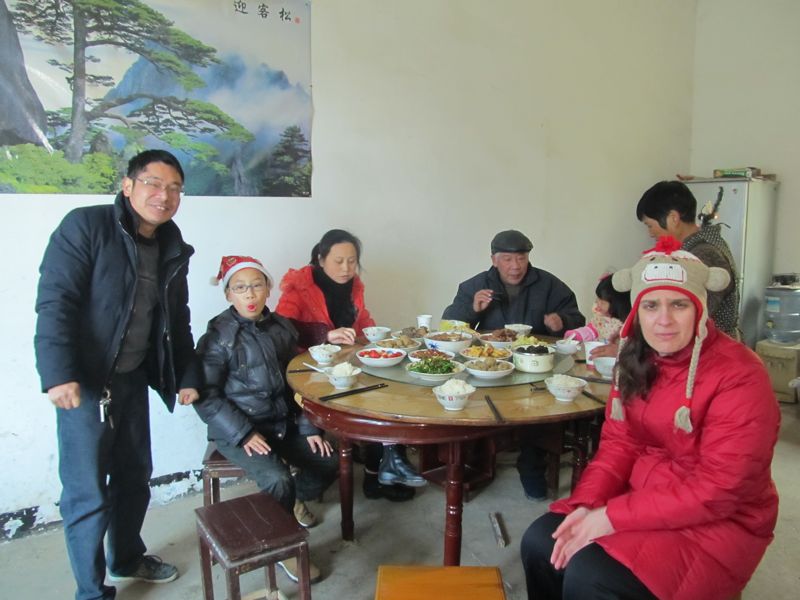
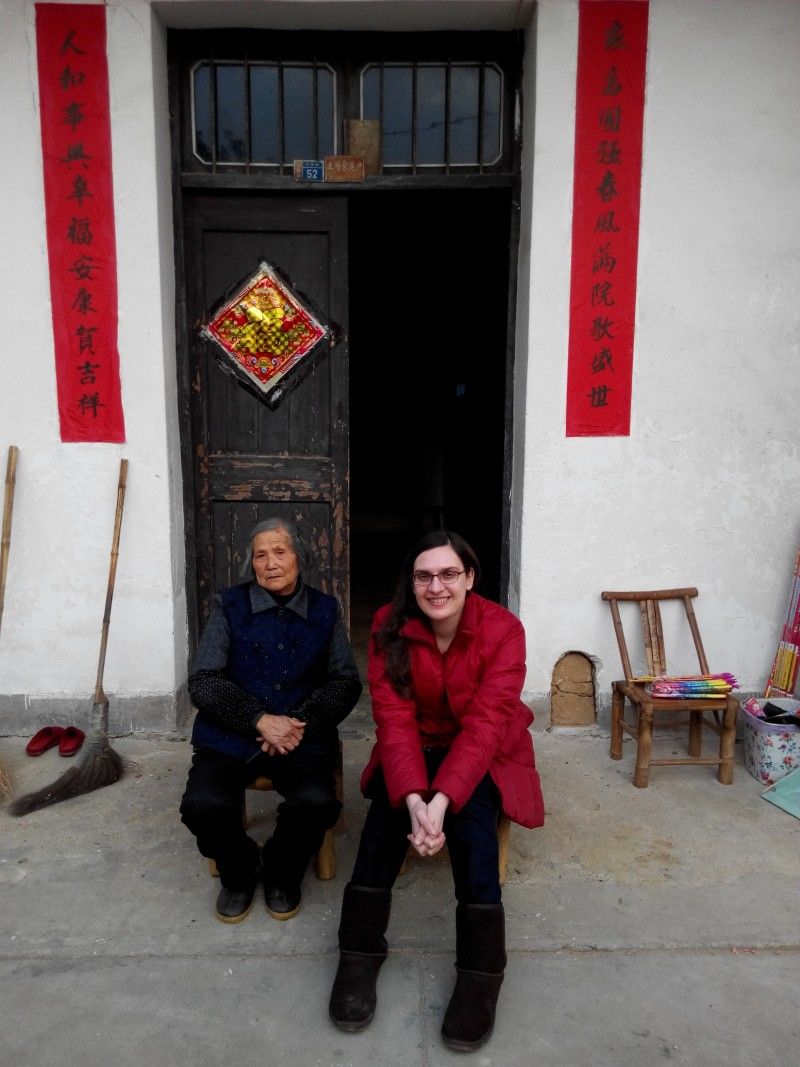
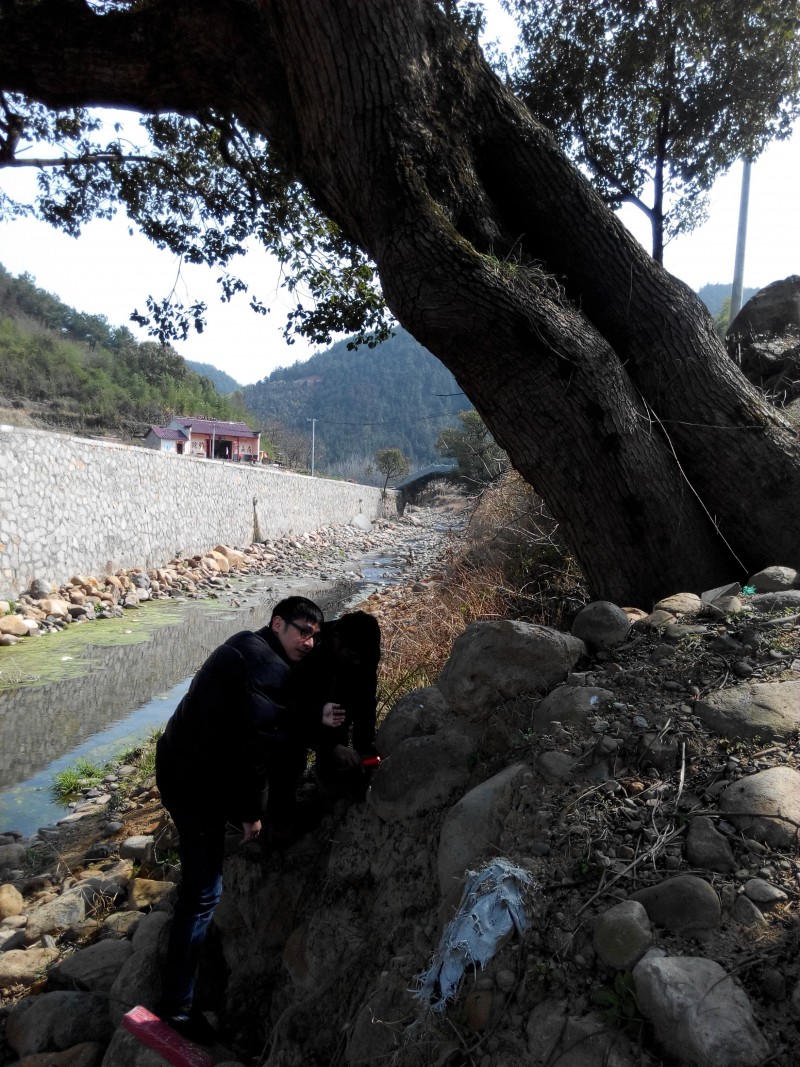
The little red VW polo we drove to my husband’s hometown (which was also my first time ever driving in China)My husband John and his brother pay respects to a camphor tree that watches over the family.We also visiting the local temple (in the background) to pray to the Jade Emperor for an auspicious new year.Hanging out with John’s grandmother at the front door of the family house.First selfie ever with John’s grandmother! (We all bust up laughing at how funny we all looked together in this.)John and I took this fun selfie with the family while dining on the most important (and delicious!) meal of the year.We visited relatives in the village, including John’s grandma (who enjoyed my foot bath and foot massage).On new years day, we found this lovely tree with pink plum blossoms.
The other night, I suddenly burst out in tears over what might probably be the silliest of all things – the fact that Chinese New Year was fast approaching, and I was really afraid of spending it with the family.
It sounds ridiculous to admit that I was sobbing in my bed over another holiday with the family, but it’s true. And it was all triggered by an equally ridiculous thing – that none of my husband’s friends could lend us their extra cars.
We knew we weren’t in a position to rent a car to drive home for the holiday, but John and I had talked about borrowing one of his friends’ cars for a while. The only problem? We waited too long to ask for that second car – and of his friends who had an extra vehicle, all of them had been promised away to someone else.
As frivolous as it sounds, I had secretly daydreamed about driving back to the family home in a car. I often imagined myself, the sunshine beating down upon me like a spotlight as I stepped out of an actual automobile in front of the family – how great it would feel for them to see us driving home to the house (instead of taking the two buses we’d normally have to brave to make the trip back).
Deep down, I know it was all about face, our own mianzi. That I thought if only we had a car – even if it was a borrowed one – it would somehow make up for everything else about our lives that seems totally imperfect or open to family criticism. Like how we don’t have kids (and everyone keeps bugging us about it). Or how we don’t own an apartment or a car (unlike all of John’s relatives his own age). Or even the fact that we live in a tiny apartment. Having a car would somehow prove our “worthiness” before everyone else in the family.
Well, without the “armor” of a borrowed car at our disposal, all of my fears came pouring out, along my tears. That everyone will notice how not much has changed for us over the year of the horse. That they might think we’re failures.
The problem of “what will others think?” has weighed upon me for much of my life. I’m a recovering perfectionist, exacerbated by the fact that I’m also incredibly sensitive. The old saying goes, “sticks and stones may break my bones, but names will never hurt me” – and yet for most of my life, I’ve taken to heart time and time again what other people say about me. Even though I should have known better.
Meanwhile, Chinese New Year is one of those times when it seems like everyone in the family makes it their business to tell you what they think about your life – whether it’s your marital status, whether you have kids, or even your own possessions. And even when people don’t say anything, sometimes just being the one who “sticks out” of the crowd – like, say, the only thirty-something couple in the family that doesn’t have a home, car, lots of money, and kids – can make you feel truly like the odd one out. As if you don’t belong (and, perhaps, never will).
Hence, all of my fears about heading home. And my crazy thinking that, somehow, having a car might make us “look better” in the eyes of everyone else.
I’d be lying if I told you I’m somehow over “what other people think,” because I’m not. I think it’s the biggest struggle of my entire life. It’s one I fight on a daily basis. Sometimes, it’s even the reason I can’t fall asleep right away; there are nights when I must whisper the mantra, “You are good enough just as you are,” over and over again, just like my mother used to whisper to me as a child when I couldn’t sleep.
Facing my family at Chinese New Year is like being tossed into my own personal three-ring circus of “what will other people think?” Specifically, people who I love and care about very much, which makes it even harder.
Yet, in another sense, I also realize that facing my worst fear – what others who love me will think – could also be my salvation. That sometimes, you have to face the darkness and plunge right into it, instead of just running away (which tends to be my knee-jerk reaction to things I am afraid of).
That instead of hiding behind someone’s borrowed car in order to feel worthy, I can feel worthy right now, exactly as I am. And not because someone else – or, especially, someone in the family – told me so.
So in a few days, John and I will walk our way over to one of Hangzhou’s bus stations and board the first of two buses to make our way back to his hometown. I don’t know what my Chinese family will say about us this holiday season. But for the first time in a long time, I’m going to try out something new – listening less to their criticism, and more to my own heart (which I’m certain that deep down inside already knows I’m good enough).
Have you ever been afraid of what other people — family or otherwise — might think of you? How do you manager your own “demons”?
P.S.: When I first drafted this post, it seemed my husband and I had no possibility of borrowing a car to head home. Then a miracle happened — when my husband happened to call a forgotten old classmate, she offered us her extra car. Still, that car won’t change my perspective; I’m still planning on listening to my heart!
When you live a lot of your life online like I do, it’s easy to make things look perfect. Like, for instance, Chinese New Year. Last year I spent much of the run-up to the holiday posting eye-catching photos of Chinese New Year – from shots of mouth-watering homemade goodies from my mother-in-law’s kitchen to handwritten red couplets shining in the winter sunshine.
But here’s the thing – it’s not all perfect or fun when you actually spend Chinese New Year with the family here. Sometimes, it’s even nerve-wracking. So in the spirit of being totally honest about Chinese New Year, here are 4 things that actually make me anxious about spending this year’s holiday with family here in China:
1. Firecrackers and fireworks
Confession time – I’m a jumpy person. If you startle or scare me (like, sneaking up on me all of a sudden), I will literally jump!
That’s why I’m not exactly the biggest fan of two of the biggest symbols of Chinese New Year: firecrackers and fireworks.
Whenever the family sets them off at our house, it’s like they’ve kicked me into a war zone. I head for the safest corner of the house to duck down and cover my ears, praying it will all be over soon.
Of course, it doesn’t help that every Chinese New Year generates a frightening bunch of tabloid-worthy news stories about tragic accidents (including deaths) caused by firecrackers and fireworks, making me even more nervous whenever I hear that great “boom” outside.
If only my husband’s family would go for those electronic firecrackers that I heard about on the news in China last year – they have a prerecorded “boom” but none of that destructive or dangerous force.
But I know better — they’re traditionalists to the core when it comes to their choice of explosives. Which means I’ll have to prepare myself for another year of explosions outside the door – and another year of me nervously crouching in the corner of the house…with my ears plugged.
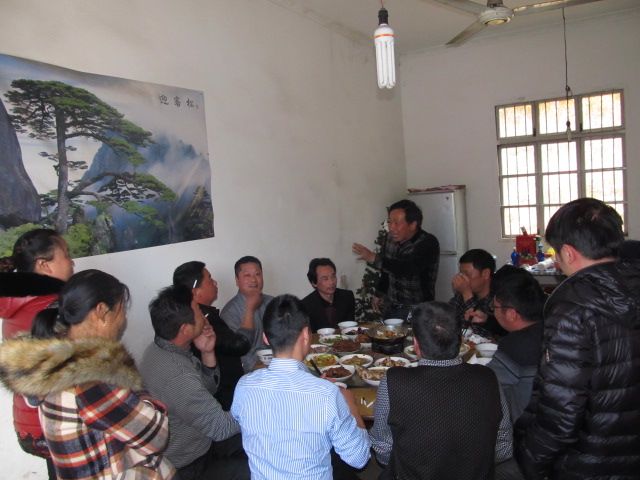
The other night, while talking to our close Chinese friend Caroline during Chinese New Year, my husband asked a common question. “Did you go out to bàinián?” Bàinián (拜年), of course, is the tradition of paying new year’s calls to your relatives and friends, usually by going over to their homes.
Caroline laughed with embarrassment. “I didn’t want to go out, I’ve stayed at home. People ask too many questions!”
That’s because Caroline still hasn’t, as they say in Chinese, “solved her personal problem”. She’s a single Chinese woman in her thirties. And because she’s single and well above 30, a sort of unofficial marriage expiration date for young people in China (especially women), her relatives will ask her the bomb of all questions: “Do you have a boyfriend?”
Caroline’s not alone in detesting the questions about her personal life. After all, one of the hottest topics trending on Chinese social media in the lead to Chinese New Year was Counter Annoying Chinese New Year Questions From Relatives.
Even I’m not immune to such questioning. John and I still have no children, which makes the questions “Do you have a kid?” or “Are you planning to have a kid soon?” — questions I frequently get from Chinese friends and relatives — sting at times. Of course, my mother-in-law doesn’t even bother to ask us; she just simply tells me I’m “too old,” which does wonders for my self-esteem! (Not.)
So, since we still don’t have a kid, guess what I’m expecting to hear from the relatives this Chinese New Year? Yep. And I’m definitely not thrilled.
It’s really scary when alcohol gets co-opted in China to measure things like filial piety or loyalty. Some of the biggest bullies often end up being some of your closest friends or relatives.
Big tobacco must love how China’s culture has successfully linked cigarette smoking to masculinity, guaranteeing that pretty much every family in the country includes smokers.
But I’m a rabid nonsmoker who finds secondhand smoke repulsive, so having smokers in my family here in China is another thing to worry about during the holidays.
Last year, it was almost impossible to find a dinner table where someone wasn’t lighting up. I experienced some uncomfortable conversations about smoking and often had to steal away from the dinner table because my lungs just couldn’t take it.
I’m expecting another round of “dodge the secondhand smoke” this year – and it’s definitely not going to be the highlight of my holidays. Ugh.
What worries you about spending the holidays with your family?
Bringing family together for the holidays is bound to produce a few awkward experiences – including when it’s your family spending Chinese New Year. Here are four I’ve had that have stayed with me over the years (making me wonder what’s in store this Chinese New Year!):
1. Family pressure to have a baby at the most important dinner of the year
Last year, just as we sat down to nianye fan (Chinese New Year’s eve dinner – the most important feast of the year), one of John’s brothers turned to me and said, “Next year, we’ll have a new person around the table, right?” The meaning wasn’t lost on me – that, obviously, he expected us to get pregnant and have a baby in the year of the horse.
Not exactly the kind of thing you like to hear when you know that’s not going to happen. (We just can’t have kids right now for personal reasons.)
My face completely flushed red as everyone around the table looked at me, and I couldn’t think of a single thing to say. It was one of those moments where time nearly ground to a halt – an incredibly awkward one, to say the least.
Fortunately, everyone soon started eating. Thank god Chinese New Year’s Eve dinner was so distracting! (And delicious!)
2. Seeing a relative so drunk he was practically unconscious and covered in vomit
This is the lunch where it all started.
This wasn’t just awkward – it was dangerous.
On the second day of the Chinese New Year, our family invited over some relatives for a loud and raucous lunch where the alcohol flowed quite freely. A little too freely, in fact.
The main culprits were a mob of older male relatives in the dining room pressuring the younger guys to drink as a sign of respect to them. It became a neverending request, where one shot glass of high proof baijiu led to another and another and another.
I never cared for boisterous and drunken family meals, so I had positioned myself on a chair outside, chatting with some of the women in the family.
An hour or so later, my husband discovered one of his cousins had gotten so sloppy drunk that he hid himself in the shed behind the family’s beehive. When John finally carried him out of the shed and plunked him into a bamboo chair, he looked almost unconscious – and then puked all over his shirt.
I swear, the baijiu on his breath mingled with the stench of vomit has forever been etched into my memory. (And, I will never, ever, sit in that bamboo chair.)
Later, family members sent him to the hospital, where they pumped his stomach and revived him. Fortunately, he didn’t consume enough to threaten his life.
But those moments when his almost comatose self, reeking of alcohol and puke, were seated right across from me rank as some of the most awkward and frightening ones I’ve experienced during the holidays.
3. Using a chamber pot in the bedroom while having my period
The family chamber pot looked something like this.(Photo via http://www.budou.com/detail/6/6242577.html)
Well, it’s one thing to manage your “monthly gift” when you’re in your own apartment – and another thing entirely to deal with it in a home where the only flush toilet is downstairs and too far from your bedroom to use at night.
Enter in the family’s chamber pot (it resembled a bucket, complete with its own lid). Yes, folks, that’s what I had to use one year when nature called and it was late at night. I’ll spare you all of the really gross details, but suffice to say it felt awkward trying to squat over a bucket AND manage the messy side of being “on the rag” at the same time.
(Thank goodness our suite at the family home now has a modern bathroom with a real flush toilet!)
4. Calling John’s parents to tell them we were stuck on a mountain after dark
John and I were so thrilled we made it to the top — never realizing we nearly ended up trapped on the mountain after dark.
Last year, we had an unseasonably warm start to the year of the horse – so much so that the glorious sunshine on the second day of the new year beckoned John and I outside for a walk. We didn’t actually intend to climb the mountain but the beautiful weather spurred us on – and besides, we had always wanted to make it to the top. We lucked out on finding a path that brought us close to the summit and couldn’t resist clawing our way through the brush and bushes until we made it. Woo-hoo!
Well, that euphoria lasted right up until the path we chose down the mountain petered out until we were trapped in a minefield of thorny vines as the sun was just disappearing behind the mountains. There we were, trapped on a mountain at dark with no idea exactly how to make it down and not a flashlight in sight.
We did, however, have our mobile phone – thus came the awkward call sometime around 6:30pm or so, announcing what was surely my mother-in-law’s worst nightmare. (She never did care for us gallivanting around the mountains in the village).
Fortunately, we did eventually make it down the mountain – slowly and step-by-step as we held hands the entire way for safety. It was one of the craziest things we’ve ever done and we suffered some nasty looks from John’s family (including his eldest brother, who gave us the silent treatment as proof of his extreme anger at us for getting lost). Not fun.
What awkward experiences have you had during the holidays?
Our friends who dined with us that evening had no idea it was our 10th anniversary. (We actually told them it was a dinner to celebrate my birthday – which was true, in part.)
It’s crazy, I know. And you might be wondering, Why would they hide such an important anniversary from their friends in China?
Because in China, it’s incredibly awkward to be married for 10 years and not have any kids. So awkward, that my husband just doesn’t want to mention it to his friends or even talk about it with people we know (like a friend’s mom we walked through the park with the other night). It’s funny how something that made me feel so proud could actually make me feel embarrassed at the same time.
For those of you wondering what that awkwardness is like, here are 5 things that reflect the challenges of being a married couple of 10 years in China with no children:
1. You will need a coping mechanism for the many times people ask you, “Why don’t you have children?”
In the US where I grew up, this sort of question is mostly off-limits (unless you have one of those really nosy relatives who doesn’t know the meaning of the term “off-limits”). In China, it’s par for the course. After all, this is a country where “Are you married?” and “Do you have children?” are a Chinese equivalent of asking “Are you well?” – ways to show your care and concern for someone else.
Well, believe me, when people find out we’re married but have zero children, they look INCREDIBLY concerned.
This is a culture that believes marriage and children are as inseparable as Beijing duck and those tasty little pancakes – you just cannot have one without the other. Chalk it up to Confucian values, particularly filial piety. In fact, of the three unfilial actions, the worst of all is never having kids (which are the next generation to care for the elders and worship the ancestors).
When I hear this question – “Why don’t you have children?” — the flippant side of me desperately wants to say, “Mind your own business!” But that doesn’t go over too well with most people, as you can imagine.
Sometimes I just say, “Because we don’t.” Sometimes I tell people, “Because we can’t,” and leave it up to them to figure out what that means. Sometimes I just change the subject. But more often, if my husband is with me, I just leave the answering to him!
Me and my mother-in-law.
2. You will need to find your inner courage whenever your mother-in-law suggests you’re an “old maid”.
I love my mother-in-law to pieces, but whenever we return back to the family home after a long hiatus, she immediately brings up having kids and then tells me I’m “too old”. After all, we’ve been married for a decade and I’m over 30 (30 is the official “expiration date” in China for having kids).
I know what you’re thinking, it’s just her opinion and it’s just a bunch of words. But things like that have a way of wiggling into your subconscious and tugging on your insecurities. Before you know it, you’re wondering, “Am I too old?” Or worse, you follow this whole train of thought to its depressing end – often something involving you curled up on your bed crying away a perfectly good afternoon.
It takes a LOT of courage to fight through these awkward moments and find your inner confidence. I still don’t have a magic bullet to deal with suggestions that I’m too old. What I have found, though, is that moments of just being present – taking a walk through the park, or focusing on my breathing – can help me feel more comfortable with where I am right at this moment.
3. You will dread going home for holidays like Chinese New Year, when all of your husband’s peers from school come over to visit – with their school-age children.
Unlike us, my husband’s peers jumped on the baby bandwagon almost immediately into their marriages (including a friend whose wife was famously pregnant and showing at their wedding – a bridal bump I had the chance to witness with my own eyes).
So whenever Chinese New Year comes around, they come around to visit as well – with, well, their young and even school-age kids.
Actually, for the most part, his friends and peers don’t give us pressure. It’s their parents that do – parents who will compare us to John’s peers and then pelt us with all sorts of uncomfortable questions or comments (usually of the “Why don’t you have children” or “You’re too old” variety) when they notice we have no little ones in tow. The whole situation completely strips all of that sepia-toned nostalgia from the idea of “home for the holidays”.
We were able to dodge a lot of these questions this year, because most people were just glad to see us back in China. But next year? I don’t really know what’s going to happen. Deep down a part of me is secretly saying, “Help!”
4. You’ll feel isolated from your friends with kids – and instead gravitate to friendships with other people who “don’t belong”.
Don’t get me wrong, we love our friends with kids. But sometimes being around them can feel a little uncomfortable, particularly when they – with well intentions – bring up the topic of us having kids. Sometimes we feel like we don’t entirely belong to the same club, if you know what I mean. So of course, we inevitably gravitate to our other friends who feel as if they “don’t belong” in Chinese society.
In particular, one of our best friends in China is Caroline, who happens to be what people call a “leftover woman.” “Leftover women” and “leftover men” describe people of a certain age in China (over 27 for women, 30 for men) who haven’t married yet. They also feel as out of step with China’s society as we do, because it’s just not normal in China for adults to be single.
We’ve always loved Caroline, our mutual friend who introduced the two of us years ago. But maybe we feel even closer to her because she’s like the ultimate safe space where we can vent about the awkwardness of our situations – hers not being married, ours being childless.
I feel like I’ve come to understand Caroline’s pain every time someone else pelts her with that unwelcome question: “Why aren’t you married yet?” She’s even shared with us some of her less-than-pleasant encounters with the question, encounters that make her angry and frustrated, and I feel her. Because to me, the question isn’t all that different from “Why don’t you have kids yet?” It’s a question that also singles you out, that divides you from the world, that reminds you of something you lack or something that perhaps you even desire but cannot have.
The other night, she told John and me about this one ridiculous girl she used to work with (“ridiculous” was her description) who kept interrogating Caroline about things that could easily have been ripped from a list of the “10 most cringeworthy questions in China”: Why aren’t you married? Why don’t you own an apartment? Why don’t you have a car?
“What do you want to hear from me?” Caroline said to this girl (surely in a voice that was getting dangerously close to angry). “That I’m unable to find someone? That I have no money?” Somehow, just hearing about Caroline’s courageous, “take no crap” response to this girl made the three of us erupt in a cathartic burst of laughter. In these moments, we always feel a little less alone and isolated.
5. “Being married for 10 years with no kids and living in China” will become one of the scariest things you write about.
For the longest time, I never wanted to go public with this topic. It scares me because it’s such a personal thing – and one that weighs on me on a regular basis (for many of the reasons I mentioned above). Why put it out there and risk having more people tell me either 1) You’re too old for kids or 2) What’s wrong with you?
But one of the things I’ve learned from my husband is the importance of self-acceptance. This is who I am – a woman who has been married to her Chinese husband for 10 years, lives in China, and has no children. Will I be like this forever? Honestly, I really don’t know for a lot of reasons I can’t share on this blog. But regardless, I must face my reality and embrace it – in all of its awkwardness. And for the moment, maybe that’s enough.
Enjoying the lanterns (such as the above) during the Chinese Lantern Festival will feel even more romantic this year, with Valentine’s Day on the same day!
February 14, 2014 is not your usual Valentine’s Day, because it also marks the rare occurrence of the Western holiday of Valentine’s Day and the Chinese holiday of the Lantern Festival (元宵节, yuánxiāojié) on the same day (which happens every 19 years).
Then again, in a sense, weren’t these holidays meant to be together? In China some have dubbed the Lantern Festival the real Chinese Valentine’s Day. In the past, unmarried women were not allowed to freely leave their homes. But during the Lantern Festival, they had the chance to come out with chaperones and enjoy the lanterns in public, a wonderful opportunity to meet potential romantic partners as well.
Still, I see this meeting of the two holidays as a perfect symbol of Chinese-Western cross-cultural relationships — and definitely worth celebrating in a special way! The question remains, how?
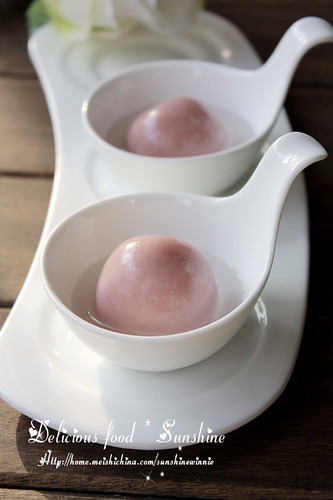
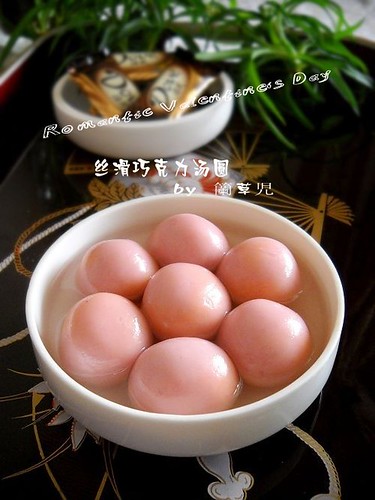
Besides the usual chocolates and roses, here in China people have decided to add a little Valentine’s Day flare to one of the Lantern Festival’s favorite treats: tangyuan. Instead of the traditional sesame or red-bean paste fillings, people are opting for rose-flavored tangyuan or chocolate tangyuan (yum!). If you’re in China, head to your local supermarket! If not, scroll down — I’ve translated a couple of recipes from online (warning: I’ve yet to try either, so attempt at your own risk!).
For me, there’s something so irresistibly romantic about light displays in the wintertime (I always loved going out with my family to enjoy the Christmas lights in Cleveland, Ohio). That’s why the perennial lantern displays all around China — and other parts of the world — could be that perfect after-dinner activity with your date or spouse. No lanterns? Consider creating your own simple version (like this) or try a Western take on the holiday by stringing up some Christmas lights (especially if you have strings of red) around the house.
How will you celebrate this unusual concurrence of the Lantern Festival and Valentine’s Day?
Wishing you all a Happy Valentine’s Day and Happy Lantern Festival! 祝你门情人节和元宵节快乐!
Rose-Flavored Tangyuan
Translated from this original recipe (which includes excellent photos as a guide). Like my mother-in-law’s cooking, this is an intuitive recipe. No exact amounts are provided, so use your judgment and palate to guide you!
Ingredients:
Glutinous rice flour (sold in Chinese supermarkets)
Dried edible roses
White sugar
Honey
Strawberries
1. Wash and then dry out the edible roses, and then remove the stems. Place the petals in a bowl.
2. Add white sugar to the bowl according to taste and preference. Mix the sugar and petals together to create a powder.
3. Add honey according to taste and preference.
4. Mix together the honey and powder to create the rose paste for the tangyuan. Set this aside.
5. Wash the strawberries, then soak them in water with a dash of salt for 15 minutes.
6. Remove the strawberries from the salt water soak and place them in a blender. Whisk the strawberries to create a juice.
7. In a saucepan, heat the strawberry juice until warm.
8. Mix the warm strawberry juice with glutinous rice flour, carefully adding just enough flour until you can knead the dough — but not so much that the dough is too dry and falls apart. Knead the dough into a round shape.
9. To prepare the rose filling, mix a little glutinous rice flour into the rose paste.
10. Take a piece of dough, roll it into a round shape and then flatten it. In the middle of the flattened shape, spoon a small amount of rose paste.
11. Slowly close the dough over the paste, then roll it into a round tangyuan shape.
12. Boil the tangyuan until they float. Remove and serve in a bowl.
Chef’s notes:
1. To give the tangyuan a more romantic pink color, I used strawberry juice in the tangyuan. It not only gives the tangyuan a slight pink color but also adds that sweet, fragrant strawberry flavor.
2. By warming the strawberry juice before mixing it with the flour, the dough is more soft and also will be less likely to split open during the process of rolling the tangyuan. No need to boil the strawberry juice, just heat until warm.
3. When adding the honey to the rose paste I added a little more and the mixture was too watery, so I later added glutinous rice flour to the paste to make it easier to fill the tangyuan.
4. Don’t add too much filling, otherwise the tangyuan will easily leak.
5. If it is too difficult for you to create the tangyuan, just directly mix the rose paste and the dough together, roll into balls and then boil them. It’s also delicious!
Romantic Valentine’s Day Chocolate Tangyuan
Translated from this recipe, which includes photos to guide you.
Ingredients:
400 grams glutinous rice flour
52 grams of Dove-brand chocolates
180 grams of non-gluten flour (such as rice flour)
Dragonfruit peels
1. Prepare the dragonfruit.
2. Remove the peel from the fruit, then slice the peel into thin strips.
3. Place the sliced dragonfruit peel into a blender and blend into a juice.
4. Using a filter to filter out the impurities, pour the juice into a bowl. Set aside.
5. Add the non-gluten flour to a new bowl, then pour in boiled water and quickly stir it together.
6. Add the glutinous rice flour.
7. Pour in the dragonfruit juice to the glutinous rice flour and mix together.
8. Even the mixture into a smooth round of dough.
9. Prepare the chocolate.
10. Pound the chocolate into small pieces.
11. Separate the dough into small pieces. Each piece should be moulded into a nest shape.
12. Add a chocolate piece/pieces in the center of the nest, and then fold the dough over and close it up into a round shape.
13. Repeat the process of nesting chocolate into the pieces of dough until all of the tangyuan are finished.
14. Place cold water in a pot and then boil the tangyuan. When the tangyuan float, they are ready to serve.
This website uses cookies to improve your experience. We'll assume you're ok with this, but you can opt-out if you wish.AcceptRejectRead More
Privacy & Cookies Policy
Privacy Overview
This website uses cookies to improve your experience while you navigate through the website. Out of these cookies, the cookies that are categorized as necessary are stored on your browser as they are essential for the working of basic functionalities of the website. We also use third-party cookies that help us analyze and understand how you use this website. These cookies will be stored in your browser only with your consent. You also have the option to opt-out of these cookies. But opting out of some of these cookies may have an effect on your browsing experience.
Necessary cookies are absolutely essential for the website to function properly. This category only includes cookies that ensures basic functionalities and security features of the website. These cookies do not store any personal information.
Any cookies that may not be particularly necessary for the website to function and is used specifically to collect user personal data via analytics, ads, other embedded contents are termed as non-necessary cookies. It is mandatory to procure user consent prior to running these cookies on your website.




 Trust me, if you’re as much of a tofu aficionado as I am, you’ve got to see this in action sometime. Or, if you’re really brave (and talented in the kitchen) try making tofu at home and experience the magic for yourself.